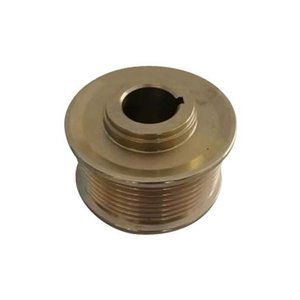
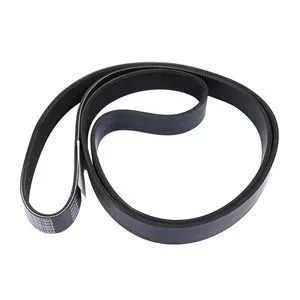
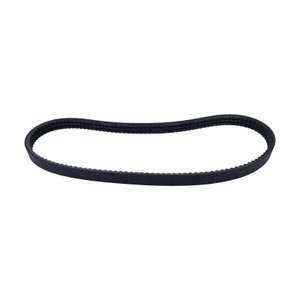
System-Level Match — Tensioner 04133543 ships with verified adjacent belt-drive components to prevent repeat failures from uncorrected pulley misalignment.
Technical Specifications
| Parameter |
Value |
| Part Number |
04133543 |
| Product Type |
Belt Tensioner |
| Cross-Reference |
04133543 (reference only), 4133543 (reference only) |
| Machine Fitment |
D2.9 L4, TD2.9 L4, TD2.9L04 |
| Brand Compatibility |
Designed to replace components in DEUTZ engines |
| Part Name |
Tensioning Pully |
| Condition |
New Aftermarket |
| Warranty |
3–12 months against manufacturing defects |
| Quality Standard |
ISO 9001 |
Application Suitability
| Engine System |
Related Components |
| Belt Drive – Accessory Drive |
Drive belt, idler pulley, pulley bracket |
| Belt Drive – Cooling Fan Drive |
Fan belt, fan hub bearing, fan blade assembly |
| Engine Overhaul – Top End |
Valve cover gasket set, rocker shaft seals |
| Engine Overhaul – Front Cover |
Front crankshaft seal, timing cover gasket |
Why a New Tensioner Fails Within Days on Deutz D2.9 Series Engines
The root cause is rarely the tensioner itself — it is the uncorrected misalignment or worn bracket in the surrounding belt-drive system.
In the Shandong equipment manufacturing corridor, I handled repeated warranty claims where a Belt Tensioner engine rebuild replacement for Deutz was returned as defective after only a few days in service. The pattern was consistent: the tensioner bearing showed one-sided wear, and the belt had migrated to the edge of the pulley groove. On teardown, the idler pulley bracket on the TD2.9L04 variant showed slight deformation from previous overheating events, throwing the entire belt run out of plane. The new tensioner absorbed the lateral load until its bearing failed prematurely [NEED_CITE: belt drive system misalignment failure modes in industrial diesel engines]. Addressing the bracket and verifying pulley runout before fitting the replacement tensioner eliminates this repeat-failure cycle.

Belt-Drive System Context for the D2.9 and TD2.9 Families
The tensioner sits at a critical node in the accessory belt path, maintaining correct tension across the crankshaft pulley, alternator, water pump, and any PTO-driven accessory. On the Deutz D2.9 L4 and TD2.9 L4 engines, the belt routing wraps multiple accessories, meaning any deviation in one pulley's position loads the tensioner unevenly. A Belt Tensioner engine rebuild replacement for Deutz must be evaluated alongside the entire belt path, not as an isolated swap.
Engine Serial Variants and Bracket Differences
The TD2.9L04 variant uses a specific bracket geometry that differs from earlier D2.9 L4 builds. When an engine has been through a prior rebuild, brackets may have been replaced with components from a different serial range, creating subtle mounting offset. Confirming the engine serial number and cross-checking bracket part references prevents installing a tensioner onto a misaligned belt path [NEED_CITE: Deutz D2.9 engine serial variant differences in front-end accessory drive].
Load Rating and Bearing Surface Precision
The tensioner pulley rides on a sealed bearing designed for continuous radial load at engine operating speed. The bearing surface finish controls friction heat buildup, which directly affects grease life inside the seal. A precision-ground raceway keeps rotational resistance low and heat generation minimal, extending service intervals in high-ambient-temperature environments typical of construction and agricultural duty cycles.
Material Strength Under Continuous Cycling
The pulley body is formed from high-strength steel to resist deformation under continuous belt tension and shock loads from engine start-stop cycling. In high-load applications such as excavator engine bays or generator enclosures, the steel construction maintains dimensional stability where lighter materials would fatigue or crack at the hub-to-rim junction.
The Hidden Cost of Swapping the Part Without Checking the System
Replacing only the worn tensioner without inspecting the idler bracket, pulley alignment, and belt condition leads to a predictable outcome: the new unit inherits the same lateral load and fails on an accelerated timeline. Workshops that adopt a system-check protocol report noticeably fewer comebacks on belt-drive jobs [NEED_CITE: belt drive system inspection protocols for heavy-duty diesel rebuild]. The cost of a second teardown, a second belt, and a second tensioner far exceeds the time spent verifying bracket straightness and pulley runout during the first rebuild.
Why Sourcing This Tensioner Through a System-Supplier Matters
Own production lines and qualified partner facilities operate under one warranty account, so the tensioner and its companion idler pulleys carry matched QC documentation. Eight product categories allow a complete belt-drive overhaul kit — tensioner, belts, idler pulleys, front seal, and gasket set — to ship as a single consignment. Minimum order starts at one piece, so a workshop can order a single tensioner for an emergency repair or a full kit for a planned overhaul. Cross-reference verification covers superseded part numbers and variant differences across D2.9 serial ranges. Sample units are available for fitment confirmation before bulk commitment, letting the rebuild shop verify bracket compatibility before ordering fleet quantities. The technical team confirms engine serial applicability and system-level grade matching.
Documentation & Verification
- Commercial invoice and packing list referencing engine model and serial range
- Belt-drive cross-reference sheet marked reference only for part interchange
- Dimensional inspection record covering pulley bore and bearing seat
- Warranty terms from 3 to 12 months against manufacturing defects
- Packing photographs showing tensioner protected against bearing contamination
- HS code and customs documentation for international engine parts clearance
Installation & Rebuild Sequence
- Verify idler bracket straightness and pulley runout before fitting the new tensioner
- Clean all belt contact surfaces to prevent abrasive contamination of the bearing seal
- Torque tensioner mounting fasteners to engine specification to avoid bracket distortion
- Check belt alignment across all pulleys after tensioner installation and initial run-in
- Run engine at idle and observe belt tracking for the first operational cycle
Requesting a Fitment-Confirmed Quote
Provide the Deutz engine model designation and serial number so the correct bracket variant can be confirmed. Share any prior rebuild history or known pulley replacements to verify system compatibility. Include the full repair list to consolidate the tensioner with matching belts, seals, and gaskets in a single shipment.
Frequently Asked Questions
Q: Should the belt and idler pulley be replaced at the same time as the tensioner?
A: On the D2.9 L4 and TD2.9 L4 engines, belt-drive components share load paths. A worn belt can accelerate tensioner bearing wear, and a grooved idler damages the new belt surface. Replacing the full belt path set — tensioner, belts, and idlers — during an engine rebuild eliminates mismatched wear and reduces the risk of early repeat failure.
Q: Do different Deutz engine serial numbers use different tensioner brackets?
A: Yes. The TD2.9L04 and earlier D2.9 L4 variants can differ in bracket geometry and mounting offset. Providing the engine serial number allows cross-referencing the correct bracket configuration and ensures the tensioner aligns properly with the existing pulley path.
Q: How do I confirm this tensioner fits my specific Deutz engine?
A: Share the engine model and serial plate details. The technical team verifies cross-reference compatibility against superseded numbers and confirms variant-specific fitment before dispatch, so the part arrives ready to install without trial fitment on the machine.
Q: What other belt-drive parts should be included in a complete overhaul kit?
A: A system-level overhaul kit typically includes drive belts, idler pulleys, the front crankshaft seal, and the timing cover gasket. Bundling these items ensures matched service life across the belt-drive system and avoids split shipments that delay the rebuild completion.
Q: Can I order a sample tensioner to verify fitment before placing a bulk order?
A: Sample supply is available for fitment confirmation. This allows rebuild shops to verify bracket alignment, bearing seat dimensions, and belt-path compatibility on one engine before committing to fleet-quantity orders across multiple machines.