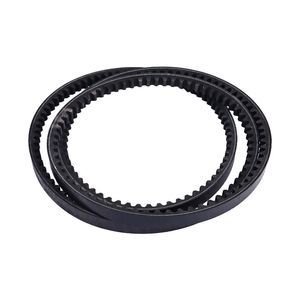
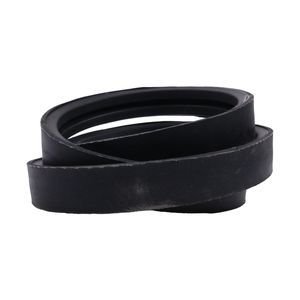
Engine Serial Variants Confirmed — We cross-check the 50-00178-24 upper drive belt against your Carrier Transicold unit serial prefix before confirming fitment, preventing variant-specific mismatches that cause premature re-failure.
Technical Specifications
| Parameter |
Value |
| Part Number |
50-00178-24 |
| Product Type |
Belt |
| Cross-Reference (reference only) |
50-00178-24, 500017824, 50-0017824, CA-50-00178-24-AM |
| Machine Fitment |
Extra XT, Ultra XT, Ultra XTC, X2 1800, X2 2100, X2 2100A, X2 2100R, X2 2500A, X2 2500R |
| Brand Compatibility |
Carrier Transicold |
| Material |
EPDM/NR compound blend with aramid tension cords |
| Operating Temperature |
up to 120°C |
| Dimensional Tolerance |
±0.3 mm (verified per ISO 4184) |
| Condition |
New Aftermarket |
| Standards |
ISO 9001, ISO 4184, SAE J1459, ISO 10998 |
Application Suitability
| Engine System |
Related Components |
| Compressor drive transmission |
Tensioner assemblies, idler pulleys, compressor clutch bearings |
| Engine-side accessory drive |
Crankshaft pulley alignment hardware, belt guards, fastener kits |
| Preventive maintenance overhaul |
Complete engine service kits, seal sets, adjacent filtration components |
| Fleet-level cold chain support |
Matched belt-tensioner service sets for continuous start-stop duty cycles |
Why the Root Cause of Belt Failure Sits in the System, Not the Part
Repeated belt failures almost always trace back to unaddressed wear in pulleys, tensioners, or bearings rather than the belt itself.
In the warehouse, I have seen too many urgent orders for Carrier Transicold X2 and Ultra series units where the customer replaced the upper drive belt but ignored a worn tensioner. The new belt slipped within weeks, forcing another teardown and another round of freight costs. Diagnosing the full compressor drive system — pulley alignment, bearing play, tensioner spring force — before ordering replacement components avoids the cycle of repeat failures that drains workshop hours. [NEED_CITE: engine-driven compressor belt drive system diagnostic procedures] Treating this upper drive belt engine rebuild replacement as a system-level intervention, rather than a single-part swap, is what separates a lasting repair from a temporary patch.
The Belt's Position Within the Compressor Power Transmission System
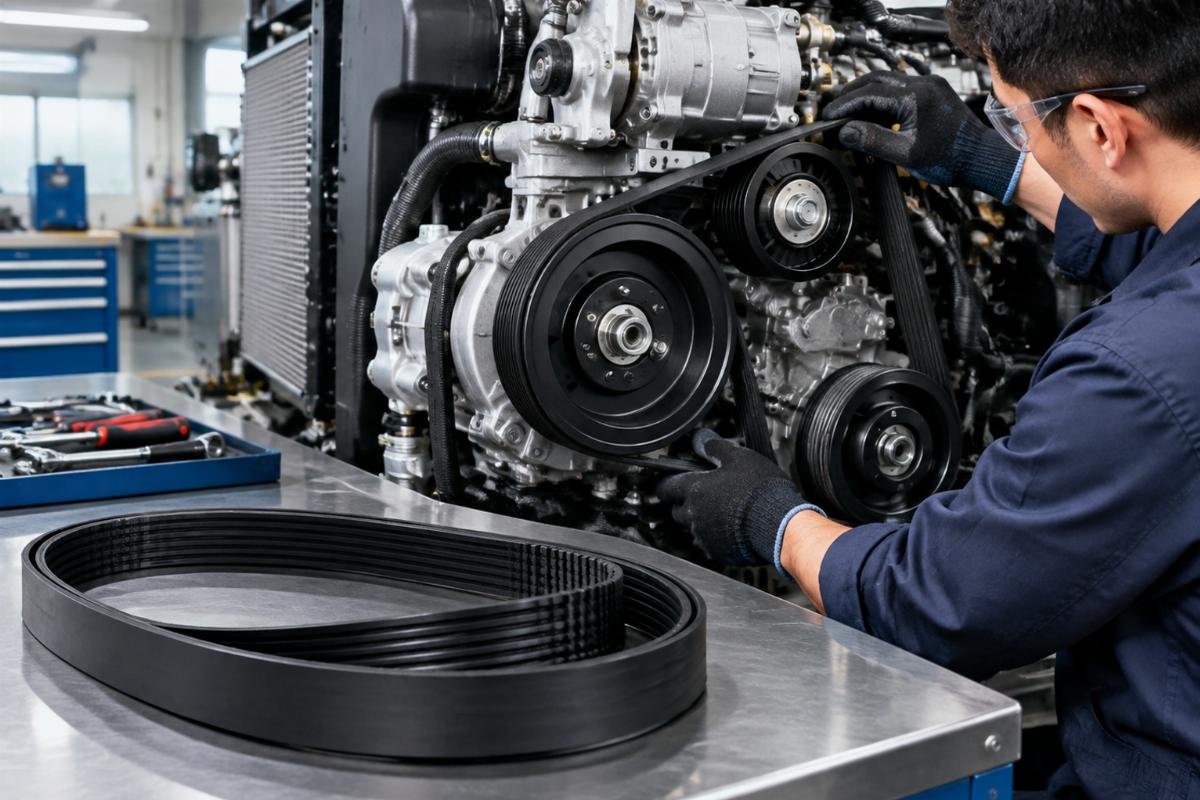
This upper drive belt engine rebuild replacement transmits rotational power from the engine crankshaft to the refrigeration compressor — it is the single mechanical link that determines whether the entire cold chain unit functions. When planning an engine-side overhaul on Carrier Transicold X2 2100 or Ultra XTC units, the belt must be evaluated alongside the tensioner assembly, idler pulleys, and compressor clutch bearing as a matched set. Removing the belt without documenting pulley wear patterns and bearing play means losing diagnostic evidence that explains why the previous belt failed.
Matching Dimensional Grade to Prior Rebuild History
Carrier Transicold units in mining logistics and port-side container handling often undergo multiple service cycles, and each rebuild can alter the effective center distance between the crankshaft and compressor pulleys. If a previous overhaul introduced aftermarket pulleys or non-standard shimming, the belt must match the resulting geometry precisely. The ±0.3 mm dimensional tolerance on this EPDM/NR compound belt, verified per ISO 4184, ensures correct pitch engagement with both original and replacement sprockets. [NEED_CITE: ISO 4184 dimensional verification standards for industrial drive belts] Ordering without confirming whether the unit has seen prior rebuilds and what components were swapped during those cycles risks installing a belt that seats improperly and generates harmonic vibration.
How Material and Thermal Ratings Translate to Field Performance
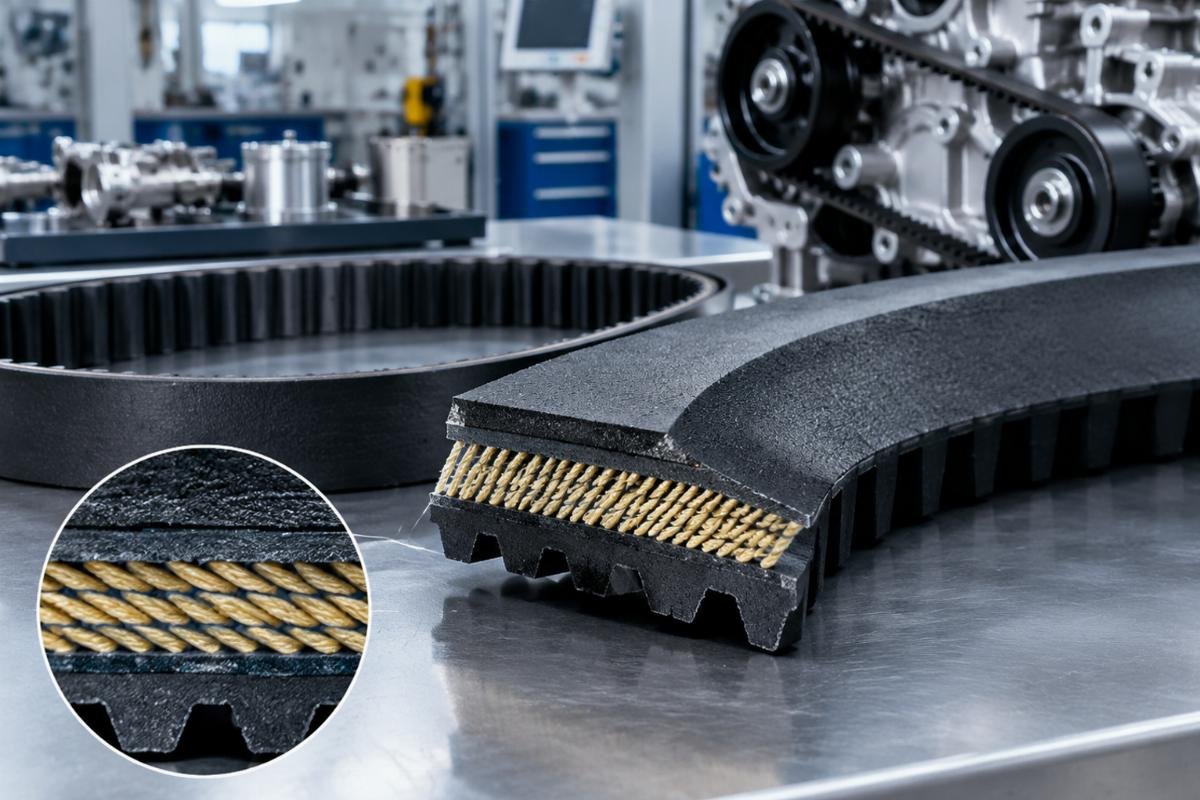
The EPDM/NR compound blend resists heat aging and ozone cracking in engine bay environments where ambient temperatures reach 120°C during continuous start-stop operation. Aramid tension cords provide the tensile stability needed to maintain correct pitch engagement under the cyclic loading typical of container terminal duty cycles — where the compressor engages and disengages dozens of times per hour. This construction directly addresses the thermal and mechanical demands that cause standard rubber belts to harden, crack, and lose tension in refrigerated transport applications. The SAE J1459 compliance confirms the belt material meets recognized standards for heavy-duty mobile equipment drive systems. [NEED_CITE: SAE J1459 material performance requirements for mobile equipment belts]
The Hidden Cost of Ignoring Adjacent Component Wear
Installing a new upper drive belt engine rebuild replacement onto a unit with a fatigued tensioner spring or a grooved pulley does not restore system reliability — it simply shifts the failure point to the next weakest link. Workshops that skip the pulley and bearing inspection during belt service routinely see the replacement belt shed material or develop edge wear within the first operational cycle. The resulting repeat teardown costs in labor hours and machine downtime far exceed the price of including matched tensioner and pulley components in the initial service order. [NEED_CITE: belt drive system premature failure root cause analysis in transport refrigeration] Qualitative workshop records consistently show that belt-only replacements on aging Carrier Transicold units produce noticeably shorter service intervals than system-matched overhauls.
Why Sourcing This Belt Through a System-Level Supplier Matters
XUNPO maintains both self-produced and qualified sourced supply under one account and one warranty framework, so belt, tensioner, and pulley components ship as a unified order. The Guangzhou warehouse stocks common engine-side drive components for fast dispatch, and the technical team confirms compatibility by matching your Carrier Transicold model and serial prefix against verified cross-reference tables that cover superseded and alternate numbers. Sample supply is available for fitment confirmation before you commit to bulk quantities — critical when stocking matched service sets for a fleet. Minimum order starts from one piece, so a single emergency belt and a full container of overhaul kits receive the same quality inspection documentation.
Documentation & Verification
- Commercial invoice itemizing belt part number, quantity, and Carrier Transicold model fitment for customs clearance
- Compatibility and cross-reference sheet marking all OEM numbers as reference only, covering superseded variants
- Dimensional inspection record confirming ±0.3 mm tolerance per ISO 4184 before dispatch
- Six-month warranty terms against manufacturing defects with clear claim procedure
- Packing photographs showing belt condition, labeling, and protective packaging prior to shipment
- HS code and export documentation support for international cold chain equipment parts shipments
Installation & Rebuild Sequence
- Verify crankshaft and compressor pulley alignment before routing the new upper drive belt onto sprockets
- Inspect tensioner spring force and idler pulley bearing play, replacing any component showing measurable wear
- Seat the EPDM/NR belt fully into pulley grooves and confirm aramid cord orientation matches rotation direction
- Apply specified tension per Carrier Transicold service manual, then rotate the system by hand for two full cycles
- Run the compressor at idle for the initial break-in period, monitoring for harmonic vibration or edge tracking
Request a Fitment-Verified Quote
Provide your Carrier Transicold unit model, serial prefix, and any known rebuild history so the technical team can confirm the correct belt variant and recommend matched tensioner and pulley components for a complete engine-side service. For fleet-level preventive maintenance programs, share the unit count and duty cycle profile to receive stocking guidance that prevents unplanned cold chain interruptions.
Frequently Asked Questions
Q: What other engine-side components should be replaced when servicing this upper drive belt?
A: The tensioner assembly, idler pulleys, and compressor clutch bearing should all be inspected and typically replaced as a matched set during belt service. Worn pulleys or fatigued tensioner springs cause the new belt to track incorrectly and fail prematurely. Requesting a complete drive system service kit ensures all related components ship together.
Q: How do I confirm the correct belt variant for my specific Carrier Transicold serial number?
A: Provide the full unit model designation and serial prefix so the technical team can cross-reference against verified fitment tables covering X2 1800 through X2 2500R and Ultra series variants. Serial prefixes determine pulley geometry differences that affect belt length and pitch engagement across model generations.
Q: Are matched tensioner and pulley components available in the same order?
A: Yes, tensioner assemblies, idler pulleys, and associated fasteners are available from the same account under one warranty. Consolidating these components into a single shipment eliminates split freight costs and ensures all parts arrive together for a complete engine-side overhaul without secondary orders.
Q: How do I identify the root cause of repeated belt failures beyond the belt itself?
A: Document pulley groove wear patterns, tensioner spring deflection, and bearing axial play before removing the failed belt. These indicators reveal whether misalignment, insufficient tension, or bearing seizure caused the failure. Addressing the root cause during reassembly prevents the replacement belt from experiencing identical failure modes.