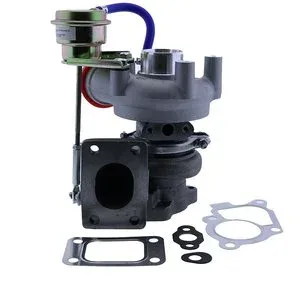
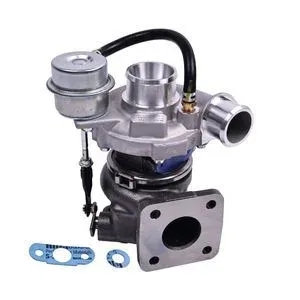
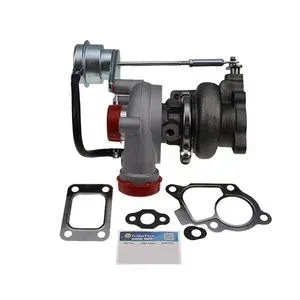
Matched System Supply — Turbo TD04L4 7008469 ships alongside gaskets, oil line fittings, and intake seals verified against your Kubota V3307 engine serial.
Technical Specifications
| Parameter |
Value |
| Part Number |
7008469 |
| Product Type |
Turbocharger |
| Cross-Reference |
7008469 (reference only) |
| Turbo Model |
TD04L4 |
| Machine Fitment |
Kubota V3307-DI-TE3-Q, V3300T; Bobcat S630, S650, T630, T650 |
| Condition |
New Aftermarket |
| Exhaust Temperature Resistance |
up to 900°C |
| Standards |
ISO 9001 |
| Warranty |
3–12 months against manufacturing defects |
Application Suitability
| Engine System |
Related Components |
| Emission & Exhaust — Turbocharger circuit |
Exhaust manifold gasket, turbo mounting studs and nuts |
| Lubrication feed to turbo bearing |
Oil feed line, oil drain hose, banjo fittings and crush washers |
| Intake air path post-turbo |
Intercooler hoses, intake clamps, air filter element |
| Crankcase ventilation |
PCV hose and breather assembly to prevent oil carry-over into intake |
Why Turbo Failures Repeat After a Straight Swap
A replacement turbocharger TD04L4 7008469 rarely solves the root cause — contaminated oil, degraded feed lines, or a leaking air filter housing typically triggered the original failure.
I once supported a Kubota V3307-DI-TE3-Q return in a Middle East desert site where a previous shop replaced only the turbo. Within a few hundred hours the new unit failed again because the oil feed banjo fitting was partially blocked with carbon. On another overhaul, the wrong gasket thickness caused an exhaust leak that masked itself as low boost [NEED_CITE: turbo failure root cause analysis for diesel engines in high-dust environments]. Replacing a turbo without tracing the system fault means paying for the same repair twice.

The Exhaust System Context of a Turbo Replacement
The TD04L4 turbocharger sits at the junction of the exhaust manifold and the intake piping on Kubota V3307 and V3300T engines. When planning an engine rebuild, the turbocharger TD04L4 engine rebuild replacement must be evaluated alongside the manifold gasket, mounting hardware, and heat shield condition. A warped manifold flange will compromise the new turbo seal regardless of how carefully the unit itself is torqued down.
Oil Feed Line Verification Before Every Turbo Install
Turbo bearing failure almost always traces back to oil supply degradation. Before the replacement turbo spins up, verify the feed line internal diameter is clear, the banjo bolt passage is unobstructed, and the drain hose has no kinks or collapse. Kubota V3307-DI-TE3-Q engines operating in high-dust environments often show accelerated oil coking in these lines [NEED_CITE: lubrication system contamination effects on turbo bearing life in construction equipment]. Addressing the oil circuit as a system — not just swapping the turbo — is what separates a lasting repair from a comeback.
Exhaust Gas Temperature and Material Selection
The TD04L4 turbine housing is rated for exhaust gas temperatures up to 900°C, which aligns with the thermal profile of Kubota V3307 engines under sustained load. In Bobcat S630 and S650 skid steer loaders, the turbo sees cyclic thermal stress from frequent idle-to-full-load transitions. The turbine wheel alloy and housing material must handle this thermal cycling without cracking. When sourcing an aftermarket turbocharger TD04L4 engine rebuild replacement, confirm that the housing dimensional check and balance test documentation are included — these records verify the rotating assembly will not introduce harmonic vibration into the engine block and main bearings.
The Cost of Skipping the System Check
Installing a new turbo without replacing the manifold gasket risks exhaust leakage that alters backpressure and reduces boost. Leaving old oil feed lines in place invites carbon particles into the new turbo bearing within the first hours of operation. On Bobcat T630 and T650 compact track loaders, a missed intake clamp leak downstream of the turbo allows unfiltered air to reach the cylinders, causing ring and bore wear that surfaces long after the turbo itself is blamed [NEED_CITE: intake air filtration and turbo system interaction in compact equipment engines]. These secondary failures cost more in labor and downtime than the gaskets and fittings would have added to the initial rebuild.
Why Source the Full System Here
Our facility produces selected engine component lines in-house and sources the remainder from ISO-certified partners — every item in the turbo kit carries the same warranty terms. You can order the TD04L4 turbo along with matched gaskets, oil line fittings, and seal kits under one account with one consignment. We identify parts from a part number, machine model, photograph, or nameplate image, which matters when the Kubota engine plate is painted over or worn unreadable. Cross-reference verification covers superseded and alternate turbo numbers, so you receive the correct variant for your specific engine serial range. Sample units are available for fitment confirmation before you commit to a bulk order. Our technical team confirms turbo wastegate calibration and mounting flange compatibility against your engine build record [NEED_CITE: aftermarket turbo cross-reference verification process for Kubota and Bobcat equipment].
Documentation & Verification
- Commercial invoice and packing list itemizing turbo, gaskets, and fittings
- Turbo compatibility sheet with cross-reference numbers marked reference only
- Quality inspection record covering balance test and housing dimensional check
- Warranty terms covering manufacturing defects across all matched components
- Packing photographs showing turbo protection and kit contents before crate closure
- HS code and customs documentation support for international engine parts shipment
Installation & Rebuild Sequence
- Inspect exhaust manifold flange flatness before mounting the TD04L4 turbocharger
- Replace oil feed banjo bolt and crush washers to ensure unobstructed lubrication flow
- Torque turbo mounting nuts to specification using new studs if originals show thread stretch
- Prime the turbo oil cavity with clean engine oil before first cranking to prevent dry start
- Run the Kubota V3307 at idle for initial break-in, monitoring boost pressure and oil leak points
- Verify intake tract clamps and intercooler hoses are sealed to prevent post-turbo air ingress
Requesting a Matched Turbo and Overhaul Kit Quote
Provide your Kubota or Bobcat engine model, serial number, and any known rebuild history so we can confirm the correct TD04L4 variant and associated gasket grades. If the engine nameplate is illegible, a photograph of the existing turbo data plate and exhaust manifold helps us verify fitment. Tell us whether you need the turbo alone or a matched set with seals, oil fittings, and intake components for a complete overhaul consignment.
Frequently Asked Questions
Q: What other engine components should be replaced together with the turbocharger during an overhaul?
A: A complete turbo replacement on Kubota V3307 engines should include the exhaust manifold gasket, turbo mounting hardware, oil feed banjo fittings, crush washers, and intake clamps. Reusing old gaskets or degraded oil lines risks contaminating the new turbo bearing and causing repeat failure. We supply these matched components in a single shipment.
Q: How do I confirm which turbo variant fits my specific Kubota engine serial number?
A: Kubota V3307-DI-TE3-Q and V3300T engines may carry different turbo mounting flanges or wastegate calibrations across production runs. Provide your engine serial number and any rebuild history so we can cross-reference the correct TD04L4 variant. We also accept photographs of the existing turbo and nameplate for identification.
Q: What system-level root causes should I check before installing a replacement turbo?
A: Inspect oil feed and drain lines for carbon buildup or restriction, verify the air filter housing is sealed, and check the exhaust manifold for cracks or warping. Contaminated oil and unfiltered air are the most common root causes of premature turbo failure in Kubota-powered construction equipment operating in dusty environments.
Q: Can I order a matched turbo and gasket seal kit as one consignment?
A: Yes. We consolidate the turbocharger, gasket set, oil line fittings, and intake seals into one shipment under a single account and warranty. This eliminates split freight costs and ensures all matched components arrive together, so your engine rebuild proceeds without waiting on secondary orders.
Q: How do I identify my engine model if the nameplate is worn or painted over?
A: Send us a photograph of the engine block casting numbers, the existing turbo data plate, or the machine model and serial number. Our technical team cross-references these against Kubota and Bobcat production records to confirm the correct turbocharger variant and associated rebuild components for your specific engine.