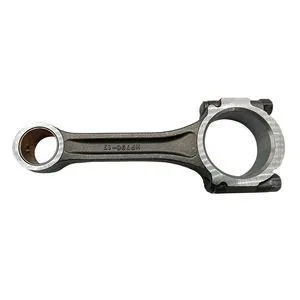
Matched Sets Ship Together — Every main and con rod bearing shell graded to the same crankshaft condition, verified before dispatch.
Technical Specifications
| Parameter |
Value |
| Part Number |
04132003 |
| Product Type |
Main Bearing Set |
| Cross-Reference |
04132003, 04137425 (reference only) |
| Machine Fitment |
Deutz TD 2.9 4L, D2.9 4L |
| Material |
Babbitt-metal-backed steel backing |
| Bearing Clearance Grade |
STD (oversize grades available upon crankshaft verification) |
| Journal Fit Diameter Tolerance |
±0.005 mm |
| Width Tolerance |
±0.01 mm |
| Condition |
New Aftermarket |
| Warranty |
6 months against manufacturing defects |
| MOQ |
1 piece |
Application Suitability
| Engine System |
Related Components |
| Bottom-End Rotating Assembly |
Con rod bearing set, thrust washers |
| Lubrication Circuit |
Oil pump assembly, bypass filter element |
| Complete Overhaul |
Full gasket kit, piston ring sets, cylinder liners |
When Standard Shells Fail on a Reground Crankshaft
A Main Bearing Set engine overhaul rebuild fails the moment an STD shell is forced onto a 0.25 undersize journal.
In the Yangtze Delta rebuild shops I have worked with, crankshaft regrinds are routine after high-hour Deutz 2.9L units come in with scored journals. The problem is not the machining — it is the paperwork gap between the machine shop and the parts counter. A crankshaft ground to the first undersize still gets fitted with standard-grade shells because the order was placed before the teardown measurements were taken. The result is an immediate oil pressure collapse on the test bench, followed by a second teardown that costs more than the first [NEED_CITE: engine rebuild teardown cost versus initial overhaul budget]. The same part number, ordered without confirming the crankshaft condition, becomes the wrong part.
The System That Fails, Not Just the Shell
Main bearings sit at the base of the entire lubrication and rotating assembly system on the Deutz TD 2.9 4L and D2.9 4L platforms. When shells show accelerated wear, the first question should never be "which bearing do I replace?" but "what upstream condition destroyed this bearing?" Oil pump output degradation, filter bypass valve sticking, or contamination ingress through a compromised breather all produce identical wear patterns on the Babbitt surface. Installing a fresh Main Bearing Set engine overhaul rebuild without addressing the root cause means the new shells will follow the same failure trajectory within a fraction of the original service life.
Matching Grade to Rebuild History
Every Deutz 2.9L engine that has seen a prior bottom-end intervention carries the risk of a reground crankshaft. Journal diameters must be measured across all main bearing positions before any order is placed. A crankshaft machined to 0.25 mm undersize requires the corresponding undersize shells; a further regrind to 0.50 mm demands the next grade. The Babbitt overlay thickness and steel backing geometry differ between grades, and mixing them across positions creates uneven oil film thickness that leads to localized metal-to-metal contact [NEED_CITE: crankshaft journal measurement standards for engine rebuild]. This Main Bearing Set engine overhaul rebuild must be specified against actual measured data, not against the factory build sheet alone.

Reading the Specs That Matter at Assembly
The Babbitt-metal-backed steel backing provides the load-bearing foundation while allowing conformability to minor journal irregularities — a property that becomes critical on crankshafts with documented service history. The ±0.005 mm journal fit diameter tolerance defines the oil clearance window: too tight and the hydrodynamic film cannot establish at cranking speed; too wide and pressure bleeds off before reaching the furthest con rod journal. Width tolerance at ±0.01 mm controls axial positioning and prevents the shell from migrating under thrust loads generated by helical gear drives. Bearing clearance grade selection — STD, 0.25, or 0.50 undersize — is the single parameter that determines whether the engine builds oil pressure on first start or requires another teardown.
The Cost of a Grade Mismatch
Fitting standard shells onto a reground crankshaft does not produce a gradual failure. Oil pressure drops to near zero within seconds of first start, and the Babbitt surface smears across the journal before the operator can react. The crankshaft — already at reduced diameter from the regrind — may now require polishing or further machining to remove embedded bearing material. The con rod bearings, which share the same oil gallery feed, often sustain collateral damage during the low-pressure event. What began as a planned bottom-end overhaul becomes a cascading repair involving crankshaft rework, full bearing replacement, and oil system flush [NEED_CITE: consequences of incorrect bearing grade selection in diesel engine rebuild].
Why Source This Set Here
Both self-produced and qualified-sourced bearing lines carry the same quality control protocol and six-month warranty, so a mixed-order bottom-end kit arrives under one accountability. Eight product categories mean the overhaul gasket kit, piston rings, and thrust washers ship in the same consignment as this Main Bearing Set engine overhaul rebuild, eliminating split freight. Minimum order stands at one piece, so a single emergency set is handled without padding the order. Guangzhou warehouse stock on common Deutz 2.9L grades allows rapid dispatch when a machine is already on the stand. Part identification works from the OEM reference number, the engine model plate, or a photograph of the worn shell. Cross-reference verification covers the superseded 04137425 number alongside the current 04132003 reference. Technical confirmation of required oversize grade is available before the order is locked.
Documentation & Verification
- Commercial invoice lists each bearing grade separately to match crankshaft measurement records
- Cross-reference sheet maps 04132003 and 04137425 numbers with reference-only designation
- Dimensional inspection record confirms journal fit and width tolerances per set
- Warranty terms cover manufacturing defects for six months from dispatch date
- Packing photographs document shell condition and packaging integrity before crate closure
- HS code and customs paperwork provided for cross-border shipment clearance
Installation & Rebuild Sequence
- Verify crankshaft journal diameter at every main position before opening bearing packaging
- Clean oil gallery passages thoroughly to remove any debris from the prior failure event
- Install shells dry; assembly lubricant applied only to the journal contact surface at final fitment
- Torque main caps to Deutz TD 2.9 4L specification in the prescribed sequence, then confirm crankshaft rotates freely by hand
- Check oil pressure on first start immediately; shut down if gauge does not register within seconds
- Run a break-in cycle under graduated load to seat the Babbitt surface before returning to full duty
Before You Request a Quote
Provide the engine model and serial number so internal variant differences within the Deutz TD 2.9 4L and D2.9 4L family are resolved. Share any crankshaft regrind records or recent measurement data so the correct oversize grade is confirmed before the order ships. If the nameplate is illegible, send photographs of the existing bearing shells and the engine block casting number for cross-verification.
Frequently Asked Questions
Q: What grade do I need if my crankshaft has been reground?
A: The oversize grade depends entirely on the measured journal diameter after machining, not on the original factory specification. A crankshaft ground to the first undersize requires the corresponding 0.25 shells; a second regrind moves to 0.50. We confirm the required grade against your measurement data or machinist report before dispatch to prevent clearance mismatch on assembly.
Q: Does this set include thrust washers and con rod bearings?
A: This listing covers the main bearing set only. Thrust washers and con rod bearings are listed as separate line items so each can be specified to the correct grade independently. Ordering them as a matched group under one account keeps the entire bottom-end system under a single warranty and a single dispatch.
Q: Are main bearings identical across all TD 2.9 4L serial ranges?
A: Internal revisions within the Deutz 2.9L platform can affect journal width and cap geometry across production runs. Providing the engine serial number allows us to cross-check against variant-specific build data and confirm that the shells supplied match your exact block configuration rather than a generic assumption.
Q: What other systems should I inspect before fitting new main bearings?
A: Oil pump output, filter bypass valve operation, and crankshaft journal surface finish must all be verified before new shells go in. A worn oil pump or a stuck bypass valve will starve the new bearings from the first start. Addressing the root-cause system failure is what separates a lasting rebuild from a repeat teardown.
Q: How do I identify my exact Deutz engine when the nameplate is gone?
A: Send photographs of the engine block casting number, the existing bearing shells if available, and any visible stampings on the crankshaft or cylinder head. Our technical team cross-references these against known Deutz 2.9L variant markers to confirm the correct configuration before any parts are committed to shipment.