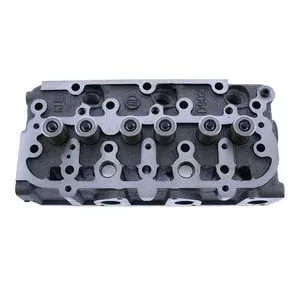
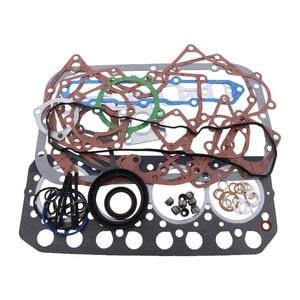
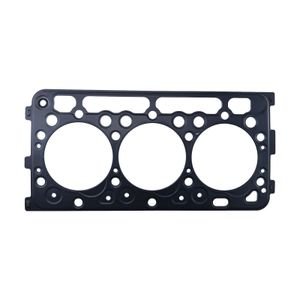
System-Matched Components — D902 Cylinder Head shipped with matched gasket set and valve train, sized to the engine suffix on your nameplate.
Technical Specifications
| Parameter |
Value |
| Product Type |
Cylinder Head |
| Engine Fitment |
D902, D902-E2B, D902-E3B, D902-E4B |
| Condition |
New Aftermarket |
| Warranty |
3-12 Month |
| Standards |
ISO-certified factory |
| Machine Fitment |
Kubota RTV900, BX, KX018-4, KX41-3, U17, ZD series |
Application Suitability
| Engine System |
Related Components |
| Top-End Overhaul |
D902 piston sets, valve train, head gasket kit |
| Emission Compliance |
Intake and exhaust valves, valve stem seals |
| Cooling Circuit |
Thermostat housing gasket, coolant passage seals |
| Fuel Delivery |
Injector sleeves, return line fittings |
Why the Same D902 Suffix Demands a Specific Cylinder Head
A cylinder head swapped without checking whether previous rebuilds changed valve sizes or deck height leads to compression loss weeks after reassembly.
The D902 engine family has evolved through E2B, E3B, and E4B generations. Internal component differences between these series require correct D902 Cylinder Head engine rebuild variant selection before ordering. A rebuild shop quoting an overhaul must verify if a prior machine shop fitted oversize valves or skimmed the deck, altering the required head specification [NEED_CITE: engine rebuilding standards for cylinder head resurfacing limits].
Matching the Head to the Block and Valve Train
When planning a D902 Cylinder Head engine rebuild, the flatness of the mating surface dictates whether the block deck requires machining. The head must also match the valve sizes already present in the block. Supplying the D902 Cylinder Head alongside matched gaskets and valve train components ensures the entire top end comes back within tolerance simultaneously, avoiding the need to source individual seals later.
Addressing the Failure Root Cause During Reassembly
Replacing a warped or cracked head without diagnosing the underlying thermal or mechanical stress invites repeat failure. Coolant passage blockage, injector spray pattern irregularities, or chronic overloading are common culprits. A comprehensive D902 Cylinder Head engine rebuild addresses these system faults [NEED_CITE: diesel engine cylinder head failure analysis]. This system-level approach prevents the new casting from succumbing to the same operational stresses that destroyed the original unit.
Decoding Flatness and Valve Seat Concentricity
The cylinder head casting must maintain strict flatness tolerances to seal against high compression pressures without relying on excessive torque on the head bolts. Valve seat concentricity is equally vital; a poorly cut seat allows hot combustion gases to erode the valve margin. For the D902, maintaining the correct valve guide interference fit prevents oil consumption and ensures stable valve operation at governed RPM. These parameters define the longevity of the D902 Cylinder Head engine rebuild.

The Cost of Overlooking Rebuild History
Installing a standard specification head on a block that has been previously machined or fitted with non-standard valves results in poor sealing or piston-to-valve contact. This leads to immediate teardown and wasted labor. Furthermore, failing to address cooling system restrictions means the new head will likely warp under the same thermal loads [NEED_CITE: thermal fatigue in cast iron cylinder heads]. Qualitative assessment of the engine's service history is essential before finalizing the parts order.
Why Procure the Cylinder Head Here
Our supply model focuses on system-level accuracy. We verify the D902 suffix (e.g., E3B-MRG-1 vs E4B-SKL-1) against the block's current state, not just the original build sheet. Our technical team confirms valve guide and seat dimensions to match your piston set. We supply the head with a matched gasket kit to prevent split shipments. Quality inspection records cover flatness and pressure testing.
Documentation & Verification
- Commercial invoice listing the specific D902 suffix and matched gasket set part numbers.
- Quality inspection record detailing head deck flatness measurements and valve seat concentricity.
- Cross-reference sheet for D902 variant identification (reference only).
- Packing photographs showing the head secured and valve train components protected.
- Warranty terms covering casting integrity and manufacturing defects.
Installation & Rebuild Sequence
- Verify block deck flatness and surface finish before placing the new D902 Cylinder Head.
- Clean all coolant and oil galleries to remove debris from the previous failure.
- Install new valve stem seals and verify valve spring tension before assembly.
- Torque head bolts in the specified sequence to yield or specification.
- Perform a leak-down test after initial break-in to confirm ring and valve seal.
Rebuild Planning and Compatibility
To confirm compatibility and receive a system-matched quote, please provide the full engine serial number and suffix from the nameplate. Details regarding any previous machining work, such as deck skimming or oversize valve installation, are critical for selecting the correct D902 Cylinder Head engine rebuild components.
Frequently Asked Questions
Q: What does the overhaul kit need to include alongside this cylinder head?
A: A complete top-end overhaul requires the head gasket set, valve stem seals, head bolts (if torque-to-yield), and ideally a full valve train refresh including springs and retainers. If the block has been machined, thicker head gaskets may be required to maintain compression ratio and piston clearance.
Q: My engine suffix differs from the list — is this head still compatible?
A: The D902 platform has numerous suffix variants for different OEM applications. While the base architecture is similar, port layouts and valve sizes can vary. Please provide the full engine serial number and a photo of the nameplate so we can cross-reference the specific casting requirements for your variant.
Q: The previous rebuild used oversize valves — will this head accept them?
A: Standard heads are machined for standard valve stems and seat diameters. If your block has been modified for oversize valves or guides, the new head must be specified or machined to match those dimensions. Always measure the existing valve train components before ordering to ensure the new head matches the block's current state.
Q: Should I replace the valve train and springs at the same time?
A: Reusing fatigued springs or worn rockers on a fresh head compromises the rebuild. Valve springs lose tension over thousands of cycles, leading to valve float or poor sealing. Replacing the complete valve train assembly ensures the new head operates within design parameters and maximizes the interval between future top-end service.
Q: How do I confirm my exact D902 engine variant from the nameplate?
A: The nameplate typically lists the base model (D902) followed by a suffix code (e.g., E3B-SCG-1). This suffix dictates the emissions tier, governed speed, and specific component mapping. If the plate is illegible, the engine serial number can often be cross-referenced with the equipment manufacturer's build records to identify the correct configuration.