Block & Internal Parts
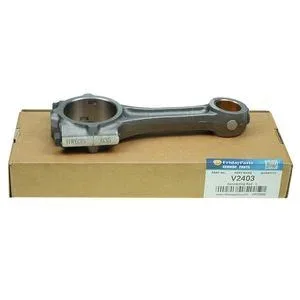
Rebuild Kit Connecting Rod Compatible with Kubota V3307 Engine
<p>Overhaul kit contents verified against your engine variant before dispatch</p>
View Details
<p><strong>Connecting Rod 4943977 for Cummins QSB6.7, New Aftermarket, ISO-Certified</strong> — compatible with QSB6.7 engine block and rotating assembly systems where rod sets, bearing shells and piston assemblies must align in grade and dimension.</p> <ul> <li>Matched tolerances across piston pin, con rod bearing and crankshaft journal interfaces</li> <li>Bearing clearance grade selected to measured crankshaft journal condition (STD / 0.25 / 0.50 undersize)</li> <li>Engine serial number verification confirms correct rod variant and bolt specification before assembly</li> </ul> <p>Dimensions and weight grades verified against rebuild history to support matched-set overhauls. (ID: 9739)</p>
MOQ
1 Piece
Lead Time
2-5 Business Days
Shipping
120+ Countries
Warranty
3-12 Months
Compatible Brands
Matched Overhaul Components — Bearing grade and rod weight classification verified against your QSB6.7 engine serial number before dispatch, ensuring the connecting rod assembly aligns with crankshaft journal condition and prior rebuild history.
| Parameter | Value |
|---|---|
| Part Number | 4943977 |
| Product Type | Connecting Rod |
| Cross-Reference | 4943977 (reference only) |
| Compatible Engine Brand | CUMMINS |
| Engine Model | QSB6.7 |
| Condition | New Aftermarket |
| Quality Certification | ISO-Certified |
| Warranty | 3–12 months against manufacturing defects |
| Engine System | Related Components |
|---|---|
| Block and Rotating Assembly | Piston assembly, piston pin, circlips |
| Crankshaft Bearing Interface | Con rod bearing shells (STD / 0.25 / 0.50 undersize) |
| Lubrication Circuit | Piston cooling nozzle, oil gallery gaskets |
| Cylinder and Head Assembly | Cylinder liner, head gasket, head bolts |
A replacement connecting rod fails early when the underlying lubrication or clearance fault remains unaddressed.
Rebuild shops frequently discover that a connecting rod failure did not originate in the rod itself. Spun bearings, blocked piston cooling nozzles, or crankshaft journal wear beyond the measured grade all place destructive loads on a new rod. When the root cause goes undiagnosed, the replacement part repeats the failure cycle within weeks [NEED_CITE: common root causes of connecting rod failure in mid-range diesel engines]. Across multiple QSB6.7 overhaul projects I have supported, the shops that avoid repeat teardowns are those that treat the connecting rod as one element of a matched rotating assembly rather than an isolated line item.
The connecting rod sits at the intersection of three critical interfaces: the piston pin at the small end, the crankshaft journal through the bearing shells at the big end, and the rod bolt clamping load that holds the cap in place. Each interface carries its own tolerance band, and the engine overhaul rebuild succeeds only when all three fall within specification simultaneously. A connecting rod engine overhaul rebuild therefore requires verifying piston pin bore diameter, measuring big-end bore roundness, and confirming bolt stretch or torque-angle values before any assembly begins.
A QSB6.7 engine arriving for its second or third overhaul may carry a crankshaft ground to an undersize journal — meaning standard-grade bearing shells no longer deliver correct oil clearance. Bearing shells are available in STD, 0.25 mm and 0.50 mm undersize, and selecting the right grade depends entirely on measured journal diameter, not on the number stamped on the old shell. I once supported a mining site in West Africa where a QSB6.7 was rebuilt with standard bearings on a previously ground crankshaft; the engine seized within operating hours because oil film thickness collapsed under load [NEED_CITE: bearing clearance selection for reground crankshaft journals in diesel rebuilds]. Every connecting rod order should therefore trigger a journal measurement check and a confirmed bearing grade before components ship.
The connecting rod must maintain big-end bore roundness, small-end bushing alignment, and centre-to-centre length within tight bands to prevent uneven loading across the six-cylinder bank. Within QSB6.7 production runs, engine serial number ranges can dictate different rod weight classifications or bolt specifications, meaning two rods carrying the same base identifier may not be interchangeable across all serial variants. The quality inspection record for each rod should confirm straightness, big-end and small-end bore dimensions, and weight class marking. When replacing more than one rod, matched weight sets keep the rotating assembly balanced and reduce vibration-induced fatigue on adjacent components.
Replacing a connecting rod without investigating lubrication breakdown, cooling nozzle blockage, or incorrect bearing grade leads to predictable repeat failures. The second teardown doubles labour hours, consumes another gasket and seal kit, and extends machine downtime well beyond the original estimate. Shops that skip the root-cause check often see the same cylinder position fail again, because the fault lives in the oil circuit or crankshaft condition, not in the rod [NEED_CITE: repeat failure patterns in diesel engine connecting rod replacements]. The cost of a full system diagnosis is marginal compared to the accumulated expense of a second rebuild cycle and the operational losses from extended equipment downtime.
XUNPO supplies the connecting rod alongside matched bearing shells, piston assemblies, and gasket kits under a single account, so the entire rotating assembly arrives together with consistent QC documentation. Both self-produced and qualified sourced lines carry the same warranty terms, eliminating split accountability when a complete overhaul kit ships as one consignment. Part identification starts from an engine serial number, a photograph of the old rod, or a nameplate image — removing guesswork when worn markings make visual identification unreliable. Technical support verifies bearing grade and rod weight class against your measured crankshaft journals before dispatch. Single-piece orders are accepted for emergency replacements, and sample supply is available for fitment confirmation before bulk commitment.
Provide your QSB6.7 engine serial number, measured crankshaft journal dimensions, and any prior rebuild history so the correct bearing grade and rod variant can be confirmed. If you are quoting a full overhaul, share the complete component list to receive matched sets with consolidated documentation.
Q: What components should be replaced together when renewing a connecting rod? A: The connecting rod should be evaluated alongside con rod bearing shells, piston pin and bushing, rod bolts, and the piston assembly itself. If the failure involved a spun bearing, the crankshaft journal condition and piston cooling nozzle must also be verified. Replacing these as a matched set prevents the root cause from destroying the new rod prematurely.
Q: How do I determine the correct bearing grade for my crankshaft condition? A: Measure each crankshaft journal with a micrometer and compare the reading against the Cummins QSB6.7 service manual clearance specifications. Bearing shells are available in STD, 0.25 mm and 0.50 mm undersize. Never rely on the stamping from a previous rebuild, as the crankshaft may have been reground since that work was performed.
Q: Does my QSB6.7 engine serial number affect which connecting rod variant I need? A: Yes. Different production runs within the QSB6.7 platform can carry distinct rod weight classifications and bolt specifications. Providing your engine serial number allows verification of the correct variant before dispatch, preventing assembly-day mismatches that delay the overhaul and risk imbalance across the cylinder bank.
Q: What system-level faults should I investigate before installing a new rod? A: Investigate lubrication pressure and flow, piston cooling nozzle condition, crankshaft journal surface finish, and oil filter bypass valve operation. A connecting rod rarely fails in isolation — the fault usually originates in oil starvation or thermal overload from a blocked cooling circuit. Addressing these causes prevents the replacement from repeating the failure cycle.
Q: Can I order a single connecting rod or must I replace the full set? A: Single rods are available for emergency replacement when only one cylinder position is damaged. However, for engines with significant operating hours or prior rebuild history, replacing the full set with weight-matched rods ensures balanced rotating assembly dynamics and reduces the risk of vibration-induced fatigue on neighbouring components.
<p>Overhaul kit contents verified against your engine variant before dispatch</p>
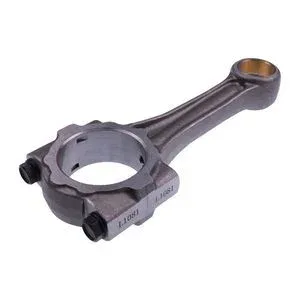
View Details<p><strong>1G924-22014 Connecting Rod</strong> for Kubota V2003, V2203, V2403 engines — high-strength alloy steel replacement for heavy-duty rebuild applications.</p> <ul> <li>Cross-reference interchange: 1G924-22013, 1G924-22012, 1G924-22010</li> <li>Matched con-rod bearing selection required based on crankshaft journal grade (STD or undersize) from prior machining history</li> <li>Root-cause diagnosis recommended: bent rod or spun bearing often traces to oil starvation or cooling faults that must be corrected alongside replacement</li> </ul> <p>Dimensional grades confirmed against engine rebuild history before dispatch.</p>
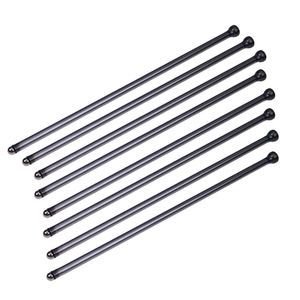
View Details<p>Stop downtime from bent or worn push rods — these 8pcs CAT 154-1248 push rods deliver OEM-equivalent strength and precision fit for C2.2 and C1.1 engines, so your skid steer or compact track loader stays up and running longer between service intervals.</p> <ul> <li><strong>Exact replacement for CAT 154-1248</strong> — hardened to 58–62 HRC and ground to ±0.005mm straightness tolerance, matching factory specs you can trust</li> <li>Fits critical models: 216B, 226B, 232B, 242B, 239D, 249D, 247B, 257B, 304.5 excavator, and C2.2/C1.1 generator & compactor engines</li> <li>No more cross-referencing guesswork — includes verified compatibility with 3024C, C2.2, and C1.1 engines (not just “similar” builds)</li> <li>Ships same day from Guangzhou warehouse — no waiting weeks for OEM backorders or risking counterfeit imports</li> </ul>
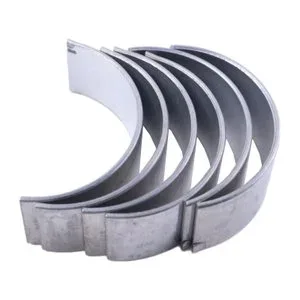
View Details<p><strong>17311-22310 17311-22312 Con Rod Bearing Kit</strong> — high-tin aluminum alloy with steel backing, compatible with Kubota D1803, D1803MDI, and D1803-CR engines across excavators, tractors, and generator sets. Correct oversize grade selection (STD / 0.25 / 0.50) must match crankshaft journal condition after prior rebuilds, and matched main bearings, thrust washers, and overhaul gaskets ensure complete bottom-end system supply. Fits Kubota KX, U, L, M, and MX series machines plus Hyundai HDF/HSL models. - Oversize grade confirmed against crankshaft measurement and rebuild history before dispatch</p>
View DetailsSend us your inquiry and our technical team will verify the part and provide a competitive quote within 24 hours. MOQ starts from 1 piece.
Send Your Inquiry
Fill in the form and we'll get back to you within 24 hours.