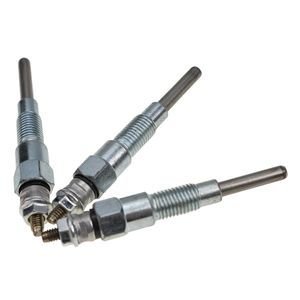
Matched Heat Range — Confirmed against Cummins CM2180 and CM558 ignition modules for each engine serial variant before dispatch.
Technical Specifications
| Parameter |
Value |
| Part Number |
4955850 / 4937472 / 5473010 |
| Product Type |
Spark Plug |
| Cross-Reference |
4955850 (reference only), 4937472 (reference only), 5473010 (reference only) |
| Engine Fitment |
C GAS PLUS CM556, C8.3 G, ISB5.9G CM2180, ISC8.3 G CM2180, ISC8.3 G CM2180 C101, ISL G CM2180, L GAS PLUS CM556, L9N CM2380 L124B, QSL9 G CM558 |
| Brand Compatibility |
Cummins |
| Electrode Material |
Iridium-enhanced center electrode, nickel-alloy ground electrode |
| Gap Tolerance |
0.028–0.031 in / 0.7–0.8 mm |
| Dielectric Strength |
Above 40 kV |
| Thread Specification |
14 mm × 1.25 mm |
| Seal Design |
Triple-seal |
| Insulator Standard |
SAE J551 |
| Condition |
New Aftermarket |
| Warranty |
3–12 months against manufacturing defects |
| MOQ |
1 piece |
Application Suitability
| Engine System |
Related Components |
| Ignition System |
Ignition coils, coil boots, ignition wiring harness |
| Fuel Delivery |
Gas pressure regulator, fuel filter, mixer assembly |
| Emission Control |
Catalytic converter, oxygen sensor, EGR valve |
| Engine Management |
CM2180 / CM558 control module, knock sensor |
| Cylinder Assembly |
Pistons, rings, liners — especially after prior rebuild |
Why the Wrong Spark Plug for Cummins Gas Engine Applications Fails the Entire Ignition System
A misfire is rarely just a plug problem — it is the ignition system telling you something upstream is wrong.
When a workshop installs a spark plug with an incorrect heat range on a Cummins natural gas engine, the symptom appears within hours: lean misfire codes, elevated exhaust gas temperature on one cylinder, and eventually catalyst degradation from unburned fuel washdown. I have watched repair facilities in Southeast Asian mining operations replace plug after plug without ever checking whether the coil boot was carbon-tracked or whether the gas mixer was delivering the correct air-fuel ratio [NEED_CITE: natural gas engine ignition system diagnostic procedures]. The Cummins Gas Engine Spark Plug replacement you install must match the control module's impedance expectations, or the system will continue throwing faults regardless of how many sets you change.

Matching the Spark Plug to the Ignition Control Module
Every Cummins gas platform — from the ISB5.9G CM2180 to the QSL9 G CM558 — runs a specific ignition strategy that expects a defined spark plug impedance and heat range. Installing a plug outside that window causes the control module to register inconsistent ion-sense feedback, triggering phantom misfire codes that lead technicians down the wrong diagnostic path. A correct Cummins Gas Engine Spark Plug replacement resolves these false faults by restoring the expected electrical signature across the ignition circuit.
System-Level Diagnosis Before Plug Replacement
Before ordering a replacement set, inspect the root cause that degraded the original plugs. Carbon-fouled electrodes suggest a rich mixture or oil consumption from worn piston rings. Eroded center electrodes beyond normal gap growth point to excessive combustion temperatures, often caused by a failing coolant system or incorrect ignition timing. Addressing only the Spark Plug for Cummins Gas Engine applications without correcting the underlying condition guarantees early repeat failure [NEED_CITE: cumulative effect of unresolved root causes on ignition component service life]. In my years supporting gas engine fleets at Indonesian mine sites, I have seen complete ignition overhauls succeed where single-component swaps failed repeatedly.
Gap, Electrode, and Seal — How Specifications Translate to Combustion
The 0.028–0.031 inch gap tolerance is not arbitrary. Cummins gas engines operate leaner mixtures than diesel equivalents, demanding a precise spark kernel to initiate stable combustion. The iridium-enhanced center electrode resists erosion across extended service intervals, maintaining gap consistency where a standard nickel electrode would widen and weaken the spark. The triple-seal design prevents combustion gas from leaking into the plug well, which would otherwise carbon-track the coil boot and cause secondary misfires. Dielectric strength above 40 kV ensures reliable firing under the high cylinder pressures typical of turbocharged natural gas engines in load-cycling applications like quarry haul trucks and landfill compactors [NEED_CITE: dielectric requirements for turbocharged natural gas ignition systems].
The Cost of Skipping the System Check
Installing a mismatched Spark Plug for Cummins Gas Engine applications does more than cause a misfire. Unburned fuel from a lean miss passes directly into the exhaust catalyst, raising substrate temperatures until the precious-metal coating degrades. A single neglected cylinder can destroy a catalyst assembly that costs many times the price of an ignition service. Repair facilities that treat plug replacement as a standalone task — without verifying coil output, boot condition, and fuel mixture — absorb repeat warranty claims and lose fleet operator confidence [NEED_CITE: catalytic converter failure caused by ignition misfire in heavy-duty gas engines]. The cumulative downtime from repeated diagnosis, re-teardown, and re-testing far exceeds the time spent on a proper system-level inspection the first time.
Why Source This Cummins Gas Engine Spark Plug Replacement Through XUNPO
Our own production lines and qualified sourced supply operate under a single warranty and a single account, so you manage one relationship whether you order six plugs or a full ignition overhaul kit. We stock across eight core categories, meaning ignition coils, coil boots, gaskets, and seal kits ship in the same consignment as the plugs themselves. Minimum order is one piece — no MOQ barrier when you need a single plug for bench verification before committing to a fleet-sized order. Part identification works from the part number, engine serial plate photograph, or even a worn nameplate image. Our technical team confirms the correct variant for your specific CM2180, CM558, or CM2380 control module before the order ships, and we offer sample supply so you can gap-check and resistance-test on your bench before bulk commitment.
Documentation & Verification
- Commercial invoice listing engine model and spark plug cross-reference numbers for customs clearance
- Fitment sheet confirming CM2180 or CM558 module compatibility with reference-only OEM numbers
- Quality inspection record with measured resistance and dielectric strength test results
- Warranty terms covering manufacturing defects for the stated service period
- Packing photographs showing triple-seal plugs individually protected before crating
- HS code classification and export documentation support for natural gas engine parts
Installation & Rebuild Sequence
- Clean the plug well thoroughly before extraction to prevent debris from entering the combustion chamber
- Verify gap on each Spark Plug for Cummins Gas Engine applications with a feeler gauge before installation
- Apply the specified anti-seize compound to the 14 mm × 1.25 mm threads to prevent galling in the aluminum head
- Torque to engine service manual specification — over-torque cracks the ceramic insulator at the seal seat
- Inspect and replace coil boots showing any carbon tracking or cracking alongside the plug service
- Run the engine at idle for the first ten minutes and monitor individual cylinder exhaust temperatures for balance
Request a Fitment-Verified Quote
Provide your engine model designation (e.g., ISL G CM2180 or QSL9 G CM558), engine serial number, and any prior rebuild history so we can confirm the correct plug variant and advise on matched ignition system components. If your engine has undergone bore work or piston replacement, share the oversize specification — it affects combustion chamber geometry and may shift the optimal heat range. We will return a verified cross-reference match and a consolidated quote covering the plugs plus any adjacent ignition or gasket items your overhaul requires.
Frequently Asked Questions
Q: How do I confirm the correct spark plug variant for my specific Cummins gas engine serial?
A: Provide the full engine model and control module designation, such as ISL G CM2180 versus QSL9 G CM558. We cross-reference your serial number against the applicable variant table to confirm the correct heat range and impedance match, then share the verification sheet before you commit to the order.
Q: What other ignition system components should I inspect when replacing spark plugs?
A: Inspect coil boots for carbon tracking, ignition wires for cracking or resistance drift, and the coil itself for output degradation. Check the gas mixer and fuel pressure regulator, because mixture faults degrade plugs prematurely. A system-level check prevents repeat failure.
Q: My engine has had a prior rebuild — does that change the plug specification I need?
A: Yes, it can. If the rebuild involved oversize pistons or altered compression ratio, the combustion chamber temperature profile shifts, potentially requiring a different heat range. Share your rebuild records so we can confirm the correct specification.
Q: Can I get a sample plug for bench gap and resistance verification before ordering bulk?
A: Yes. We supply single-piece samples so your workshop can measure gap tolerance, verify resistance, and confirm thread fitment on the actual engine head before committing to a fleet-quantity order. Minimum order is one piece.
Q: What diagnostic steps should I take before replacing a plug that shows unusual wear patterns?
A: Examine the wear pattern: carbon fouling indicates rich mixture or oil consumption, while white blistered insulators suggest lean conditions or cooling faults. Check cylinder compression, coil output, and fuel pressure before replacing plugs to address the root cause rather than the symptom.