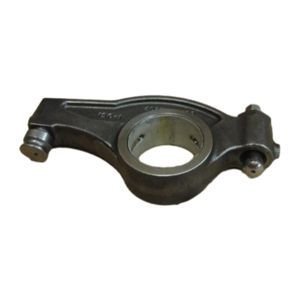
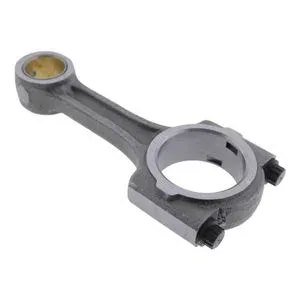
System-Level Match — Every QSK60 rocker lever is verified against engine serial prefix and valve train variant before dispatch.
Technical Specifications
| Parameter |
Value |
| Part Number |
4065636 |
| Cross-Reference |
4065636 (reference only) |
| Product Type |
Rocker Arm |
| Machine Fitment |
Cummins K19, QSK19 CM500, QSK19G, QSK45 CM500, QSK60 CM2150, CM2250, CM2350 series |
| Material |
42CrMo alloy steel |
| Surface Treatment |
Black oxide coating |
| Condition |
New Aftermarket |
| Warranty |
3–12 months against manufacturing defects |
| MOQ |
1 piece |
Application Suitability
| Engine System |
Related Components |
| Valve Train |
Push rods, valve bridges, camshaft followers |
| Cylinder Head Assembly |
Valve stems, rotators, springs, and keepers |
| Lubrication Feed |
Rocker shaft oil passages and feed tubes |
| Emission Control |
Exhaust valve actuation geometry |
The Root Cause is Rarely Just the Rocker Arm Itself
Replacing a rocker lever without diagnosing the failure origin guarantees a repeat failure within the first service interval.
When a rocker arm fractures or shows abnormal wear on the valve bridge contact pad, the root cause usually lives elsewhere in the valve train. Push rod wear alters the geometry of force transfer, starving the rocker pivot of oil causes localized scoring, and a previous rebuild that mixed oversize grades creates inherited misalignment. [NEED_CITE: diesel engine valve train failure root cause analysis] We have pulled rocker arms from K19 engines in Indonesian mining sites that failed because the adjacent push rod had bent slightly, changing the load angle on the lever tip.

Valve Train Geometry and Cumulative Tolerance Stack-Up
The Cummins K19 and QSK60 valve trains rely on precise geometry from the cam lobe through the follower, push rod, and into this rocker arm 4065636 engine rebuild component. When any link in that chain wears beyond tolerance, the rocker arm absorbs the consequence as abnormal contact stress on its nose or pivot bushing.
Matching Grade and Oversize Across a Rebuild Set
If the engine has been rebuilt previously, the valve train may already contain oversize or undersize components. A new standard-grade rocker lever fitted into a train that already runs oversize push rods will not achieve correct clearance. [NEED_CITE: engine rebuild tolerance stack and oversize component matching] The entire train must be measured and matched before the new rocker arm is installed.
Why 42CrMo Alloy Steel Matters for Heavy-Duty Valve Trains
The 42CrMo alloy steel used in this component provides the fatigue strength and surface hardness required for continuous-duty applications such as marine gensets and open-pit mining shovels. Black oxide coating provides baseline corrosion protection during storage and initial break-in. The material must resist contact fatigue at the valve bridge pad while maintaining dimensional stability at sustained elevated temperatures found in QSK60 CM2150 and CM2350 series engines. [NEED_CITE: 42CrMo alloy steel mechanical properties for valve train applications]
The Cost of Skipping System-Level Diagnosis
Fitting a new rocker arm into a valve train where the underlying fault remains unresolved leads to repeat failure. The replacement part inherits the wear pattern that destroyed the original. In field conditions, this means a second teardown, a second set of gaskets, and machine downtime that compounds against the production schedule. [NEED_CITE: cost of repeat valve train failure in heavy equipment]
Why Procurement Verification Matters
This supplier supports system-level matching by verifying engine serial prefix against valve train variant before dispatch. Components are sourced and produced under a single warranty account covering both self-produced and qualified partner lines. A single piece can be ordered for fitment confirmation before a full overhaul kit is committed. Technical staff can cross-reference superseded numbers and confirm compatibility against engine build records.
Documentation & Verification
- Commercial invoice listing part number 4065636 with applicable HS code.
- Cross-reference sheet noting reference only for OEM interchange numbers.
- Dimensional inspection record covering pivot bore, nose radius, and pad contact surface.
- Warranty terms specifying coverage for manufacturing defects.
- Packing photographs showing foam cushioning and carton reinforcement.
Installation & Rebuild Sequence
- Verify pivot bushing inner diameter matches rocker shaft journal before assembly.
- Clean all oil feed passages in the rocker shaft and cylinder head galleries.
- Check push rod ball end and rocker cup for pitting before reusing adjacent components.
- Apply assembly lubricant to the valve bridge contact pad prior to first rotation.
- Set valve clearance cold per engine manual, then recheck after initial run-in.
Send Your Engine Build Data for Accurate Quoting
Provide your engine model, serial number prefix, and any previous overhaul records so we can confirm valve train variant and grade requirements. Include the nameplate image if the serial number is unclear. Our technical team will return a cross-reference verification and component compatibility confirmation.
Frequently Asked Questions
Q: What other valve train components should be inspected when replacing the rocker arm?
A: Inspect the corresponding push rod for straightness and ball-end wear, the valve bridge for flatness and guide wear, and the rocker shaft journal for scoring. Oil feed passages must be clear. If any adjacent component shows wear beyond tolerance, it should be replaced as a matched set to prevent inherited failure in the new rocker arm.
Q: How do QSK60 sub-model variants affect rocker arm specifications?
A: The CM2150, CM2250, and CM2350 sub-models have different valve train geometries and may require variant-specific components. The engine serial number prefix is required to confirm which variant applies. Providing this at the quoting stage prevents receiving a part that fits the block but not the specific valve train configuration.
Q: Is this rocker arm supplied as part of a complete overhaul kit?
A: It can be supplied individually for single-component replacement or as part of a matched valve train set that includes push rods, bridges, and related hardware. Supplying as a matched set ensures all components share the same tolerance grade and eliminates the risk of mixed-grade assembly.
Q: What caused the original rocker arm to fail?
A: Common root causes include lubrication starvation from blocked oil passages, push rod misalignment transferring angular load to the lever nose, or thermal overload from exhaust valve actuation under sustained high-load operation. Identifying the cause before fitting the replacement prevents the new part from failing prematurely.
Q: How do I confirm my exact engine build from the serial number?
A: Provide the full engine serial number from the nameplate. Our technical team cross-references this against build records to confirm valve train variant, component grade, and any superseded part numbers. A clear photograph of the nameplate is sufficient if the stamping is worn or painted over.