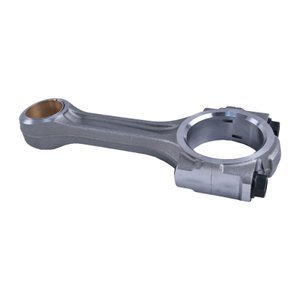
Matched Valve Train Sets — Rocker arm variants confirmed against engine serial before dispatch to prevent tolerance mismatch during Cummins 855/N14 overhaul.
Technical Specifications
| Parameter |
Value |
| Part Number |
3052170 |
| Product Type |
Rocker Arm |
| Cross-Reference |
3052170rx, 3047479 (for identification purposes) |
| Machine Fitment |
NT855, N14, NH855, G855, NTA855A, CM558, 6810, 6910 |
| Brand Compatibility |
Compatible with Cummins and John Deere engine platforms |
| Condition |
New Aftermarket |
| Standard |
ISO 9001 |
| Warranty |
3-12 months against manufacturing defects |
| MOQ |
1 piece |
Application Suitability
| Engine System |
Related Components |
| Valve Train Actuation |
Pushrods, valve stems, camshaft lobes |
| Cylinder Head Overhaul |
Valve seals, head gasket, injector sleeves |
| Top-End Rebuild Kit |
Rocker shaft assembly, adjusting screws, lock nuts |
| Emission & Exhaust Interface |
Exhaust valves, crossheads, valve rotators |
Why Rocker Arm Failures Demand System-Level Diagnosis
Replacing a worn rocker arm without tracing the root cause invites repeat failure within the first few hundred hours.
In Shandong engine rebuild bays, I have torn down freshly overhauled Cummins NT855 and N14 heads only to find the new rocker arm already pitted on the valve contact face. The pushrod was slightly bent from a prior over-speed event, transferring off-axis loading straight into the rocker pivot. [NEED_CITE: valve train misalignment failure modes in heavy-duty diesel engines] A rocker arm assembly engine overhaul rebuild must therefore include pushrod straightness checks, cam lobe profile inspection, and valve clearance verification before the new components are fitted. Ignoring these adjacent variables turns a planned rebuild into a cycle of repeated teardowns and warranty disputes.

Positioning the Rocker Arm Within the Valve Train System
The rocker arm sits at the top of a force-transmission chain that begins at the camshaft and ends at the valve face. In Cummins 855 and N14 families, this component translates pushrod lift into the precise valve opening event required for intake and exhaust timing. A rocker arm assembly engine overhaul rebuild should therefore treat this part as one node in a larger kinematic loop. When one node degrades, the load redistributes to adjacent surfaces, accelerating wear on pushrod tips and valve stem caps.
Engine Serial Variants and Oversize Implications
Within the NT855 and N14 engine families, production changes across serial ranges altered rocker shaft diameter, adjusting screw thread pitch, and valve bridge configuration. An early-production G855 may require a different rocker arm profile than a later N14, even though both share the same base displacement. [NEED_CITE: Cummins engine serial range variant identification for overhaul parts] Ordering by engine serial number, not just model designation, prevents receiving a component that physically mounts but produces incorrect valve geometry. Previous rebuilds may also have introduced non-standard clearances that must be accounted for when selecting replacement components.
Contact Surface Precision and Thermal Stability
The pivot bore and valve-stem contact pad on this rocker arm assembly engine overhaul rebuild component are finished to maintain dimensional stability under the thermal cycling typical of continuous heavy-load operation in mining trucks and marine vessels. Heat-treated contact surfaces resist spalling when valve spring forces peak during high-RPM operation. Precision-machined pivot interfaces support correct valve clearance adjustment, which in turn reduces parasitic loading on the camshaft and pushrod. Proper surface geometry here directly influences how evenly the valve seats, affecting compression and combustion efficiency across the cylinder head.
The Hidden Cost of Skipping Root-Cause Inspection
I once saw a workshop replace all six rocker arms on an NH855 without checking the camshaft. The engine returned with valve train noise in under a month — the worn cam lobe on cylinder three was hammering every new component above it. [NEED_CITE: camshaft lobe wear propagation effects on valve train components] When a rocker arm fails prematurely, the fault usually lives somewhere else in the system. Treating the symptom rather than the cause leads to repeated teardowns, wasted gasket sets, and machine downtime that compounds with each return visit to the bench.
Why Source This Rocker Arm Here
Selected part lines are produced in our own facility, with the remainder sourced from ISO-certified manufacturing partners — both carry identical QC and warranty terms, so a mixed-order valve train kit arrives under one accountability. Eight core categories mean the rocker arms, pushrods, seals, and head gaskets for a complete N14 top-end job ship as one consignment. Minimum order starts at one piece, allowing emergency single-cylinder repairs without forcing a full-set purchase. The technical team verifies compatibility by engine serial number and can confirm grade and variant before bulk commitment. Guangzhou warehouse stock enables fast dispatch on common items, and cross-reference verification covers superseded and alternate numbers to catch catalog errors before the box ships.
Documentation & Verification
- Commercial invoice lists each rocker arm variant with matching engine serial reference
- Cross-reference sheet notes 3052170, 3052170rx, 3047479 as interchange reference only
- Quality inspection record covers pivot bore diameter and contact surface finish
- Warranty terms specify coverage period and manufacturing-defect conditions
- Packing photographs show rocker arms individually protected before crating
- HS code and customs documentation support included for cross-border shipment
Installation & Rebuild Sequence
- Clean cylinder head mating surfaces thoroughly before mounting rocker shaft assembly
- Verify pushrod straightness and tip condition prior to rocker arm installation
- Torque rocker shaft bolts to specification in the prescribed sequence
- Set valve clearance cold, then recheck after first heat cycle and break-in run
- Inspect valve contact pattern after initial run to confirm correct rocker geometry
Requesting the Right Configuration
To confirm the correct rocker arm variant for your Cummins or John Deere engine, provide the engine model, serial number, and any known rebuild history. If the engine has undergone previous overhauls, note whether oversize or undersize components were installed. Photographs of the existing rocker arm and nameplate help resolve ambiguity between serial-range variants. This information allows the technical team to match the component to your specific engine build before dispatch.
Frequently Asked Questions
Q: What other valve train components should be inspected when replacing rocker arms?
A: Inspect pushrod straightness, camshaft lobe profile, valve stem cap condition, and rocker shaft bore wear. Off-axis loading from a bent pushrod or worn cam lobe transfers directly into the new rocker arm, causing premature contact surface failure. A complete valve train inspection prevents repeat teardowns and ensures the rocker arm assembly engine overhaul rebuild addresses the system fault, not just the visible damage.
Q: How do engine serial variants within NT855/N14 affect rocker arm compatibility?
A: Production changes across serial ranges can alter rocker shaft diameter, adjusting screw thread, and valve bridge configuration. Two engines sharing the same model designation may require different rocker arm profiles. Verification by engine serial number — not model alone — ensures correct fitment and prevents installing a component that mounts but produces incorrect valve geometry during operation.
Q: What root causes lead to premature rocker arm failure beyond normal wear?
A: Common causes include pushrod misalignment from prior over-speed events, worn camshaft lobes generating irregular lift profiles, incorrect valve clearance settings creating impact loading, and contaminated lubrication accelerating pivot bore wear. Diagnosing these system-level faults before installing new components prevents the replacement rocker arm from inheriting the same destructive conditions that destroyed the original.
Q: Can I order a matched set of rocker arms, pushrods, and valve seals together?
A: Yes. Consolidating valve train components into a single order ensures compatibility across the entire cylinder head and avoids split-shipment delays. The matched set ships under one warranty and one quality inspection record, so every component in the rocker arm assembly engine overhaul rebuild is traceable and verified against the same engine serial reference.
Q: How do I confirm the correct rocker arm variant for my specific engine build?
A: Provide the engine model, full serial number, and details of any previous rebuilds including oversize or undersize component usage. Photographs of the existing rocker arm, nameplate, or cylinder head casting help resolve ambiguity. The technical team cross-references this data against variant tables to supply the exact configuration your engine requires.