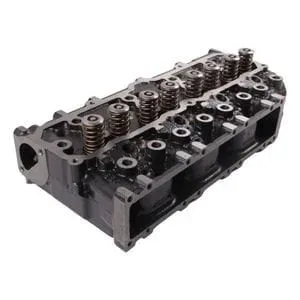
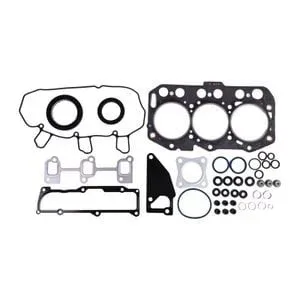
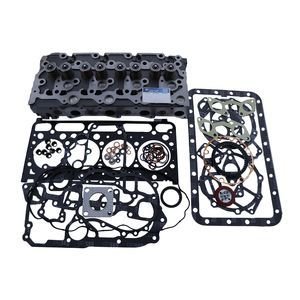
Matched Sealing System — Every gasket in this kit cross-verified against Shibaura N844L and N844LT build variants before dispatch, so the turbo oil return seal is not missing when the engine is an LT.
Technical Specifications
| Parameter |
Value |
| Product Type |
Overhaul Gasket Kit |
| Engine Compatibility |
Shibaura N844L, N844LT |
| Engine Displacement |
2.2L |
| Cylinder Head Gasket Type |
Multi-layer steel (MLS), 0.3mm stainless-steel layers with elastomer coating |
| Intake/Exhaust Manifold Gaskets |
Embossed steel carriers |
| Oil Pan Gasket Material |
Nitrile-butadiene rubber (NBR) |
| Oil Pan Gasket Temperature Rating |
Continuous 110°C operation |
| Rubber Components Standard |
SAE J200 |
| Condition |
New Aftermarket |
| Warranty |
6 months against manufacturing defects |
| Machine Fitment |
L170, LS170, C175, L175, LS175, L215, L218, L220, LX665, SR160, SR175, SV185, TLT30, TLT30D |
| Brand Compatibility |
Compatible with CASE, JCB, New Holland, Shibaura equipment |
| Standards |
ISO 9001, ISO 4546, SAE J200 |
Application Suitability
| Engine System |
Related Components |
| Cylinder head sealing |
Head bolts, valve stem seals, injector sleeve O-rings |
| Intake and exhaust manifold |
Manifold studs and nuts, turbo oil feed and return lines (N844LT) |
| Crankcase and oil pan |
Oil pan bolts with integrated washers, oil pickup tube gasket |
| Front and rear crankshaft |
Front and rear main seals, timing cover gasket |
| Coolant circuit interfaces |
Thermostat housing gasket, water pump mounting gasket |
Why Gasket Kits Arrive Incomplete for N844L and N844LT Rebuilds
An overhaul gasket kit for engine rebuild work on these 2.2-liter platforms often ships missing the turbo-specific seals that only the N844LT requires — or it includes a naturally aspirated head gasket that cannot handle the combustion pressures of the turbocharged variant. The result is a block sitting open on the shop floor while a second order is placed and shipped.
Confirming the exact engine serial variant before the kit leaves the warehouse eliminates the second teardown risk entirely.
In the Pearl River Delta warehouse where I spent years watching rebuilds stall, a missing turbo oil return flange gasket once held a New Holland L220 skid steer out of service for an entire shift cycle. The base architecture of the N844L and N844LT is nearly identical, but the turbocharged variant introduces sealing interfaces at the oil drain, the intake plenum, and the exhaust outlet that a standard N844L kit simply does not address [NEED_CITE: Shibaura N844L versus N844LT turbo sealing interface differences]. Rebuild shops quoting a full overhaul need the complete picture before the block is stripped.

System-Level Sealing Across the 2.2L Cylinder and Crankcase
This overhaul gasket kit for engine rebuild applications covers every sealing interface from the cylinder head down to the oil pan sump on the Shibaura N844L and N844LT family. The cylinder head gasket, manifold gaskets, and crankcase seals are engineered to work as a matched set — meaning their material responses to thermal cycling are coordinated rather than specified in isolation.
When a head gasket and a manifold gasket expand at different rates under sustained load, the clamping force distribution across the head bolts shifts, creating localized leak paths. Sourcing all cylinder and crankcase gaskets from one matched kit removes that variable from the rebuild equation.
Serial Variant Verification and Dimensional Grade Confirmation
The N844LT adds a turbocharger oil feed seal, a turbo oil drain flange gasket, and a revised exhaust manifold gasket with a higher temperature rating than the naturally aspirated N844L equivalent. Ordering the wrong variant means the turbo sealing interfaces are either absent or substituted with components rated for lower thermal stress [NEED_CITE: diesel engine turbocharger oil sealing requirements under continuous load].
Beyond variant differences, a previous rebuild may have altered the deck height or head surface flatness of the block. When those surfaces have been machined, a standard-thickness head gasket may no longer maintain proper clamping geometry. Confirming whether the block is at factory specification or has been skimmed in a prior overhaul determines which gasket thickness is required for reliable sealing.
Material Selection Across the Gasket Set
The multi-layer steel cylinder head gasket uses 0.3mm stainless-steel layers with an elastomer coating. The steel layers provide structural rigidity to maintain clamping force as the aluminum head and cast-iron block expand at different rates during warm-up and cool-down cycles. The elastomer coating fills microscopic surface irregularities that machining leaves on both the deck and head faces.
The embossed steel carriers on the intake and exhaust manifold gaskets resist warping when the manifold bolts are torqued against uneven flange surfaces — a common issue on machines that have seen multiple heat cycles in quarry or demolition environments. The NBR oil pan gasket is rated for continuous 110°C operation, matching the thermal profile of the sump area where oil temperatures concentrate during sustained loader cycles. Rubber components throughout the kit comply with SAE J200, ensuring resistance to both engine oil and coolant formulations used in this engine family [NEED_CITE: SAE J200 rubber classification for automotive and industrial fluid sealing].
The Cost of a Mismatched Overhaul Kit
A head gasket that is dimensionally correct but materially underspecified for the N844LT's turbo combustion pressures will fail at the fire ring within the first few hundred hours. By that point, the machine has been returned to the customer, and the failure becomes a warranty claim rather than a controlled shop repair.
An oil pan gasket made from a generic rubber compound rather than NBR may harden and crack within a single season of operation in a high-ambient-temperature quarry environment, leading to oil loss that the operator attributes to a main seal failure [NEED_CITE: nitrile rubber versus generic elastomer degradation in high-temperature sump applications]. Misdiagnosis leads to pulling the engine a second time for a problem that a correctly specified gasket would have prevented.
Why Rebuild Shops Source This Kit Through One Account
The gasket kit is verified against the specific N844L or N844LT serial variant before it leaves the Guangzhou warehouse, not after it arrives at the rebuild bay. Self-produced gasket lines and sourced components from qualified partners carry the same inspection protocol and the same six-month warranty, so there is no quality gap between items in the kit.
A single-piece minimum order means a shop doing one emergency rebuild does not have to justify a bulk purchase. The technical team reviews the engine serial number and any documented rebuild history to confirm whether standard or revised gasket dimensions are required. Cross-reference verification covers superseded part numbers that may appear on older service manuals but no longer match current production configurations. Sample kits are available for fitment confirmation on a spare block before a shop commits to stocking multiple units for a compact loader fleet.
Documentation & Verification
- Commercial invoice listing each gasket component by position and quantity for customs and receiving checks
- Fitment sheet mapping each gasket to its engine sealing interface, marked as cross-reference only for OEM number identification
- Dimensional inspection record showing head gasket layer count and thickness verification against specification
- Six-month warranty covering manufacturing defects across all gasket components in the kit
- Pre-dispatch packing photographs confirming complete kit contents before crate closure
- HS code guidance for gasket kit classification at destination customs
Installation & Rebuild Sequence
- Clean all mating surfaces to bare metal before placing the MLS head gasket — elastomer coating requires uncontaminated contact surfaces
- Verify head bolt stretch is within specification before torquing, as reused stretched bolts will not maintain clamping force on the MLS layers
- Install embossed manifold gaskets with the embossed side facing the cylinder head to ensure proper combustion seal
- Apply no sealant to the NBR oil pan gasket unless the service manual specifies it — the material is designed to seal dry against machined surfaces
- Confirm turbo oil drain flange gasket orientation on N844LT variants before tightening, as reversed installation blocks oil return
- Run initial break-in at moderate load for the first operating cycle to allow elastomer coatings to seat under controlled thermal expansion
Request a Kit Matched to Your Engine Build
Provide the engine model designation (N844L or N844LT), the engine serial number from the block nameplate, and any documented history of prior machining or rebuild work. This information allows the technical team to confirm variant-specific gasket inclusion and dimensional grade before the kit is assembled and dispatched.
Frequently Asked Questions
Q: What exactly is included in this overhaul gasket kit for the N844L versus the N844LT?
A: The N844L kit covers all naturally aspirated sealing interfaces from head to oil pan. The N844LT kit adds the turbocharger oil feed seal, turbo oil drain flange gasket, and a higher-temperature exhaust manifold gasket rated for turbo back-pressure conditions. Both kits include the MLS head gasket, manifold gaskets, oil pan gasket, and all crankcase seals required for complete reassembly.
Q: My engine was previously rebuilt — how do I confirm the gasket dimensions still match?
A: Provide the engine serial number and any records of head or deck machining from the previous rebuild. If the block or head has been skimmed, a standard-thickness head gasket may no longer maintain correct clamping geometry. The technical team reviews the documented machining history and recommends the appropriate gasket specification for the current surface condition.
Q: Are the manifold gaskets compatible with both naturally aspirated and turbocharged variants?
A: The intake manifold gasket is shared between N844L and N844LT variants. The exhaust manifold gasket differs: the N844LT version uses an embossed steel carrier rated for higher thermal cycling from turbo exhaust gas temperatures. The correct variant is confirmed by engine serial number before the kit ships, preventing installation of an under-specified gasket on a turbocharged engine.
Q: What other engine system components should be inspected alongside the gasket kit during overhaul?
A: Head bolts should be measured for stretch and replaced if beyond specification, as reused bolts cannot maintain clamping force on the MLS head gasket. Valve stem seals, injector sleeve O-rings, and the thermostat housing gasket are typically replaced during a full overhaul. On N844LT variants, inspect the turbo oil feed and return lines for carbon buildup that restricts flow and accelerates gasket degradation.