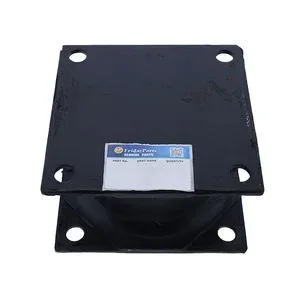
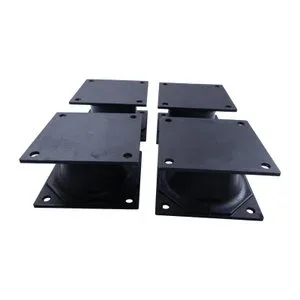
Matched Sets Shipped — Rubber isolators, adjacent fasteners and support brackets verified against the engine serial variant before dispatch.
Technical Specifications
| Parameter |
Value |
| Product Type |
Cushion Damper |
| Cross-Reference (reference only) |
TRSA000008038, SW-180100, SW180100 |
| Machine Fitment |
Stanley HS6000, HS6019, HS6100, HSX6, HS8000, HS11000, HSX11, Bobcat PCF64, Small Vibratory Plate Compactors |
| Material |
Rubber composite with internal reinforcement |
| Operating Temperature |
-20°C to 80°C (-4°F to 176°F) |
| Condition |
New Aftermarket |
| Standard |
ISO 9001 |
| MOQ |
1 piece |
| Warranty |
3-12 months against manufacturing defects |
Application Suitability
| Engine System |
Related Components |
| Engine Mounting & Vibration Isolation |
Engine support brackets, mounting bolts, lock washers, alignment shims |
| Auxiliary Drive & Accessory Mounting |
Belt tensioners, pulley bearings, accessory bracket fasteners |
| Exhaust & Emission Isolation |
Flexible exhaust joints, muffler hangers, heat shield mounts |
| Cooling System Interface |
Radiator cushion pads, fan shroud isolators, coolant hose clamps |
Diagnosing the Root Cause Behind Cushion Damper Failures
Replacing the rubber isolator shock mount engine auxiliary parts rebuild requires investigating the misalignment or overload that destroyed the previous unit.
When a vibratory plate compactor returns to the workshop with a torn shock mount within weeks of the last repair, the rubber itself is rarely the culprit. In my experience moving from parts catalog identification to hands-on technical support, I have seen installers swap the cushion damper on a Stanley HS6000 without checking whether the engine support bracket had bent under impact loading. The new isolator absorbed the same off-axis stress and failed again [NEED_CITE: vibration isolation failure root cause analysis for compact construction equipment]. The rubber isolator shock mount engine auxiliary parts rebuild process must address the system, not just the symptom.
A worn or fatigued cushion damper transmits high-frequency vibration directly into the engine block and chassis frame. That energy travels through every rigid connection, accelerating wear on hydraulic hose fittings, loosening electrical connectors and cracking exhaust manifold gaskets. Treating the shock mount as a standalone consumable ignores the damage already spreading through adjacent systems.

Vibration Isolation Within the Engine Auxiliary Ecosystem
The cushion damper sits at the critical junction between the engine and the machine frame. It is not simply a noise reduction pad. Its primary function is managing dynamic loads generated during asphalt compaction, trench backfilling and foundation work. When the engine auxiliary system is properly isolated, the rubber isolator shock mount engine auxiliary parts rebuild protects sensitive components including fuel injectors, sensor housings and the lubrication circuit from harmonic fatigue.
System-Level Inspection Before Cushion Damper Replacement
Before installing a new cushion damper, the entire engine mounting plane requires inspection. I check bracket flatness with a straight edge, verify that all mounting bolt holes remain round and un-distorted, and confirm that the engine sits level when the old isolators are removed. If one cushion damper has failed while the others show minimal wear, the cause is typically an uneven load path rather than a material defect [NEED_CITE: engine mounting load distribution and alignment verification procedures]. Matching replacement sets across all mounting points prevents the new unit from absorbing disproportionate stress.
Material Behavior Across the Operating Envelope
The rubber composite in this cushion damper maintains elasticity from -20°C to 80°C, covering cold-start winter conditions through sustained operation on hot asphalt surfaces. The internal reinforcement structure handles both compressive loads from engine weight and shear forces generated during vibratory compaction cycles. Material hardness is balanced to isolate high-frequency vibration without allowing excessive engine movement that would strain connected hoses and wiring harnesses. The rubber isolator shock mount engine auxiliary parts rebuild depends on this temperature-stable compound to perform consistently across seasons and job site conditions.
The Hidden Cost of Skipping Adjacent Component Assessment
Replacing only the torn cushion damper while leaving a deformed bracket or fatigued fastener in place almost guarantees a repeat visit. The new rubber isolator shock mount engine auxiliary parts rebuild absorbs the same misaligned forces that destroyed its predecessor, and the machine is back in the shop within weeks. I have documented cases where three consecutive damper replacements were performed before a technician finally measured bracket deflection and corrected the root cause [NEED_CITE: repeat failure patterns in engine mounting systems for vibratory equipment]. The cost of a thorough system inspection is marginal compared to repeated teardowns, lost production hours and compounding damage to nearby hydraulic and electrical connections.
Sourcing Engine Auxiliary Components from a Single Account
Our Guangzhou warehouse stocks cushion dampers for Stanley, Bobcat and Doosan compactors alongside the fasteners, brackets and gaskets that complete the repair. Self-produced lines and qualified sourced supply carry the same QC standards and warranty terms, so a full engine auxiliary rebuild ships under one account. Cross-reference verification covers superseded numbers including TRSA000008038, SW-180100 and SW180100 (for identification purposes), confirming which variant fits a specific engine serial range. Samples are available for fitment confirmation before bulk commitment, and the technical team supports compatibility and grade questions throughout the ordering process.
Documentation & Verification
- Commercial invoice and packing list matching cushion damper quantities and cross-reference numbers
- Part compatibility sheet listing HS6000 through HSX11 variants with reference-only OEM numbers
- Dimensional inspection record covering rubber thickness, mounting hole spacing and hardness reading
- Warranty terms covering manufacturing defects for 3 to 12 months from dispatch date
- Packing photographs showing cushion damper protection and carton labeling before shipment
- HS code and customs documentation support for international engine auxiliary parts orders
Installation & Rebuild Sequence
- Clean the engine mounting surface and bracket faces before positioning the new cushion damper
- Verify mounting bolt hole alignment with a drift pin before inserting any fasteners
- Torque all mounting hardware to specification in a star pattern to distribute load evenly
- Inspect adjacent hydraulic fittings and electrical connectors loosened by previous vibration exposure
- Run the compactor at idle for a break-in period and re-check fastener torque after initial operation
- Record cushion damper condition at each scheduled service interval for predictive replacement planning
Request a System-Level Quotation
Provide your engine model, serial number and any previous rebuild history so we can confirm which cushion damper variant and associated components match your machine. Including photographs of the existing mounting arrangement and any worn nameplates helps our technical team verify fitment accuracy before the order ships.
Frequently Asked Questions
Q: What other engine auxiliary parts should be replaced alongside the cushion damper?
A: During a rubber isolator shock mount engine auxiliary parts rebuild, inspect all mounting bolts, lock washers, support brackets and alignment shims. Fatigued fasteners and distorted brackets transfer uneven loads to the new damper and cause early failure. Replace any hardware showing corrosion, stretch or thread damage as part of the same service event.
Q: Do different production years of the HS6000 use different cushion damper variants?
A: Yes. Engine serial ranges within the HS6000, HSX6 and HSX11 families may use different mounting hole patterns or rubber hardness grades. We verify the correct variant against your engine serial number and cross-reference TRSA000008038 or SW-180100 to confirm interface compatibility before dispatch.
Q: Why does my cushion damper keep tearing within weeks of replacement?
A: Repeated tearing usually indicates bracket misalignment, a bent engine support frame or uneven torque on mounting hardware. The damper absorbs off-axis loads it was not designed to handle. A straight-edge check of the mounting surface and a review of fastener torque values typically reveals the root cause.
Q: Can I order a sample cushion damper to test fitment before committing to a bulk purchase?
A: Sample units are available for fitment verification. Install the sample on one mounting point, run the machine through a normal work cycle and confirm that the rubber isolator shock mount engine auxiliary parts rebuild sits flush without binding. Once fitment is confirmed, proceed with the full set order.
Q: How do I confirm which cross-reference number applies to my machine?
A: Send your machine model, engine serial number and a photograph of any remaining label on the old cushion damper. Our technical team cross-references the numbers against the manufacturer database to confirm whether TRSA000008038, SW-180100 or SW180100 applies to your specific build.