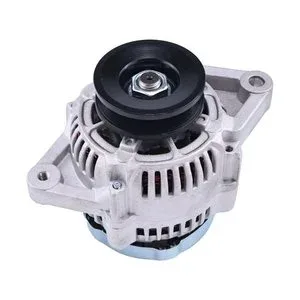
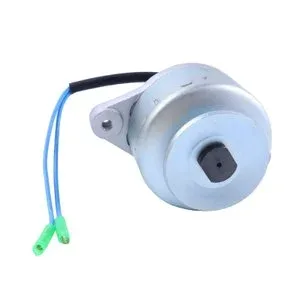
Engine Serial Variants Confirmed — Every 17531-64012 unit ships only after cross-checking your Kubota Z482 or D722 engine serial against bracket and connector variant records.
Technical Specifications
| Parameter |
Value |
| Part Number |
17531-64012 |
| Product Type |
Alternator |
| Cross-Reference |
17531-64012 (reference only), 17531-64010 (reference only), 17531-6401-0 (reference only) |
| Machine Fitment |
J106-AUS, J108-AUS, J310-AUS, Solar 015 |
| Brand Compatibility |
Compatible with Kubota, Doosan engine platforms |
| Electrical Rating |
12V DC, 14A output |
| Stator Winding Insulation |
Class H (180°C) |
| Rectifier Bridge |
Six high-current Schottky diodes, 100V reverse-blocking rating |
| Operating Temperature Range |
-20°C to +85°C |
| Shaft Runout |
≤0.03 mm TIR |
| Mounting Tolerance |
±0.15 mm |
| Bearing Life |
Beyond 5,000 hours |
| Condition |
New Aftermarket |
| Warranty |
6 months against manufacturing defects |
| Minimum Order Quantity |
1 piece |
| Standards |
ISO 9001, SAE J1171 |
Application Suitability
| Engine System |
Related Components |
| Auxiliary charging system (Kubota Z482) |
Belt drive assembly, tensioner pulley, battery terminals |
| Auxiliary charging system (Kubota D722) |
Wiring harness connectors, voltage regulator, drive belt |
| Generator set excitation circuit |
Stator windings, rectifier diodes, rotor slip rings |
| Mobile hydraulic power unit charging |
Battery bank, isolation switch, charge indicator lamp |
Why the Same Alternator Part Number Fails Across Two Engine Builds
An alternator swap alone will not hold if the underlying fault — a worn belt tensioner, corroded harness terminals, or degraded battery cells — is not addressed in the same overhaul cycle. The Kubota Z482 and D722 share the same base alternator identifier, yet the mounting bracket geometry and connector pinout diverge across engine serial ranges, meaning a mismatched unit arrives looking correct but refuses to bolt on or excite properly.
I have seen generator sets on Southeast Asian construction sites sit idle for days because the replacement 12V 14A alternator physically fit the cradle but the excitation plug was one pin off. The crew blamed the part; the real cause was an engine serial variant that swapped the connector type mid-production run. [NEED_CITE: Kubota Z482 and D722 engine serial variant documentation for auxiliary components]
Matching the correct alternator engine rebuild replacement for Kubota Z482 D722 demands more than a part number — it requires the engine build sheet, the serial range, and a verified cross-reference before the unit leaves the warehouse.

The Charging System Lives or Dies as a Set
This alternator belongs to the engine auxiliary charging system, and its replacement should always coincide with a full inspection of the belt drive, tensioner, and pulley alignment. When a generator overhaul is planned, the alternator is one node in a circuit that includes the battery bank, wiring harness, and voltage regulation path. Replacing only the failed component while ignoring adjacent wear points invites a repeat failure within the first hundred hours of the rebuild. [NEED_CITE: engine auxiliary charging system diagnostic sequence for small diesel generator sets]
Serial Variants That Change the Physical Interface
The Z482 and D722 platforms were produced across multiple build phases, and Kubota introduced bracket revisions and connector changes without altering the base alternator designation. A unit stamped 17531-64012 (cross-reference only) on an early-production D722 may carry a two-pin excitation plug, while a later serial uses a three-pin molded connector. Mounting ear spacing can shift by several millimeters between variants. Confirming the engine serial number and bracket profile before ordering prevents the costly cycle of receiving, testing, returning, and re-ordering.
Reading the Specifications That Matter in the Field
The Class H (180°C) stator winding insulation is specified for the thermal cycling typical of stop-start generator duty, where the alternator heats rapidly under load then cools during idle periods. Lower insulation classes degrade prematurely under this profile. The six-diode Schottky rectifier bridge with 100V reverse-blocking rating handles load-dump transients — sudden voltage spikes when a heavily loaded circuit disconnects — that are common when portable generator sets shed and pick up construction site loads. Operating range from -20°C to +85°C covers both cold-morning starts and sustained high-ambient operation in tropical sites. Shaft runout held to ≤0.03 mm TIR protects the bearing from premature wear that would otherwise manifest as a whine or vibration detectable only after the unit is reassembled into the engine bay.
The Hidden Cost of Skipping the Root-Cause Check
When an alternator fails and the replacement is installed without investigating why the original unit died, the new component often inherits the same destructive conditions. A slipping belt causes the alternator to run at partial excitation, overheating the stator. Corroded battery terminals force the alternator to sustain maximum output continuously, exceeding its thermal design envelope. [NEED_CITE: root cause analysis methodology for repeated alternator failure in diesel generator applications] An engine rebuild that addresses the failed part but not the fault pathway leads to a second teardown, a second parts order, and a second round of machine downtime — all traceable to a skipped diagnostic step.
Why Procurement Through This Channel Works
Selected alternator lines are produced in-house while the remainder is sourced from ISO-certified manufacturing partners, and both carry the same quality control and warranty terms. The eight core categories mean a complete generator overhaul — alternator, belt, tensioner, seal kits, filters — ships under one account and one consignment. Orders start at one piece for emergency replacements. The Guangzhou warehouse holds stock on fast-failure electrical items for rapid dispatch. Part identification is confirmed from the part number, machine model, photograph, or nameplate image, and cross-reference verification covers superseded and alternate numbers. Samples are available for fitment confirmation before bulk commitment, which matters when bracket variants differ across engine serials.
Documentation & Verification
- Commercial invoice and packing list referencing 17531-64012 and matched belt-drive SKUs
- Part compatibility sheet noting Z482 versus D722 bracket and connector variants (reference only)
- Quality inspection record covering no-load voltage regulation and full-load thermal rise
- Six-month warranty terms against manufacturing defects with replacement support pathway
- Packing photographs showing alternator cushioning and connector protection before crate closure
- HS code and customs documentation support for cross-border generator parts shipments
Installation & Rebuild Sequence
- Inspect mounting bracket ears and bolt-hole spacing against the old unit before beginning installation of the 14A alternator
- Verify excitation connector pin count and keying match the engine harness; adapt only with documented crossover
- Set belt tension to specification and confirm pulley alignment to prevent shaft runout from exceeding tolerance
- Perform no-load voltage check at idle, then full-load current stability test before returning the generator set to service
- Log alternator serial and engine hours at installation for future overhaul interval tracking
Requesting the Correct Variant for Your Engine
Provide the engine model, serial number, and any previous rebuild history so the correct bracket and connector variant is confirmed before dispatch. If the nameplate is worn or painted over, send a photograph of the existing alternator mounting face and connector. This allows the technical team to cross-reference superseded numbers and verify the matching alternator engine rebuild replacement for Kubota Z482 D722 configuration for your specific unit.
Frequently Asked Questions
Q: What other charging-system components should be replaced alongside the alternator during an overhaul?
A: The belt, tensioner, and battery terminals should be inspected and typically replaced in the same cycle. Corroded harness connectors and degraded wiring insulation also contribute to repeat failures. A system-level approach ensures the new alternator operates within its designed electrical and thermal envelope rather than inheriting the conditions that destroyed its predecessor.
Q: How do Z482 and D722 engine serial variants affect alternator mounting and connector type?
A: Kubota introduced bracket revisions and connector changes across production runs without altering the base part designation. Early and late serials may differ in mounting ear spacing, bolt-hole pattern, and excitation plug pin count. Confirming your specific engine serial number against the variant table prevents receiving a unit that physically resembles the original but will not bolt on or connect properly.
Q: Does the engine overhaul kit include the alternator, or is it ordered separately?
A: Most standard overhaul kits cover internal engine components — pistons, rings, bearings, gaskets — and do not include auxiliary charging system parts. The alternator is typically ordered as a separate line item alongside belt-drive and electrical components. Confirm the kit contents against your rebuild scope to avoid discovering the omission mid-teardown.
Q: What caused the original alternator to fail, and how do I prevent a repeat failure?
A: Common root causes include a slipping or misaligned drive belt, corroded battery connections forcing sustained maximum output, and load-dump transients from abrupt load shedding on generator sets. Addressing these system-level faults during the rebuild — not just swapping the failed unit — prevents the replacement from entering the same destructive operating conditions.
Q: How do I confirm the correct alternator variant when the engine has been rebuilt before?
A: Previous rebuilds may have introduced components from a different serial range or substituted brackets. Send photographs of the current alternator mounting face, connector, and any legible stampings alongside the engine serial number. This allows cross-reference verification against both the original build specification and known substitution patterns.