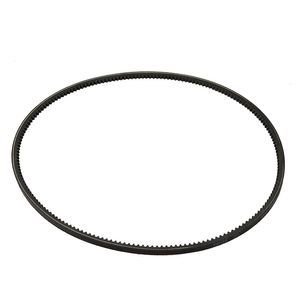
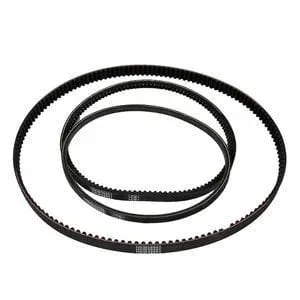
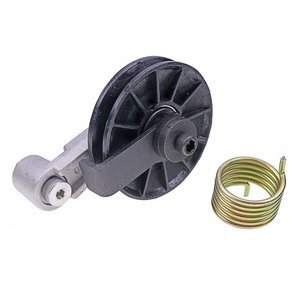
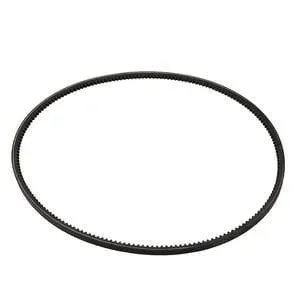
Matched Drive Sets — Every 0117-9565 belt order we dispatch is checked against the engine serial build record to confirm variant-specific pulley and tensioner compatibility, because a belt is only as reliable as the system that tensions it.
Technical Specifications
| Parameter |
Value |
| Part Number |
0117-9565 |
| Product Type |
Belt |
| Cross-Reference |
01179565, 02235179, 2324000890 (reference only) |
| Machine Fitment |
BF4M2011, D2011L03, F2L1011F, F3L1011F, F3L2011, F3M2011, F4L2011 |
| Dimensions |
10 × 1125 mm |
| Top Width |
10 mm |
| Pitch Length |
1125 mm |
| Material |
Chloroprene (CR) rubber with polyester cord reinforcement |
| Temperature Range |
–25°C to +100°C |
| Standard Compliance |
DIN 2215 |
| Condition |
New Aftermarket |
| Warranty |
3–12 months against manufacturing defects |
| MOQ |
1 piece |
Application Suitability
| Engine System |
Related Components |
| Alternator drive circuit |
Alternator bearing, pulley groove, tensioner arm and spring |
| Water pump drive circuit |
Water pump bearing seal, coolant hose clamps adjacent to belt path |
| Air compressor auxiliary drive |
Compressor clutch pulley, mounting bracket alignment |
| Cooling fan drive (where applicable) |
Fan hub bearing, viscous coupling condition, shroud clearance |
Why the Belt Drive System Fails Before the Belt Does
The belt is the symptom, not the cause. A Deutz V-Belt engine replacement that fails within weeks almost always traces back to a worn tensioner spring, glazed pulley grooves, or a seizing accessory bearing — not a defective belt.
Working across job sites in Dubai and Riyadh, I have walked up to machines where the maintenance crew had already changed the belt twice. Each time the new belt shredded within a shift. The real failure was a water pump bearing with enough radial play to push the belt out of alignment under load. Nobody had checked it because the work order only listed a belt. Repeated belt failures in Deutz 1011 and 2011 series engines frequently originate in adjacent components that remain unchecked during a simple swap [NEED_CITE: root cause analysis methodology for belt drive system failures in industrial diesel engines].

How the Belt Drive System Connects to Overhaul Planning
During a full Deutz 1011/2011 engine rebuild, the belt drive system sits at the boundary between the internal rebuild scope and the external accessory scope. If the cylinder head, pistons, and liners are being refreshed but the tensioner and pulleys carry over from a previous service life, the new Deutz V-Belt engine replacement inherits the same misalignment that destroyed the last one. Engine rebuild shops quoting a complete overhaul should treat the belt, tensioner, and driven pulleys as a matched set — refreshing all of them during the same teardown avoids a second disassembly weeks later.
Engine Serial Variants and the Wrong-Length Belt Problem
Within the Deutz 1011 and 2011 families, the same base engine model can ship with different accessory configurations depending on the OEM application — a wheel loader variant may route the belt around an air compressor pulley that a generator-set variant does not have. This changes the required pitch length. We have seen F3L1011F engines where the installed belt was 20 mm longer than spec because a previous rebuild swapped in an alternator bracket from a different variant. Before ordering, confirm the exact engine serial number and accessory layout against the build record, especially on units with documented prior overhauls [NEED_CITE: Deutz 1011 2011 engine serial variant identification and accessory configuration differences].
Reading the Specifications Against Real Operating Conditions
The 10 mm top width and 1125 mm pitch length conform to DIN 2215, which governs the wedge angle and groove contact geometry for narrow V-belts. Correct wedging action depends on the belt sitting at the right depth in the pulley groove — a worn groove allows the belt to bottom out, converting friction drive into a slipping contact that generates heat and accelerates cracking. The chloroprene compound with polyester cord reinforcement is selected for thermal stability across the –25°C to +100°C range. In Middle Eastern engine compartments where ambient air already exceeds 45°C before the engine warms up, the belt compound must resist hardening and lateral cracking through repeated thermal cycles. Chloroprene maintains its flexibility and tension-holding capacity across this range, whereas natural rubber compounds tend to glaze and lose grip.
What Happens When Only the Belt Gets Replaced
Installing a new belt on worn hardware transfers the prior failure mode directly onto the replacement. A tensioner spring that has lost preload allows the belt to flutter under sudden load changes — the alternator spikes when the electrical load shifts, and a loose belt jumps the groove. In quarry crushing plants where Deutz-powered units run continuous shifts, this kind of intermittent slip causes the belt to develop localized heat spots that lead to cord separation. The machine goes down again, the crew orders another belt, and the cycle repeats. The hidden cost is not the belt itself but the unplanned downtime and the labor hours spent on repeat disassembly [NEED_CITE: belt drive system preventive maintenance intervals for heavy-duty diesel applications].
What Makes Sourcing This Part Different Here
Our own production lines and qualified sourcing partners operate under a single account with a single warranty, so whether the belt ships from our Guangzhou facility or a certified partner, the QC terms are identical. We carry stock across eight categories, meaning a Deutz engine rebuild order — pistons, liners, gaskets, seals, and belts — consolidates into one dispatch. Minimum order is one piece, so an emergency single-belt requirement ships without waiting to fill an MOQ. Part identification works from the part number, the engine model, a photograph of the worn belt, or a nameplate image. Our technical team verifies cross-reference numbers against superseded and alternate listings to catch mismatches before shipment, and we supply samples for fitment confirmation when a buyer needs to validate compatibility before committing to bulk.
Documentation & Verification
- Commercial invoice and packing list referencing 0117-9565 and matched drive components
- Belt drive cross-reference sheet covering 01179565, 02235179, 2324000890 (reference only)
- Dimensional inspection record confirming 10 mm top width and 1125 mm pitch length
- Warranty terms covering material and manufacturing defects for 3–12 months
- Packing photographs showing belt condition and protective packaging before dispatch
- HS code and customs documentation for international belt shipments
Installation & Rebuild Sequence
- Inspect all pulley grooves for wear and glazing before fitting the new 10 mm belt
- Verify tensioner arm travel and spring preload against Deutz service specifications
- Route the belt following the exact accessory layout recorded for this engine serial number
- Set tension to spec and re-check after the first 30 minutes of operation
- Confirm alternator, water pump, and compressor bearings show no radial play
- Run the engine at idle then under load, watching for lateral belt migration
Request a System-Level Quote
Provide your Deutz engine model, serial number, and any known rebuild history so we can confirm the correct belt length variant and identify which adjacent drive components should ship together. If the nameplate is worn or painted over, send a photograph and we will work from the machine model and accessory layout to verify compatibility.
Frequently Asked Questions
Q: What other belt drive components should be replaced at the same time as this V-belt?
A: The tensioner arm and spring, all pulleys in the drive path, and any accessory bearing that shows radial play should be evaluated during the same service event. A new belt installed on a worn tensioner or glazed pulley inherits the failure mode that destroyed the previous belt. We recommend treating the entire drive circuit as a matched set during overhaul.
Q: My engine has been rebuilt once before — how do I confirm the correct belt length for the current accessory layout?
A: Send us the engine serial number and a photograph of the current belt routing. Previous rebuilds sometimes swap alternator brackets or compressor mounts from different variants, changing the required pitch length. We cross-check the serial number against the original build record and verify which 1011/2011 variant configuration your engine currently carries.
Q: Are all Deutz F3L1011F engines fitted with the same belt, or do variants exist?
A: Variants exist within the F3L1011F family depending on the OEM application and accessory configuration. A unit equipped with an air compressor uses a different belt routing and potentially a different pitch length than a base configuration. Confirming the exact engine serial number and accessory list is the only reliable way to identify the correct belt specification.
Q: What system-level checks should be done before installing a new belt to prevent early re-failure?
A: Check every driven accessory bearing for radial and axial play, inspect pulley grooves for wear depth and glazing, verify tensioner spring preload and arm travel, and confirm bracket alignment. A belt that fails repeatedly is almost always a symptom of a system-level fault in one of these adjacent components rather than a belt quality issue [NEED_CITE: belt drive diagnostic checklist for diesel engine auxiliary systems].
Q: How do I identify my exact Deutz engine variant when the nameplate is partially illegible?
A: Send us whatever is readable on the nameplate along with photographs of the engine block casting numbers, the accessory layout, and the bell housing pattern. We use these visual identifiers in combination with cross-reference data to narrow down the exact variant and confirm which belt specification matches your engine build.