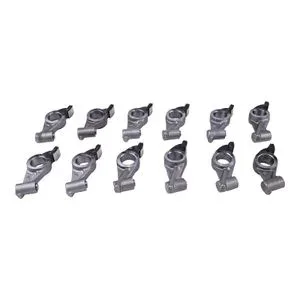
Matched Set Dispatch — Every rocker arm in the 13257-40F06 set ships tolerance-verified as a group, so no single cylinder runs tighter clearance than the rest after a KA24E rebuild.
Technical Specifications
| Parameter |
Value |
| Part Number |
13257-40F06 |
| Product Type |
Rocker Arm |
| Cross-Reference |
1325740F06, 13257-40F07, 13257-40F17, 13257-40F16, 1325740F07, 1325740F17, 1325740F16 (reference only) |
| Machine Fitment |
1989-1997 Pickup (Hardbody) 2.4L, 1989-1992 Stanza 2.4L, 1989-1991 240SX 2.4L, 1990-1995 Axxess 2.4L |
| Engine Compatibility |
2.4L KA24E SOHC 12V |
| Assembly State |
Complete Rocker Arm Set |
| Bearing Clearance |
0.02–0.05 mm |
| Condition |
New Aftermarket |
| Standard |
ISO 9001 |
Application Suitability
| Engine System |
Related Components |
| Valvetrain actuation |
Camshaft lobes, valve stems, rocker shaft, valve springs |
| Cylinder head overhaul |
Head gasket set, valve stem seals, head bolts |
| Lubrication supply |
Oil pump, oil gallery passages, rocker shaft oil feed holes |
| Emission and exhaust |
Valve seat inserts, exhaust manifold gasket |
Why Rebuild Shops See Repeat Rocker Failures Within Weeks
Replacing rockers without tracing the upstream fault guarantees a comeback.
A scored rocker bushing on a KA24E rarely means the rocker itself was the problem. In most teardowns I have walked through, the damage traces back to a starved oil gallery, a worn oil pump that cannot maintain pressure at idle, or valve springs that have sagged past their installed height specification. The rocker arm is simply the component that shows the scar first. Shops that swap the rocker arm set for KA24E engine rebuild without checking these upstream causes end up with the same failure pattern repeating [NEED_CITE: valvetrain lubrication failure root cause analysis in SOHC engines]. The cost is not the part — it is the second teardown, the second head gasket, and the customer who does not call back.

The Valvetrain as a System, Not a Collection of Parts
The KA24E SOHC 12V valvetrain depends on each rocker arm maintaining consistent contact geometry with the camshaft lobe and the valve stem tip. When you replace a single worn rocker among eleven originals, the new unit carries a different wear profile and transfers load unevenly across the shared rocker shaft. A complete Rocker Arm Set for KA24E engine rebuild eliminates that mismatch by putting identical-tolerance components on every cylinder.
Previous Rebuilds Change the Rules
If the engine in front of you has been opened before, the rocker shaft may already be undersized from polishing or the valve stems may sit at a different installed height after a valve job. These shifts alter the effective clearance between the rocker bore and the shaft. Confirming the current dimensional state before ordering prevents receiving a standard set that no longer fits the actual hardware on the bench [NEED_CITE: engine rebuild oversize and undersize component identification practices].
Reading the Specs That Matter
The bearing clearance range of 0.02–0.05 mm defines the oil film thickness between each rocker bushing and the shaft. Too tight, and the rocker seizes when oil is cold and viscous; too loose, and the rocker hammers the shaft at high RPM, accelerating wear on both surfaces. The complete set assembly state means every unit in the box has been checked against the same gauge, so no cylinder runs a different clearance class than its neighbor. This is the tolerance stack-up that piecemeal replacement cannot control.
The Real Cost of a Mismatched Set
When one rocker in a set arrives in a different clearance grade, the affected cylinder develops a ticking noise within the first hundred miles. The customer brings the vehicle back, the head comes off again, and the shop absorbs the labor while the engine sits disassembled waiting for a correct replacement. The downtime compounds because the head gasket is now single-use and must be replaced a second time. Matching tolerances across the full Rocker Arm Set for KA24E engine rebuild avoids this cascade [NEED_CITE: cost of repeat cylinder head removal in light truck service].
What Makes This Supply Chain Different
Selected part lines are produced in-house while the remainder is sourced from ISO 9001 manufacturing partners, both covered under the same warranty terms — so the rocker arms and the gasket kit beside them carry identical accountability. Eight product categories sit under one account, meaning the valvetrain components, overhaul gasket set, and oil pump all ship as a single consignment rather than arriving on different trucks on different days. The minimum order is one piece, so a shop verifying fitment on a single KA24E can order a sample set before committing to shelf stock. Cross-reference verification covers superseded numbers like 13257-40F07 and 13257-40F17, catching variants that copied tables often miss. Technical support is available to confirm clearance grade and engine serial compatibility before the order ships.
Documentation & Verification
- Commercial invoice listing each rocker arm position and quantity per engine bank
- Cross-reference sheet mapping 13257-40F06 to alternate numbers (reference only)
- Dimensional inspection record confirming bearing clearance on every unit in the set
- Warranty terms covering manufacturing defects for three to twelve months
- Packing photographs showing set completeness before crate closure
- HS code and customs documentation for cross-border engine parts shipment
Installation & Rebuild Sequence
- Inspect rocker shaft for scoring and measure diameter before installing the new Rocker Arm Set for KA24E engine rebuild
- Clean all oil gallery passages in the cylinder head to ensure feed holes are unobstructed
- Verify valve stem installed height after any valve job to confirm rocker geometry remains correct
- Torque rocker shaft mounting bolts to specification in the prescribed sequence
- Pre-lube each rocker bushing with assembly oil before sliding onto the shaft
- Run initial break-in at moderate RPM and re-check valve lash after the first heat cycle
Before You Place the Order
Provide the engine code, engine serial number, and any known rebuild history so the correct clearance grade and variant can be confirmed. If the nameplate is missing or the stamping is illegible, a photograph of the existing rocker arm and the cylinder head casting number is enough to verify fitment against the KA24E platform.
Frequently Asked Questions
Q: What other valvetrain components should be replaced alongside the rocker arm set during a rebuild?
A: The rocker shaft should be measured for diameter and surface condition, and replaced if scoring is visible. Valve stem seals, valve springs, and the camshaft lobes that contact the rocker pads should all be inspected. Replacing rockers without refreshing worn springs or a damaged shaft leads to early repeat failure.
Q: Does this set include the rocker shaft, or is it rockers only?
A: This listing covers the complete rocker arm set only. The shaft is a separate line item and must be ordered if replacement is needed. Measure shaft diameter and check for visible wear grooves before deciding whether to reuse the existing shaft or order a new one.
Q: My KA24E has been rebuilt before — how do I confirm the current variant still matches?
A: Provide the engine serial number and describe any previous machine work done to the cylinder head or valve train. Previous valve jobs can alter stem height, and shaft polishing can reduce diameter. We cross-reference these details against known variant differences before confirming the correct set.
Q: What oil system faults typically cause premature rocker arm wear?
A: Clogged oil galleries feeding the rocker shaft, a worn oil pump delivering insufficient pressure at idle, and incorrect oil viscosity all starve the rocker bushings of lubrication. Addressing the upstream cause before installing new rockers prevents the same failure from repeating within weeks.
Q: Can I get a sample set to verify fitment before committing to a bulk order?
A: Yes. The minimum order is one piece, so a rebuild shop can order a single set, confirm fitment on the bench against the actual engine hardware, and then place a larger order with confidence that the tolerance and variant are correct for the fleet being serviced.