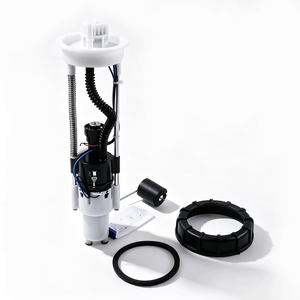
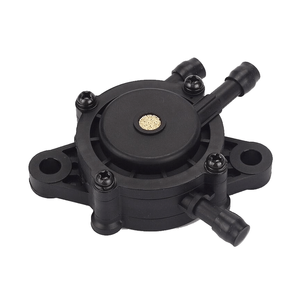
Matched Sets Shipped Together — pressure output, connector rating, and port geometry verified against engine serial variant before dispatch.
Technical Specifications
| Parameter |
Value |
| Part Number |
2521307 |
| Cross-Reference |
2521307 (reference only), 2204852 (reference only) |
| Machine Fitment |
Polaris Ranger 570 Crew Full-Size (2015), Polaris Ranger 570 Full-Size (2015–2019), Polaris Ranger 900 Crew (2014–2015), Polaris Ranger 900 Crew EPS (2014–2015), Polaris Ranger 900 XP (2013–2015), Polaris Ranger Crew 900-5 (2016), Polaris Ranger Crew 900-5 EPS (2016), Polaris Ranger Crew 900-6 (2016), Polaris Ranger Crew 900-6 EPS (2016), Polaris Ranger Crew XP 900 (2017–2019), Polaris Ranger Crew XP 900 EPS (2017–2019), Polaris Ranger XP 900 (2016–2019), Polaris Ranger XP 900 EPS (2019) |
| Condition |
New Aftermarket |
| Pressure Output |
45–55 psi |
| Internal Diaphragm Material |
Nitrile Rubber (NBR) |
| Operating Temperature Range |
-40°C to +120°C |
| Port Material |
Brass |
| Electrical Connector Rating |
IP67 |
| Dimensional Tolerance |
±0.05 mm |
| Integrated Check Valve |
Yes |
| Warranty |
6-month warranty against manufacturing defects |
| MOQ |
1 piece |
| Standards |
ISO 9001, SAE J1128, SAE J1849 |
Application Suitability
| Engine System |
Related Components |
| Fuel Delivery — Polaris Ranger 570 ProStar |
Fuel filter, fuel pressure regulator, injector set, fuel line hose clamps |
| Fuel Delivery — Polaris Ranger 900 ProStar |
Fuel filter, in-tank strainer, fuel rail assembly, ECU fault code scanner |
| Overhaul Support — Lean Misfire Diagnosis |
Fuel pump assembly, injector cleaning kit, fuel line replacement sections |
| Fleet Maintenance — Remote Utility & Quarry Transport |
Matched fuel pump and filter sets for scheduled service intervals |
Why Replacing the Pump Alone Rarely Solves the Root Cause
The failed pump is usually the symptom, not the disease — the upstream restriction or electrical fault that killed it is still waiting to destroy the new one.
When a Fuel Pump Assembly engine rebuild replacement goes in without addressing the fuel filter condition, line integrity, and electrical supply quality, the new unit often fails within weeks. The diaphragm fatigues against the same restriction that destroyed the previous pump [NEED_CITE: fuel system root cause analysis methodology for off-road utility vehicles]. Shops that track warranty return data consistently find that repeat fuel pump failures trace back to unresolved upstream or downstream faults, not defective replacement units. Spending time on the full fuel circuit diagnosis before ordering parts prevents a second teardown.
Where This Pump Sits in the Ranger Fuel Circuit
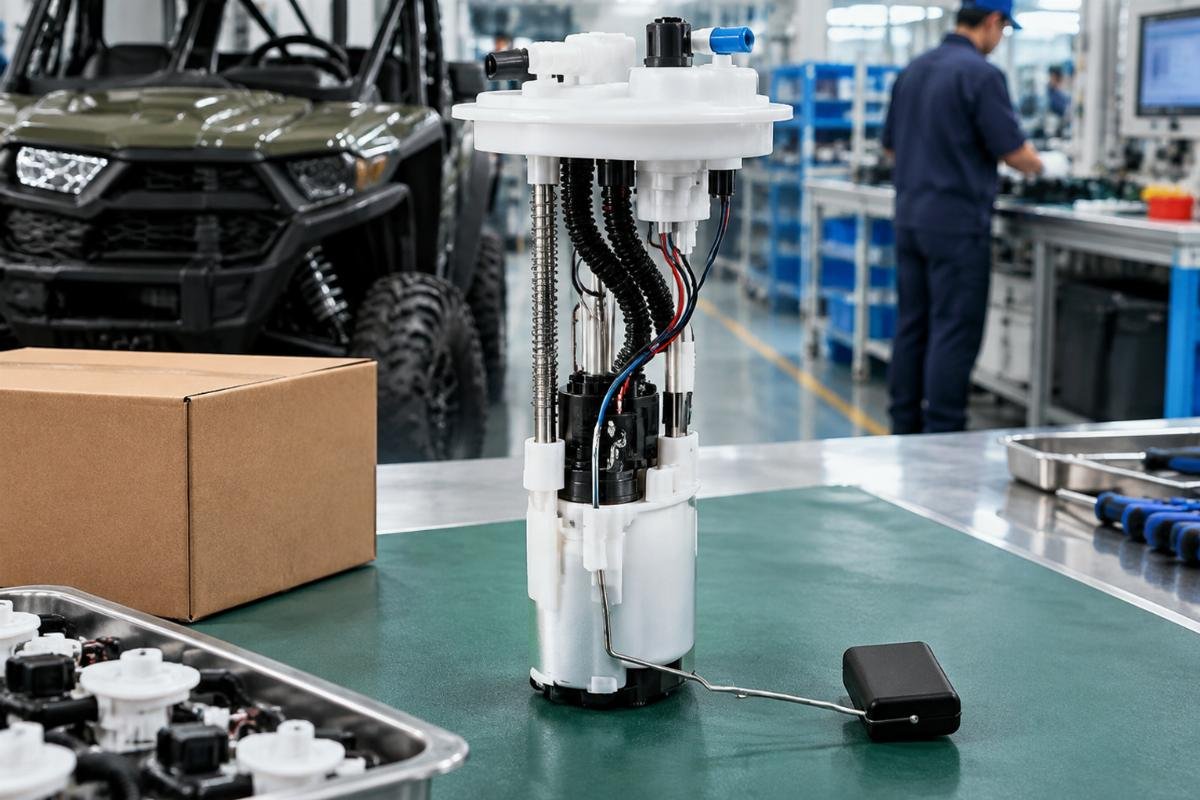
The fuel pump assembly is the pressure source for the entire fuel delivery system on Polaris Ranger 570 and 900 platforms. It draws from the tank through an inlet strainer, pressurizes the line to 45–55 psi, and feeds the injectors through a filter and pressure regulator. Every component downstream depends on stable pressure and clean flow — a weak pump causes lean conditions the ECU tries to compensate for, masking the real problem until injector or combustion damage occurs.
Matching Pump Grade to Engine Serial Variant
Within the Polaris Ranger 900 lineup, engine serial ranges correspond to different ECU calibration profiles that expect specific pressure delivery characteristics. A Fuel Pump Assembly engine rebuild replacement must match the variant your machine carries — the connector pinout, pressure curve, and physical port orientation can differ between a 2014 Ranger 900 XP and a 2017 Ranger Crew XP 900 EPS [NEED_CITE: Polaris Ranger engine serial range variant identification procedures]. Confirming the exact model year and EPS designation before ordering eliminates the most common fitment mismatch on these platforms.
Pressure, Diaphragm, and Thermal Endurance Explained
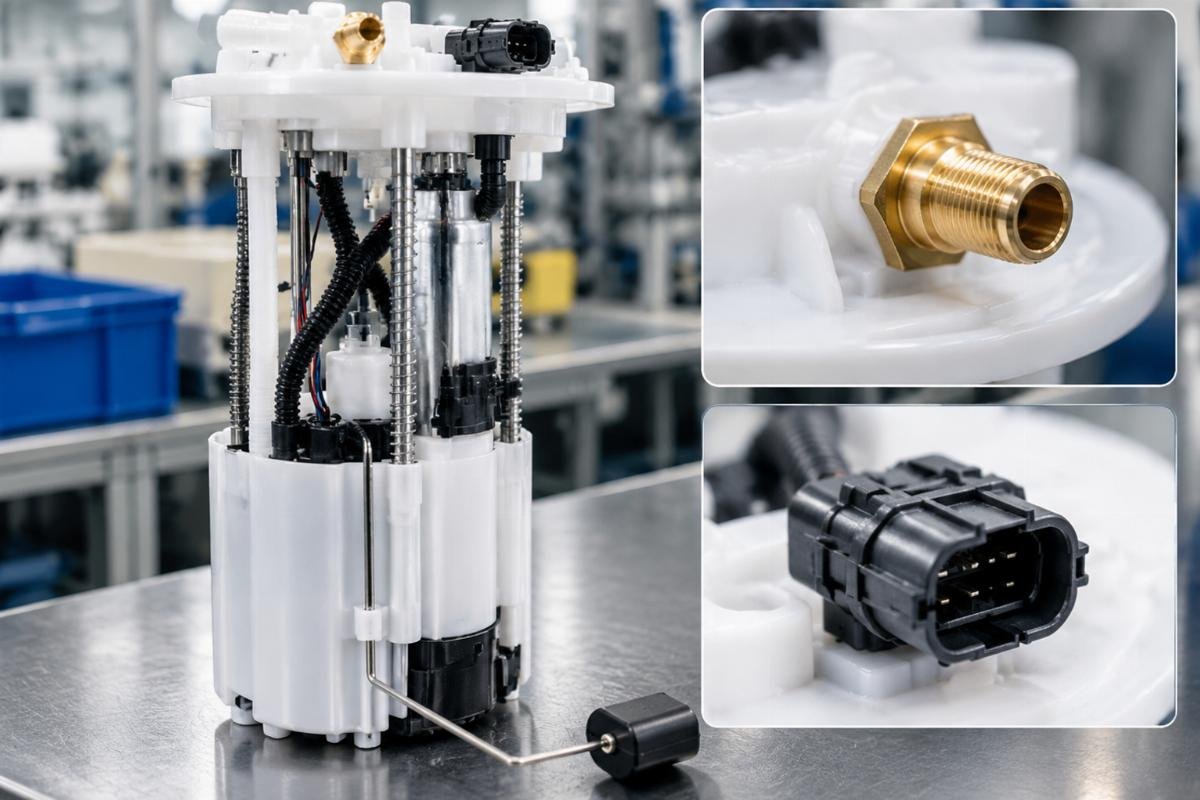
The 45–55 psi output range aligns with the pressure regulator specification for Polaris ProStar engines, maintaining consistent injector spray pattern across throttle positions. The NBR diaphragm resists degradation from ethanol-blended fuels common in agricultural and remote utility environments, where fuel can sit in tanks for extended periods. Operating across -40°C to +120°C covers both cold-start conditions and sustained high-load operation in quarry or land-clearing duty cycles [NEED_CITE: nitrile rubber chemical resistance in ethanol-blended fuel environments]. Brass inlet and outlet ports resist corrosion at the fuel line connection points, and the integrated check valve holds residual line pressure after shutdown — essential for reliable hot restarts when the engine bay is heat-soaked.
The Cost of Skipping System-Level Diagnosis
Replacing the pump without inspecting the fuel filter, checking line restriction, and verifying voltage at the connector leaves the original failure mechanism intact. The new diaphragm works against the same clogged filter or corroded wiring, and early failure follows. Shops that skip the full-circuit check often see the machine return within weeks with the same lean misfire code, eroding customer confidence and consuming warranty resources [NEED_CITE: repeat fuel system failure rates in off-road fleet maintenance programs]. The labor to pull the pump twice far exceeds the time spent on proper diagnosis the first time.
Why Source This Assembly Through XUNPO
XUNPO produces selected fuel system lines in-house and sources the remainder from ISO-certified partners, with both channels carrying the same QC protocol and 6-month warranty. Eight product categories under one account mean the fuel pump, filter, line sections, and seal kits ship as a single consignment rather than arriving from multiple suppliers on different timelines. Orders start from one piece, so an emergency single-unit replacement is never blocked by volume requirements. Part identification works from the OEM reference number, machine model, or a photograph of the existing nameplate — useful when field-worn labels make the number unreadable. Cross-reference verification covers both 2521307 and 2204852 with supersession tracking. Technical support is available to confirm pressure grade and connector compatibility against your specific engine serial number before you commit to bulk.
Documentation & Verification
- Commercial invoice listing Fuel Pump Assembly 2521307 with HS code and customs-ready format
- Cross-reference sheet mapping 2521307 and 2204852 with Polaris model year applicability (reference only)
- Pressure output, flow rate, and voltage response test results included per unit
- 6-month warranty terms with documented replacement procedure
- Packing photographs showing port protection and connector sealing before crate closure
Installation & Rebuild Sequence
- Verify fuel tank is drained and lines are depressurized before disconnecting brass ports
- Compare new assembly port orientation and connector pinout against removed unit before installation
- Replace fuel filter and inspect inlet strainer as part of the same service event
- Torque fuel line fittings to specification and check for leaks before reconnecting battery
- Run engine at idle to verify steady 45–55 psi pressure and confirm no lean fault codes persist
- Log installation date and machine hours for scheduled fuel system maintenance tracking
Before You Request a Quote
Provide the full Polaris Ranger model designation including year, crew configuration, and EPS status. If available, share the engine serial number and any active ECU fault codes related to fuel delivery. For fleet orders, include the unit count and whether you need matched fuel filter and line components bundled in the same shipment.
Frequently Asked Questions
Q: What other fuel system components should be replaced alongside this fuel pump?
A: During a Fuel Pump Assembly engine rebuild replacement, we recommend replacing the fuel filter, inspecting the inlet strainer, and checking fuel line condition. Injector cleaning or flow testing should be part of the same service event, since a failing pump often causes lean conditions that leave deposits on injector nozzles. Addressing the full circuit prevents repeat failures within weeks.
Q: Are OEM references 2521307 and 2204852 interchangeable across all Ranger model years?
A: These numbers serve as cross-reference identifiers and do not apply uniformly across all model years. The correct application depends on your specific Ranger variant, model year, and engine serial range. Confirming applicability against your machine's exact build configuration before ordering prevents connector or port mismatches during installation.
Q: What diagnostic steps confirm the pump is the actual root cause?
A: Before concluding the pump has failed, check fuel filter restriction, verify voltage and ground at the electrical connector under load, and measure line pressure with a gauge. A clogged filter or corroded connector can mimic pump failure symptoms. Only after ruling out upstream and downstream faults should the pump itself be condemned.
Q: Does this assembly include the fuel level sender unit?
A: The Fuel Pump Assembly 2521307 covers the pressure pump, diaphragm, check valve, and port connections. The fuel level sender is a separate component and is not included. If your service event requires sender replacement, specify this separately so we can confirm availability and compatibility for your Ranger model.
Q: How do I confirm the correct pump variant for my specific Ranger?
A: Provide your full machine model, year, and engine serial number. Variants within the Ranger 900 lineup can differ in connector type, port orientation, and ECU pressure expectations. Our technical team cross-references your details against application data to verify the correct assembly ships, reducing the risk of a fitment mismatch on the bench.