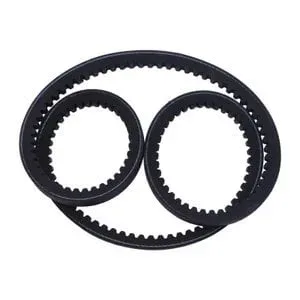
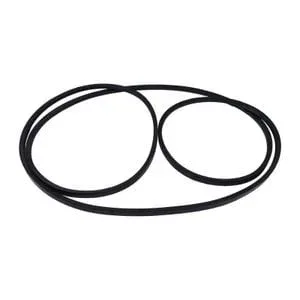
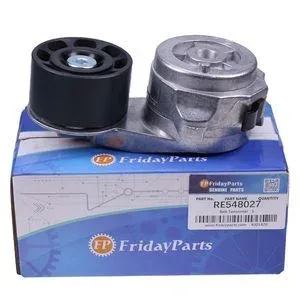
Matched Cooling Drive Components — Every belt order cross-checked against engine serial range and tensioner specification to prevent repeat failures on Bobcat skid steer cooling systems.
Technical Specifications
| Parameter |
Value |
| Part Number |
6718730 |
| Product Type |
Belt |
| Cross-Reference |
6718730 (reference only) |
| Machine Fitment |
Bobcat S150, S160, S175, S185, S205, T180, T190, 5600, 773 |
| Material |
EPDM (Ethylene Propylene Diene Monomer) rubber compound |
| Cord Reinforcement |
High-modulus polyester tensile cords |
| Profile Type |
Molded V-profile |
| Dimensional Tolerance |
±0.15 mm |
| Dynamic Flex Testing |
10,000+ cycles at 85°C |
| Condition |
New Aftermarket |
| Warranty |
3–12 months against manufacturing defects |
| Standards |
ISO 9001, SAE J1459 |
Application Suitability
| Engine System |
Related Components |
| Cooling Fan Drive |
Fan pulley, tensioner assembly, idler pulley, water pump drive |
| Alternator Drive |
Alternator mounting bracket, alternator pulley, belt guard |
| Water Pump Drive |
Water pump bearing, coolant seal, thermostat housing |
| Engine Overhaul Kit |
Gasket set, seal kit, tensioner spring, mounting hardware |
When a Snapped Fan Belt Is Not the Real Problem
The broken belt is usually the final link in a chain of cooling drive wear that started months earlier.
Replacing the belt on a Bobcat skid steer without inspecting the tensioner bearing, pulley alignment, and fan hub means the new fan belt engine replacement for Bobcat skid steer will likely fail within weeks. Across job sites where dust and ambient heat compound stress on the drive system, a single component swap rarely addresses the root cause. [NEED_CITE: engine cooling system cascade failure patterns in compact loaders]
I have seen machines return to the workshop within days of a belt change because the tensioner was applying uneven load across the V-profile, creating localized heat that degraded the rubber compound from the inside out. The pattern repeats: the operator reports a snapped belt, the mechanic fits a new one, and nobody checks whether the pulley grooves are still within dimensional tolerance. The result is predictable and expensive.

Cooling Drive as a System, Not a Single Part
The fan belt engine replacement for Bobcat skid steer loaders sits at the center of a drive loop that includes the crankshaft pulley, water pump, alternator, and fan assembly. When one element drifts out of specification — a worn tensioner spring, a glazed pulley surface, a misaligned bracket — the belt absorbs the cumulative error. EPDM compound provides resistance to heat and oil contamination that accumulate inside the engine bay, but it cannot compensate for mechanical misalignment. Inspecting the entire cooling drive loop before fitting a new belt turns a reactive repair into a planned intervention.
Engine Serial Variants and Belt Routing Differences
Bobcat machines across the S175, S185, S205, and T190 range share a common base engine architecture, yet belt routing and pulley configuration can shift between production runs. A machine with an earlier serial range may have a different alternator bracket position or tensioner mounting point compared to a later build, meaning the belt length and profile that fits one variant does not fit another. Confirming engine serial number before ordering prevents the situation where a fan belt engine replacement for Bobcat skid steer arrives and simply cannot be routed around the installed pulleys. [NEED_CITE: Bobcat skid steer engine serial variant belt routing differences]
Reading the Specifications for Real-World Performance
The EPDM rubber compound is formulated to withstand continuous exposure to under-hood temperatures that regularly exceed ambient in Middle East operating conditions, where engine bays in skid steer loaders trap heat from the hydraulic system alongside combustion heat. High-modulus polyester tensile cords maintain their length under sustained high-RPM operation, preventing the gradual stretch that causes belt slip and reduced fan speed. The molded V-profile is shaped to match original pulley groove geometry within a dimensional tolerance of ±0.15 mm, ensuring contact pressure distributes evenly across the belt flanks rather than concentrating on one edge. Dynamic flex testing at 85°C through 10,000+ cycles simulates the thermal and mechanical fatigue the belt experiences during continuous loader operation in demolition and quarry environments.
What Happens When the Root Cause Gets Missed
A belt that snaps prematurely after replacement almost always points back to an unchecked component in the drive loop. A seized idler pulley bearing generates friction heat that transfers into the belt body, breaking down the EPDM compound from within. A tensioner that no longer maintains correct preload allows the belt to flutter across the pulley grooves, accelerating flank wear. When the fan belt engine replacement for Bobcat skid steer fails a second time, the machine has now been down twice for what was actually a single system problem. [NEED_CITE: repeat belt failure root cause analysis in mobile equipment engines]
Why This Source Supports System-Level Repairs
Own production on selected belt lines combined with qualified sourced supply means cooling drive components ship under one account and one warranty structure. Eight product categories allow a complete cooling system refresh — belt, tensioner, pulleys, gaskets, seals — to consolidate into a single dispatch. Minimum order of one piece accommodates emergency single-belt replacements without forcing unnecessary volume. Guangzhou warehouse stock on common Bobcat drive belts supports fast dispatch when a machine is already down. Technical verification covers engine serial cross-referencing, superseded number identification, and pulley configuration matching before the order ships. Sample supply available for fitment confirmation before bulk commitment on fleet-level orders.
Documentation & Verification
- Commercial invoice listing belt part number, quantity, and engine compatibility reference
- Cross-reference sheet mapping superseded belt numbers with reference only notation
- Dimensional inspection record confirming V-profile tolerance and length measurement
- Warranty certificate covering manufacturing defects for 3–12 months from delivery
- Packing photographs showing belt packaging condition before container loading
- HS code declaration supporting customs clearance in destination country
Installation & Rebuild Sequence
- Verify pulley groove condition and tensioner bearing play before routing the new belt onto the fan drive
- Confirm belt routing matches engine serial variant diagram, noting alternator bracket position differences
- Apply specified tension value and recheck after initial 30-minute run-in to account for bedding settlement
- Inspect belt flank contact pattern after first hour of operation to confirm even load distribution across V-profile
- Record installation date and machine hour meter reading to establish replacement baseline for fleet maintenance schedule
Requesting a Compatibility Confirmation
Send your machine model, engine serial number, and any visible marking from the old belt — even a partial number or a photograph of the worn label. If the machine has undergone a previous engine swap or rebuild, note the donor engine details as these change the belt routing and pulley configuration. For fleet orders covering multiple serial ranges, provide the full unit list so each machine receives a verified match rather than a single blanket part number.
Frequently Asked Questions
Q: What other cooling system components should be replaced alongside the fan belt?
A: The tensioner assembly and idler pulley are the most common companion replacements, as worn bearings in either component cause uneven belt loading and premature failure. Inspect the fan hub bearing and water pump shaft for play. If any show measurable wear, replacing them in the same service window prevents a second downtime event within weeks.
Q: How do I confirm this belt fits my specific Bobcat engine configuration?
A: Provide your engine serial number and machine model for cross-reference verification. Belt routing and pulley configuration can differ between production runs of the same machine model. Our technical team checks the serial range against documented configurations before confirming compatibility.
Q: Does engine serial number affect which belt variant fits my machine?
A: Yes. Engines within the same Bobcat model range can have different alternator bracket positions, tensioner types, or pulley diameters depending on production date. The serial number determines which belt length and profile matches your specific drive configuration.
Q: What causes repeat fan belt failures even after replacement?
A: Repeat failures typically trace to unchecked drive loop components — a seized idler bearing, a weak tensioner spring, or misaligned pulley brackets. Heat from these faults degrades the belt from the inside out. System-level inspection during belt replacement identifies and resolves the underlying cause.
Q: Can I order a matched set of belt, tensioner, and pulleys for a complete cooling drive refresh?
A: Yes. Provide your machine model list and engine serial numbers, and we consolidate belt, tensioner, idler, and related seals into one shipment under a single warranty. This approach eliminates split deliveries and ensures all components arrive together for a planned service window.