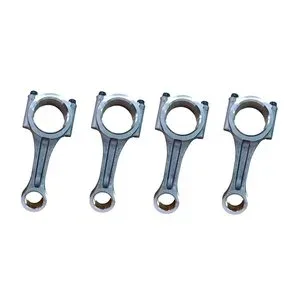
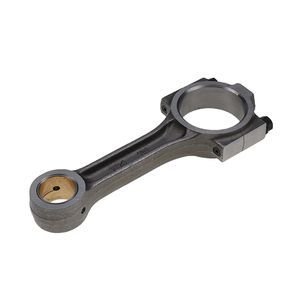
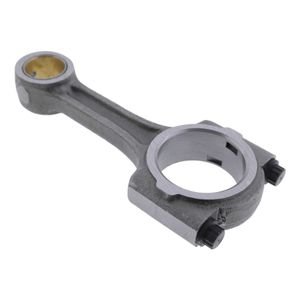
Matched Weight Sets — Rods grouped by weight class and bore grade ship together so the Doosan D24 rotating assembly stays balanced without sorting on the bench.
Technical Specifications
| Parameter |
Value |
| Part Number |
7031360 |
| Product Type |
Connecting Rod |
| Cross-Reference |
7031362, 7031361, 7031358, 7031359 (reference only) |
| Machine Fitment |
Bobcat E32, E35, E42, E45, E50, E55, E57W, E63, E85, S450, S510, S550, S570, S590, S595, S630, S650, T450, T550, T590, T595, T630, T650, ToolCat 5600, 5610, Portable Power P185 |
| Brand Compatibility |
Designed to replace components in Bobcat and Doosan D24 engine applications |
| Material |
Forged steel with micro-alloying elements (vanadium and niobium) |
| Surface Treatment |
Shot-peened |
| Hardness |
HRC 28–32 |
| Bore Tolerance (big-end and small-end) |
±0.005 mm |
| Assembly State |
Individual, anti-rust oil coated |
| Condition |
New aftermarket |
| Standard |
ISO 9001 |
| Warranty |
6-month manufacturer defect warranty |
| MOQ |
1 piece |
Application Suitability
| Engine System |
Related Components |
| Rotating assembly overhaul |
Matched piston sets, main and rod bearing shells, crankshaft seal kit |
| Single-cylinder rod repair |
Individual piston, pin, circlips, rod bearing shell set |
| Full D24 engine rebuild |
Complete overhaul gasket kit, oil pump, water pump, valve train components |
| Rebuild shop stocking |
Grade-sorted rod sets (STD / 0.25 / 0.50) for common Bobcat E-series engines |
Why a Connecting Rod Rebuild Fails Before the First Oil Change
The rod itself rarely caused the original failure — the system around it did.
Every time I have opened a Doosan D24 after a connecting rod knock, the root cause traced back to something upstream: oil starvation from a clogged pickup, incorrect bearing clearance from a previous rebuild that used the wrong grade shells, or detonation damage that fatigued the big-end bore beyond specification. Replacing the rod without diagnosing the oil circuit or measuring the crankshaft journal is how an engine rebuild becomes a repeat visit. [NEED_CITE: diesel engine connecting rod failure root cause analysis for compact equipment]
A connecting rod engine rebuild replacement must address the full rotating assembly, not just the visibly damaged component. When a crankshaft has been reground to an undersize during a prior overhaul, fitting standard-grade rods and bearings produces excessive oil clearance and rapid wear. This connecting rod is supplied in identifiable grade classes so the rebuild matches the actual journal condition sitting on the bench.

System Context Inside the D24 Block
The connecting rod sits at the heart of the Doosan D24 rotating assembly, transferring combustion force from the piston to the crankshaft journal. In Bobcat E-series compact excavators and S-series skid steers, these engines run multi-shift cycles in demolition and trenching environments where oil contamination and thermal cycling accelerate bearing wear. This connecting rod engine rebuild replacement belongs to a system that includes matched pistons, bearing shells graded to the crankshaft condition, and an oil pump delivering adequate film pressure at idle.
Grade Matching and Previous Rebuild History
Engines arriving for a second or third overhaul rarely have standard-size crankshaft journals. Previous regrinds move journals to 0.25 mm or 0.50 mm undersize, and the connecting rod bore must pair with the correct bearing shell thickness to maintain oil film. Fitting a standard-grade rod into a block with reground journals is a mistake I have seen cause knock within the first hour of operation. [NEED_CITE: crankshaft journal regrind grade identification for compact diesel engines] Each rod ships with bore grade identification so rebuild shops can match the set to measured journal diameters rather than assuming standard size. Weight-class grouping across the full cylinder set keeps the rotating assembly balanced without manual sorting during assembly.
Reading the Specifications That Matter on the Bench
Forged steel with vanadium and niobium micro-alloying gives the rod body the fatigue strength to handle repeated combustion loading in high-cycle diesel service. Shot-peening introduces compressive surface stress that slows crack initiation at the big-end fillet — the region where fatigue failures typically originate. Bore tolerance held to ±0.005 mm on both the big-end and small-end ensures the bearing shell crush height produces correct oil clearance and the piston pin fit stays within the floating or pressed specification the D24 requires. Hardness in the HRC 28–32 range keeps the rod body tough enough to absorb shock loading without becoming brittle enough to crack under detonation events. [NEED_CITE: shot-peening fatigue life improvement in forged steel connecting rods]
The Cost of Skipping Root-Cause Diagnosis
When a rebuild replaces the connecting rod without measuring crankshaft journals, checking oil pump output, or inspecting the piston cooling jet, the new rod inherits the same conditions that destroyed the old one. Bearing shells wear through in weeks, the big-end bore elongates again, and the engine returns to the shop with the same knock the owner thought was fixed. Grade mismatch alone — fitting standard shells on a 0.25-undersize journal — produces excess clearance that no amount of assembly lube can compensate for once oil reaches operating temperature. [NEED_CITE: engine bearing clearance failure modes in reground crankshaft applications]
Why Rebuild Shops Source This Component Through XUNPO
Self-produced and qualified sourced lines carry the same QC protocol and warranty terms, so a shop ordering rods alongside overhaul gaskets and bearing sets gets consistent quality under one account. Eight product categories mean the full D24 rebuild list — pistons, bearings, seals, gaskets, oil pump — consolidates into one dispatch instead of arriving from multiple suppliers on different schedules. Minimum order from one piece lets a workshop replace a single damaged rod without carrying stock. Part identification works from an engine serial number, a worn nameplate photo, or a machine model when the original tag is gone. Cross-reference verification covers superseded numbers like 7031362 and 7031358 so buyers confirm they are receiving the correct variant. Technical support confirms bore grade and weight class before the order ships.
Documentation & Verification
- Commercial invoice listing rod grade and weight class per line item
- Cross-reference sheet mapping 7031360 to alternate numbers (reference only)
- Dimensional inspection record showing big-end and small-end bore measurements
- 6-month warranty terms covering material and manufacturing defects
- Packing photographs documenting anti-rust coating condition before crating
- HS code and customs classification for forged steel engine connecting rods
Installation & Rebuild Sequence
- Verify crankshaft journal diameter with a micrometer before selecting bearing shell grade
- Clean rod bore thoroughly to remove anti-rust oil residue that contaminates assembly lube
- Check bearing shell crush height and oil hole alignment against the D24 service manual specification
- Torque rod cap bolts in the specified sequence and confirm big-end bore roundness after tightening
- Confirm piston pin fit type (floating or pressed) matches the small-end bushing configuration
- Prime the oil system and verify oil pressure at idle before placing the engine under load
Before You Request a Quote
Provide the Doosan D24 engine serial number and any known rebuild history — specifically whether the crankshaft has been reground and to what undersize. If the engine is still assembled, a photograph of the nameplate and any visible stamping on the existing rod helps confirm the correct grade variant before the order is processed.
Frequently Asked Questions
Q: What grade rod do I need if the crankshaft has been reground?
A: Measure the crankshaft journal diameter with a micrometer and compare it to the Doosan D24 service manual specifications. Reground journals require matching undersize bearing shells paired with rods identified by the correct bore grade. Ordering standard-grade components for a reground crankshaft produces excessive oil clearance and rapid bearing failure.
Q: Does the overhaul kit include the correct bearings for my engine serial variant?
A: Doosan D24 engines across Bobcat E-series and S-series models have serial-level build differences that affect bearing shell specifications. Confirm your engine serial number and rebuild history so the bearing set matches your specific variant rather than a generic kit assumption.
Q: How do I confirm my D24 engine build variant before ordering?
A: The engine serial number stamped on the block identifies the build variant. When the nameplate is worn or painted over, a photograph of any visible stamping combined with the host machine model allows cross-reference verification to pinpoint the correct rod specification.
Q: Can I order a matched weight set of rods for a full rebuild?
A: Yes. Rods can be grouped by weight class so the complete rotating assembly ships balanced. This eliminates manual sorting on the bench and reduces vibration from weight imbalance across cylinders during high-speed operation.