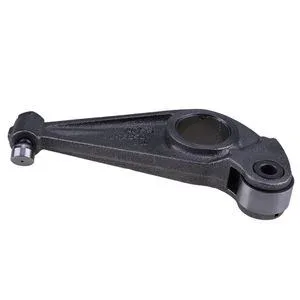
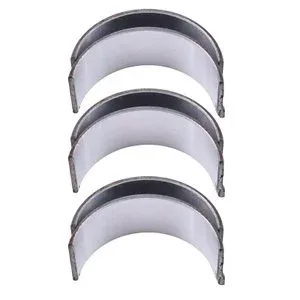
Graded Bearing Match — Every connecting rod is paired to the crankshaft journal condition recorded during teardown, preventing mismatched clearance in V1500 and V2003-T rebuilds.
Technical Specifications
| Parameter |
Value |
| Part Number |
17311-22010 17311-22012 |
| Product Type |
Connecting Rod |
| Cross-Reference |
17311-22010, 17311-22012, 17331-22010, 17311-22013 (reference only) |
| Engine Compatibility |
Kubota V1500, V1702DI, V1902DI, V2003-T |
| Machine Fitment |
KX121-2, KX121-3, KX161-2, KX161-3, KX91-3, U35, U45S, R420, R510, R520, L2250DT through L5450DT, M4030 through M5700HD, MX5000 |
| Condition |
New Aftermarket |
| Warranty |
3–12 months against manufacturing defects |
| Manufacturing Standard |
ISO-certified production |
| Bearing Grade Availability |
STD, 0.25 and 0.50 undersize |
Application Suitability
| Engine System |
Related Components |
| Bottom-end rotating assembly |
Crankshaft, main bearings, con rod bearing shells |
| Piston and cylinder group |
Piston pin bushing, piston rings, cylinder liner |
| Lubrication feed path |
Oil pump, oil filter, gallery jets feeding big-end |
| Overhaul gasket system |
Full engine gasket set, crankcase seals, valve cover gasket |
Why Rebuilds Fail Before the First Oil Change
The connecting rod was never the problem — the clearance was. When a crankshaft journal has been reground to an undersize dimension during a previous overhaul but the replacement rod and bearing shells arrive in standard grade, the big-end bore runs too loose. Oil pressure drops at operating temperature, the bearing shell spins, and the engine comes back on the stand within weeks. [NEED_CITE: crankshaft journal regrind and bearing clearance standards for diesel engines]
I have seen this pattern repeat across mining fleets in northern Chile, where V1500 and V1702DI engines cycle through rebuild shops without anyone recording what happened to the crankshaft last time. The part number on the tag matches, but the actual fitment does not.

Where the Connecting Rod Sits in the Overhaul Sequence
A connecting rod is not an isolated replacement — it is the mechanical link between piston crown pressure and crankshaft torque output. When planning a Kubota engine overhaul, this rod must be evaluated alongside the piston it carries, the bearing shells it clamps, and the crankshaft journal it wraps around. Replacing the rod without verifying the condition of every adjacent surface in the rotating assembly is how partial rebuilds turn into repeat teardowns.
Grading the Journal Before Ordering the Rod
Every crankshaft that has seen a prior rebuild may no longer be at factory standard diameter. The journal could have been machined to 0.25 mm or 0.50 mm undersize, which means the connecting rod bearing shells must match that grade precisely. Ordering a standard-grade shell for a reground journal produces excessive clearance; ordering an oversize shell for an unground journal produces interference. The correct Connecting Rod engine rebuild approach always starts with measuring the journal before the purchase order goes out. [NEED_CITE: bearing grade selection procedures for reground diesel crankshafts]
Reading the Spec Sheet Against the Teardown Report
The big-end bore diameter of this connecting rod determines which bearing shell thickness will produce the correct oil film clearance. Rod bolt torque specification controls clamp load on the cap, which directly affects bore roundness under firing load. Weight class grouping matters when multiple rods are assembled into the same engine — an imbalance across cylinders introduces vibration that accelerates bearing wear. These parameters are not optional extras; they define whether the assembled rotating group survives break-in.
What Happens When the Grade Is Wrong
A connecting rod paired with the wrong bearing shell grade does not fail immediately — it fails after the engine warms up and oil thins out. The knock gets louder over days, then a shell spins, the journal scores, and the crankshaft that could have been reused now needs another regrind or outright replacement. [NEED_CITE: progressive bearing failure modes in medium-displacement diesel engines]
The cost of a second teardown always exceeds the cost of measuring the journal correctly the first time. And the machine downtime compounds the loss beyond the workshop floor.
Why Source the Rod Through This Supply Chain
Production runs on selected lines are managed in our own facility, while remaining volumes come from qualified ISO-certified manufacturing partners — both channels carry identical quality control and warranty terms. Every Connecting Rod engine rebuild order can ship alongside matched piston assemblies, graded bearing shells, and overhaul gasket sets under one account and one warranty. Minimum order starts at one piece, so a single emergency rod does not require a bulk commitment. Part identification works from a part number, machine model, photograph, or nameplate image, and cross-reference verification covers superseded and alternate numbers across the V1500 and V2003-T family. Technical support is available for compatibility confirmation and bearing grade matching before you commit to the order.
Documentation & Verification
- Commercial invoice listing each rod variant and bearing grade shipped
- Cross-reference sheet mapping 17311-22010 and superseded numbers (reference only)
- Dimensional inspection record covering big-end bore, rod straightness, and weight class
- Warranty terms specifying coverage period for manufacturing defects
- Packing photographs taken before crate closure for shipment traceability
- HS code and customs paperwork prepared for destination country clearance
Installation & Rebuild Sequence
- Clean big-end bore and cap mating surface before bearing shell installation to prevent debris-induced scoring
- Verify rod bolt torque in two stages to achieve even clamp load across the cap
- Confirm bearing shell grade matches measured crankshaft journal diameter before final assembly
- Check side clearance between adjacent connecting rods after crankshaft installation
- Prime lubrication galleries before first cranking to prevent dry-start bearing contact
Requesting the Correct Configuration
Send the engine model, serial number, and any available rebuild history — especially whether the crankshaft was reground and to which undersize grade. If the nameplate is worn or painted over, a clear photograph of the block casting and any remaining stamping lets the technical team lock the correct variant and bearing match.
Frequently Asked Questions
Q: What does the complete overhaul kit include alongside this connecting rod?
A: A matched overhaul kit typically contains piston assemblies, piston pin bushings, con rod bearing shells in the correct grade, main bearings, full gasket set, and crankshaft seals. Exact contents vary by engine serial number and rebuild scope. We verify the kit list against your specific engine build before dispatch to prevent missing items.
Q: The crankshaft has been reground — which oversize bearing grade do I need with this rod?
A: The bearing grade must match the regrind dimension precisely, typically STD, 0.25 mm, or 0.50 mm undersize. Send the crankshaft measurement report or the machining record from the previous rebuild. We match the shell thickness to your journal condition so the big-end clearance falls within specification at operating temperature.
Q: Do all V2003-T engines use the same connecting rod regardless of serial number?
A: No. Variants exist within the V2003-T family that differ in rod weight class and big-end bore specification depending on production period and application. Confirming the engine serial number or sending a photograph of the existing rod lets us identify the correct variant before shipment.
Q: What system-level faults should I investigate to prevent this rod from failing again?
A: Oil starvation from a worn oil pump, incorrect bearing clearance from a previous rebuild, and rod bolt torque loss are the most common root causes. Checking the lubrication feed path, measuring the crankshaft journal condition, and verifying bolt stretch or torque values during reassembly address the failure cause rather than only replacing the damaged component.
Q: How do I confirm the exact engine variant when the nameplate is worn or painted over?
A: Send photographs of the block casting numbers, any visible stamping on the old connecting rod, and the machine model. The technical team cross-references these details against production records to identify the engine variant and confirm the correct rod configuration and bearing grade for your build.