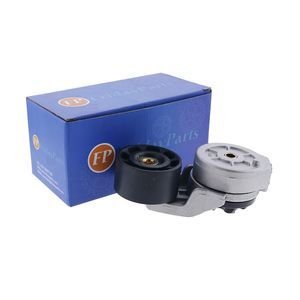
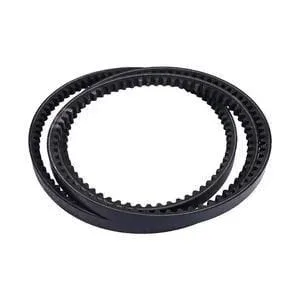
Matched Belt Drive Components — Every tensioner and fan pulley ships together after rotational balance verification on our test bench, ensuring the belt drive system operates without harmonic vibration from day one.
Technical Specifications
| Parameter |
Value |
| Part Number |
6735884 6662997 |
| Product Type |
Belt Tensioner |
| Cross-Reference |
6735884 (reference only), 6662997 (reference only) |
| Machine Fitment |
653, 751, 753, 763, 773, 7753, S130, S150, S160, S175, S185, S205, T140, T180, T190 |
| Condition |
New Aftermarket |
| Material |
Forged steel hub |
| Bearing Type |
Pre-greased sealed unit |
| Warranty |
6 months against manufacturing defects |
| Standard |
ISO 9001 |
Application Suitability
| Engine System |
Related Components |
| Belt drive and accessory drive |
Serpentine belt, idler pulley, alternator bracket hardware |
| Cooling system front-end |
Cooling fan, fan shroud, radiator hoses adjacent to pulley path |
| Engine overhaul top-end kit |
Gasket set, front crankshaft seal, timing cover seal |
| Preventive maintenance program |
Belt wear gauge, tension check tool, spare belt storage |
Why Belt Failures Return After a Single-Part Swap
The fault usually lives in the system, not the component you replaced.
A tensioner swapped in isolation often sees the new belt fail within weeks. The real cause may be worn fan pulley bearings introducing harmonic vibration, or a weakened tensioner spring that no longer maintains consistent load across the full RPM range. Rebuild shops that address only the visibly failed part end up repeating the job [NEED_CITE: engine belt drive system diagnostic procedures for skid steer loaders]. This belt tensioner and cooling fan pulley kit exists because the belt drive system demands matched components to maintain correct tension and thermal management throughout the engine's operating range.

The Belt Drive System as a Single Operating Unit
The tensioner, fan pulley, and drive belt form a closed loop where each element affects the others. A pulley with bearing play introduces lateral runout that the tensioner must absorb, accelerating its own wear. During an engine rebuild, treating this Belt Tensioner & Fan Pulley Kit engine rebuild as a matched set ensures that no single aged component undermines the new hardware beside it.
Dimensional Grades, Prior Rebuilds, and Serial Variants
Engines that have been rebuilt before may have non-standard clearances or aftermarket brackets that shift pulley alignment by fractions of a millimeter. The forged steel hub on this tensioner is machined to original dimensional tolerances, but confirming your engine serial number matters — variant differences in mounting bracket geometry exist across the S130 through S205 range. A previous rebuild using oversize bearings or non-standard spacers can alter the belt tracking path, making system-level inspection essential before reassembly [NEED_CITE: engine serial variant identification for Bobcat diesel platforms].
Material and Bearing Specification Under Thermal Load
The forged steel hub resists deformation under the combined load of belt tension and cooling fan inertia at sustained high RPM. The pre-greased sealed bearing unit is specified to align with typical engine overhaul intervals, meaning the bearing service life tracks with the surrounding gaskets and seals rather than failing mid-cycle. Heat treatment on the hub maintains dimensional stability across the thermal range encountered in continuous construction site operation, where ambient dust and elevated under-hood temperatures compound mechanical stress on the belt drive system.
The Hidden Cost of Partial Replacement
Replacing only the tensioner while leaving a worn fan pulley in place invites repeated belt failure. The worn pulley bearing introduces oscillation that no new tensioner can fully dampen. Shops that skip the pulley during a belt drive service often see the machine return within weeks for the same complaint. This pattern drives up warranty claims, erodes customer confidence, and wastes labor hours that a complete Belt Tensioner & Fan Pulley Kit engine rebuild would have avoided [NEED_CITE: repeated belt failure root cause analysis in mobile equipment engines].
Supply and Verification From One Source
Our own production lines and qualified sourced supply carry identical QC and warranty terms, so this kit ships under one accountability. Eight product categories mean the belts, seals, and gaskets your rebuild needs can consolidate into one consignment. Minimum order starts at one piece — no forced bulk when you need a single kit. Part identification works from the number, the machine model, or a photograph of a worn nameplate. Cross-reference verification covers superseded and alternate numbers so fitment is confirmed before dispatch. Technical support is available for engine serial confirmation and grade selection when prior rebuild history is uncertain.
Documentation & Verification
- Commercial invoice listing matched kit contents and individual cross-reference numbers
- Belt drive compatibility sheet noting engine serial variants and reference-only OEM designations
- Quality inspection record covering rotational balance and bearing preload measurement
- Warranty terms specifying six-month manufacturing defect coverage with claim procedure
- Packing photographs showing kit components secured against transit movement
- HS code and customs documentation support for international engine parts shipments
Installation & Rebuild Sequence
- Inspect timing cover and front crank seal surface before mounting the new tensioner bracket
- Clean all pulley mounting faces to bare metal to ensure flush seating of the forged steel hub
- Torque tensioner and fan pulley fasteners to engine manual specification in the correct sequence
- Verify belt alignment with a straight-edge across all pulleys before applying final tension
- Run engine at idle for initial break-in and check for lateral belt wander or unusual bearing noise
- Re-check tensioner arm position after the first heat cycle to confirm spring load stability
Confirm Your Engine Configuration Before Ordering
Provide the engine model, serial number, and any known rebuild history so we can verify the correct variant for your machine. If the nameplate is unreadable, send a photograph of the existing tensioner mounting pattern and pulley diameter for identification.
Frequently Asked Questions
Q: What other belt drive components should be replaced together with the tensioner?
A: The serpentine belt, any idler pulleys, and the front crankshaft seal should be evaluated during the same service. Worn idler bearings introduce the same harmonic issues as a failing fan pulley. Replacing the complete belt path as a set avoids partial repairs that lead to repeat visits and ensures all wear items share a common service interval.
Q: How do I confirm the correct variant for my engine serial number?
A: Share your engine serial number or a clear photograph of the existing hardware and mounting bracket. Variant differences exist across the S130 through T190 range, particularly in bracket geometry and pulley offset. Our technical team cross-references your serial against fitment records to confirm the correct Belt Tensioner & Fan Pulley Kit engine rebuild before dispatch.
Q: What causes repeated belt failures even after tensioner replacement?
A: Lateral runout from worn fan pulley bearings, misaligned brackets from a prior rebuild, or a belt routed incorrectly around an accessory. The tensioner cannot compensate for oscillation originating elsewhere in the drive loop. System-level inspection of every pulley and bracket in the belt path typically reveals the actual failure source.
Q: Does the kit include all hardware needed for a complete belt drive service?
A: The kit includes the tensioner assembly and fan pulley as matched components. Fasteners, belts, and gaskets are engine-specific and should be verified against your particular build configuration. Confirm your engine serial number so we can advise on any additional items required for a complete belt drive service.
Q: How do I identify the root cause of a belt or pulley failure before reassembly?
A: Spin each removed pulley by hand to feel for bearing roughness or lateral play. Check the old belt for uneven edge wear indicating misalignment. Inspect the tensioner arm for spring fatigue by comparing its rest position against specification. Documenting these findings guides whether the Belt Tensioner & Fan Pulley Kit engine rebuild alone resolves the issue or if adjacent components need attention.