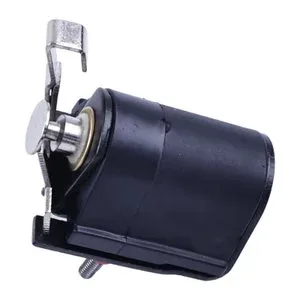
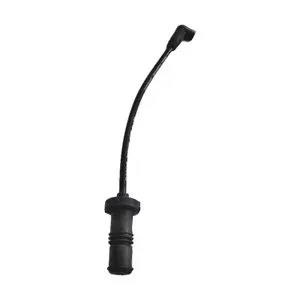
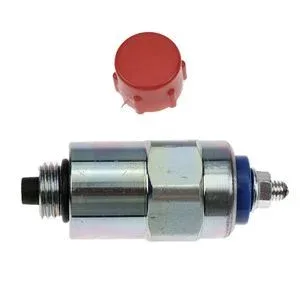
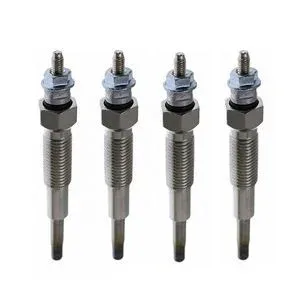
Engine Rebuild Kits Matched — Every fuel system component verified against Perkins and John Deere serial variants before dispatch.
Technical Specifications
| Parameter |
Value |
| Part Number |
AR90340 RE37089 AR48219 AR51796 RE62240 |
| Cross-Reference |
RE62240, RE37089, AR90340, AR48219, AR51796, 8094900, 14067411, 15577535, 26435149 (for identification purposes only) |
| Machine Fitment |
Perkins 1004-4, 1004-40, 1004-40T, 1004-42, 1004-4T, 1006-6, 1006-6T; John Deere 4239, 4239D, 4239T, 4329A, 6404, 6466, 6466A, 6466D, 6466T; John Deere Tractor 1020–6030 series; John Deere Combine 3300, 9400; John Deere Harvester 5200–9930; John Deere Loader 210C–315D; John Deere Hay Cutting 2250–3830; GM/Ford/Stanadyne 4.3L–7.3L |
| Voltage |
12V |
| Coil Insulation Class |
Class H (180°C continuous rating) |
| Actuation Voltage Range |
10–14V (±3% tolerance) |
| Sealing Rating |
IP67 |
| Sealing Type |
Dual O-rings and molded elastomer housing |
| Dimensional Tolerance |
±0.05 mm |
| Surface Treatment |
Zinc-nickel plating (15 μm) |
| Core Material |
Precision-machined low-carbon steel with controlled magnetic permeability |
| Condition |
New Aftermarket |
| Warranty |
6-month standard warranty against manufacturing defects |
| MOQ |
1 piece |
Application Suitability
| Engine System |
Related Components |
| Perkins 1004/1006 Fuel Injection |
Injection pump service kit, fuel line O-rings, governor spring set, transfer pump diaphragm |
| John Deere 4239/6466 Fuel Delivery |
Rotary pump seal kit, throttle shaft bushing, fuel shutoff linkage, return line check valve |
| GM/Ford/Stanadyne Mechanical Pump |
DB2/DB4 pump overhaul gasket set, metering valve sleeve, advance piston seal, solenoid connector pigtail |
| Agricultural & Industrial Diesel Overhaul |
Full engine gasket set, injection nozzle assemblies, fuel lift pump rebuild kit, timing cover seal |
Why the Fuel Injection Bench Job Stalls Before It Starts
A 12V Fuel Injection Pump Shutoff Solenoid engine rebuild replacement arrives on the bench, but the injection pump beside it carries a serial variant that demands a different connector type or stroke length — and the engine overhaul gasket kit on the shelf is missing the mating O-ring for this exact housing bore.
Confirm the pump build variant before the teardown sequence begins.
When I supported mining haul fleets running Perkins 1006-6T and John Deere 6466T platforms, the most common bench delay was not the solenoid itself but the discovery that a prior rebuild had swapped the Stanadyne pump variant, leaving the original part number cross-reference pointing to a body length that no longer matched. [NEED_CITE: Stanadyne rotary pump variant identification procedures for diesel fuel systems] The same base engine family can ship with two or three solenoid body configurations across production runs, each with distinct thread engagement and port orientation. Missing this detail at the teardown stage means the engine sits open while a replacement is sourced.

The Solenoid's Position Within the Fuel Delivery System
This 12V Fuel Injection Pump Shutoff Solenoid engine rebuild replacement sits at the interface between the electrical shutdown circuit and the mechanical fuel metering assembly inside the injection pump. It does not operate in isolation. The solenoid plunger acts directly on the fuel control rack or metering valve, meaning any residue, varnish, or scoring on the adjacent pump bore affects actuation force and response time. During a system-level overhaul, the pump bore condition, the return spring tension, and the wiring harness connector integrity all require inspection alongside the solenoid replacement itself.
Engine Serial Variants and Prior Rebuild History
Production-run changes and previous overhauls create fitment variables that a part number alone cannot resolve. A John Deere 6466D may have left the factory with one Stanadyne pump configuration, but an earlier rebuild shop might have installed a later-variant pump body that accepts a different solenoid thread pitch or connector orientation. [NEED_CITE: diesel injection pump serial number cross-reference for variant identification] The dimensional tolerance of ±0.05 mm on this component means even minor discrepancies in housing depth or thread engagement cause binding or incomplete fuel shutoff. Always verify the current pump body casting number against the solenoid specification, not just the engine serial plate.
What the Specification Sheet Means on the Bench
Class H coil insulation rated to 180°C addresses the sustained thermal environment inside an engine bay where ambient temperatures around the injection pump regularly exceed normal electrical component ratings. The IP67 sealing with dual O-rings and a molded elastomer housing prevents diesel fuel ingress into the coil winding — a primary cause of short-circuit failure in mechanical fuel systems where the solenoid mounts directly into the pump body fuel gallery. The zinc-nickel plating at 15 μm provides corrosion protection against the acidic condensates that form in diesel fuel exposure, preserving the solenoid body dimensional accuracy over its service life. The 10–14V actuation range with ±3% tolerance accommodates the voltage drop that occurs across aging wiring harnesses common in machines with high operating hours.
The Cost of Skipping the System Check
Installing a correctly numbered solenoid into a pump bore that carries scoring from a previous failure means the new unit inherits the same binding condition that destroyed its predecessor. The engine starts, runs, then fails to shut down on key-off — or worse, the plunger sticks mid-stroke and the machine runs away. [NEED_CITE: diesel engine overspeed prevention and fuel shutoff system reliability] A repeat teardown follows, with the injection pump now requiring a full bore recondition rather than a simple component swap. The labor cost compounds because the bench was already cleared and the engine partially reassembled.
System-Matched Supply From One Account
XUNPO maintains production on selected fuel system lines alongside qualified sourced supply, all under a single warranty and account so your overhaul kit ships as one consignment. Cross-reference verification covers superseded numbers like AR48219 and AR51796, confirming which variant matches your specific pump casting. Technical support confirms compatibility against engine serial, pump body casting number, or bench photograph before commitment. Quality inspection records document the 12V functional test and dimensional verification for each unit before dispatch. Sample supply is available for fitment confirmation on unfamiliar pump variants before bulk orders release.
Documentation & Verification
- Commercial invoice listing all matched fuel system components under one reference
- Cross-reference sheet mapping RE62240, RE37089, AR90340 to your pump variant (reference only)
- Dimensional check record confirming thread pitch, body length, and plunger stroke before dispatch
- Quality inspection report with 12V coil resistance and actuation test results
- Warranty terms covering manufacturing defects for six months from delivery
- Packing photographs showing O-ring protection and connector pin condition prior to crating
Installation & Rebuild Sequence
- Inspect pump bore for scoring and varnish before inserting the new solenoid body; ream if deposits are present
- Lubricate both O-rings with clean diesel-compatible assembly compound to prevent pinch-cut during thread engagement
- Verify connector pin orientation matches harness plug; re-pin if prior rebuild used a variant harness
- Confirm plunger stroke and return spring tension against pump manufacturer specification before reassembly
- Test fuel shutoff response at bench voltage before installing pump on engine block
- Run initial startup at idle and verify clean shutdown within two seconds of key-off
Send Your Pump Casting Number and Engine Serial
Provide the injection pump body casting number, engine model and serial, and any prior rebuild documentation so we can confirm the correct solenoid variant, matched seals, and associated fuel system components for your specific overhaul.
Frequently Asked Questions
Q: What other fuel system components should be replaced when servicing the shutoff solenoid?
A: The injection pump seal kit, fuel return line check valve, and governor spring set should be evaluated during the same teardown. If the solenoid failed due to fuel ingress, inspect the pump bore condition and wiring harness connector for corrosion. Replacing seals and inspecting adjacent components prevents a second bench visit caused by a related failure the original teardown missed.
Q: How do I confirm which solenoid variant fits my specific engine serial number?
A: The engine serial plate identifies the original build configuration, but prior rebuilds may have changed the injection pump variant. Provide the pump body casting number alongside the engine serial for cross-reference verification. Photographs of the existing solenoid thread, connector type, and body length allow dimensional comparison against known variant specifications before ordering.
Q: Are the seals and O-rings for the solenoid mounting included in the engine overhaul gasket kit?
A: Not always. Many standard overhaul gasket sets cover block and head seals but omit injection pump mounting O-rings and fuel gallery seals specific to the solenoid interface. Confirm the gasket kit contents against your pump variant before the teardown begins, and source the mating seals separately if the kit listing does not explicitly include them.
Q: My engine has been rebuilt before — how does that affect which shutoff solenoid I need?
A: A prior rebuild may have swapped the injection pump to a later or alternate variant, meaning the original factory part number no longer matches the current pump body. Document the pump casting number, measure the existing solenoid body length and thread specification, and submit these details for cross-reference verification rather than relying on the engine serial plate alone.
Q: What is the root cause of shutoff solenoid failure, and how do I prevent it from recurring?
A: Common root causes include fuel ingress past degraded O-rings shorting the coil winding, voltage drop across corroded harness connectors reducing actuation force, and pump bore scoring causing plunger binding. Addressing the failure requires replacing seals, cleaning or re-pinning the connector, and inspecting the bore surface — not just swapping the solenoid itself.