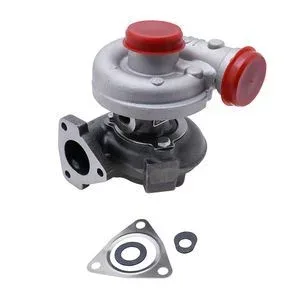
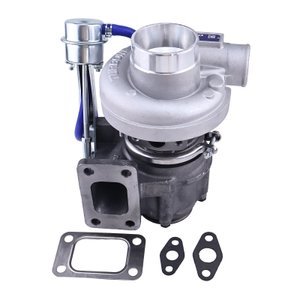
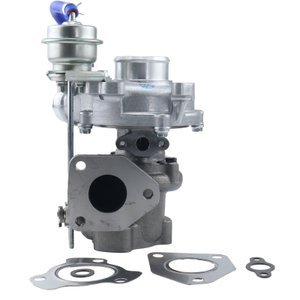
System-Level Component Matching — Every S1B turbocharger for Deutz engine rebuild is verified against the specific engine serial variant and prior rebuild history to ensure intake and exhaust system tolerances align.
Technical Specifications
| Parameter |
Value |
| Product Type |
Turbocharger |
| Part Number |
315666 |
| Turbo Model |
S1B |
| Machine Fitment |
BF3L914, BF4M1011F |
| Cross-Reference |
4234298KZ, 4272467KZ, 4272466KZ, 4272465KZ, 315666, 317904, 317905, 317906, 315639, 315640, 315641 (reference only) |
| Condition |
New Aftermarket |
| Standards |
ISO manufacturing standards |
| Warranty |
3-12 months against manufacturing defects |
| Minimum Order |
1 piece |
Application Suitability
| Engine System |
Related Components |
| Intake Air Delivery |
Air filter elements, intake manifold gaskets, boost pressure sensor |
| Exhaust Gas Energy Recovery |
Exhaust manifold gaskets, exhaust flange studs, heat shields |
| Lubrication Supply to Turbo |
Oil feed line, oil return line, oil filter, crankcase breather |
| Engine Overhaul Kits |
Piston rings, cylinder liners, main and big-end bearings, full gasket set |
Why Turbos Fail Again After a Deutz BF4M1011F Rebuild
Replacing the turbocharger without diagnosing the root cause guarantees a repeat failure within the next service interval.
In Middle East rebuild workshops, I have seen S1B turbocharger for Deutz engine rebuild jobs come back on the stand because the oil feed line was still restricted from the previous failure. Carbon deposits from degraded oil baked onto the bearing housing restrict flow, and the new unit starves for lubrication before the break-in period ends. The same pattern repeats when exhaust manifold cracks go undetected—exhaust gas leaks upstream of the turbine reduce the energy driving the compressor wheel, and the engine never reaches target boost. [NEED_CITE: common root causes of turbocharger failure in air-cooled and liquid-cooled diesel engines]
The workshop buys a replacement turbo, pays for the teardown and reassembly labor again, and the machine owner questions whether the rebuild was worth the cost. Addressing the fault that killed the previous unit is not optional sequencing; it is the difference between a successful overhaul and a warranty claim.

The Turbocharger Inside the Deutz Intake and Exhaust System
The S1B turbocharger sits at the intersection of three systems on BF3L914 and BF4M1011F engines: exhaust gas drives the turbine, the compressor delivers pressurized air to the intake manifold, and engine oil lubricates the floating bearings at high rotational speed. Any weakness in these three circuits—exhaust leakage, intake restriction, or oil contamination—transfers stress directly to the turbocharger bearings and seals.
An S1B turbocharger for Deutz engine rebuild must therefore be treated as a system component, not an isolated replacement. Matching the unit to the combustion characteristics of the specific Deutz model ensures correct boost pressure and air-fuel ratio across the operating range, which in turn protects pistons and cylinder liners from thermal overload during the break-in phase.
Prior Rebuild History Determines What Actually Fits
When a Deutz BF4M1011F engine has been through a previous overhaul, the block may have been line-bored, the crankshaft ground to an undersize, or the cylinder bores fitted with oversized liners. These modifications change the oil pressure profile reaching the turbocharger bearings and the exhaust gas volume driving the turbine. A unit specified for a zero-hour engine may operate outside its intended envelope in a second-life block.
Confirming the engine serial number and rebuild history before dispatch allows us to verify port configuration and oil feed compatibility. [NEED_CITE: Deutz engine serial number identification and variant cross-reference procedures] This step prevents the situation where the turbo arrives on the stand, the oil return flange does not align with the block casting, and the rebuild stalls while a replacement is sourced.
Interpreting the S1B Platform Specifications
The S1B designation indicates a specific turbine and compressor wheel geometry matched to the displacement and exhaust energy profile of Deutz BF3L914 and BF4M1011F engines. The turbine housing is designed to extract maximum energy from the exhaust pulse pattern of these particular cylinder configurations, while the compressor wheel delivers the volume and pressure ratio needed for complete combustion at rated load.
Bearing design in this platform relies on a full-flow oil feed from the engine gallery. The oil return port must remain unobstructed, and return line diameter must match specification—any restriction causes oil to back up into the compressor seal, producing the blue smoke that mechanics often misdiagnose as worn piston rings. Correct oil feed and return port orientation relative to the block connection is therefore as critical as the turbine specification itself.
The Cost of Skipping Root Cause Diagnosis
Installing a new S1B turbocharger for Deutz engine rebuild on a block where the oil gallery still contains metallic debris from the previous bearing failure means the new unit inherits contamination from day one. The floating bearings score within operating hours, shaft play increases, and the compressor wheel contacts the housing. The rebuild shop then faces a difficult conversation: the turbo failed again, but the cause was never in the turbo itself. [NEED_CITE: diesel engine oil gallery cleaning standards during overhaul]
Similarly, reusing an exhaust manifold gasket that has already been heat-cycled through one removal distorts the sealing surface. Exhaust gas escapes before reaching the turbine, boost drops under load, and the engine runs rich—washing cylinder walls with unburned fuel and accelerating liner wear. The turbo gets blamed, but the gasket was the actual failure point.
Why Source the Turbocharger and System Components Together
Our selected S1B production lines and qualified sourced supply carry the same quality inspection and warranty terms under one account, so the turbocharger and its companion gaskets, oil lines, and filter elements ship as a single verified consignment.
We cross-reference superseded and alternate numbers—including 4234298KZ, 4272467KZ, 317904, and 315639—against your engine serial number to confirm the correct variant ships. Each unit is matched to available intake and exhaust gaskets, oil feed fittings, and air filter elements so the complete rebuild list goes out in one dispatch. A quality inspection record covering pressure ratings, leak resistance, and rotational balance accompanies each order. Sample supply is available for fitment confirmation before you commit to bulk quantities for your workshop stock.
Documentation & Verification
- Commercial invoice listing turbocharger part number and all companion gaskets and lines in one document
- Cross-reference sheet mapping 4234298KZ, 317904, 315639 and alternate numbers to your engine serial (reference only)
- Quality inspection record showing rotational balance test, leak resistance, and dimensional verification
- Warranty terms covering manufacturing defects with matched system components under the same account
- Packing photographs confirming turbocharger protection and companion parts included before dispatch
- HS code and customs documentation support for engine system components
Installation & Rebuild Sequence
- Verify oil gallery cleanliness and flush feed line before connecting S1B turbocharger oil inlet
- Confirm exhaust manifold gasket surface flatness and replace studs if stretch is detected
- Match oil return port orientation to block casting before tightening turbocharger mounting bolts
- Pre-lube turbocharger bearings with clean engine oil before first cranking sequence
- Run engine at idle for initial break-in and monitor boost pressure against Deutz specification
Requesting the Correct Variant for Your Rebuild
Provide the Deutz engine model, full serial number, and any known rebuild history so we can confirm the correct S1B turbocharger variant and oil port configuration. If the engine nameplate is unreadable, a photograph of the existing turbocharger data tag, exhaust flange pattern, and oil return connection allows our technical team to identify the correct unit. Share your complete overhaul component list so we can verify that intake gaskets, exhaust hardware, oil lines, and filters are matched and included in the same consignment.
Frequently Asked Questions
Q: What gaskets and seals should be replaced together with the turbocharger during a Deutz engine rebuild?
A: Intake and exhaust manifold gaskets, oil feed and return line seals, turbocharger mounting flange gaskets, and air filter elements should all be replaced as a set. Reusing heat-cycled gaskets risks exhaust leaks that reduce turbine efficiency and oil seal leaks that contaminate the intake tract. We supply the complete companion set matched to your BF3L914 or BF4M1011F variant.
Q: How do I confirm which cross-reference number applies to my specific engine serial variant?
A: Provide your Deutz engine serial number and we verify the applicable cross-reference from numbers including 4234298KZ, 4272467KZ, 317904, and 315639. Superseded numbers and alternate references are mapped against production date ranges and variant codes. This step confirms port configuration and oil feed orientation before the unit ships.
Q: What system-level fault diagnosis should be done before fitting a replacement turbocharger?
A: Inspect oil feed and return lines for restriction, check exhaust manifold for cracks or gasket leakage, verify air filter housing integrity, and confirm crankcase breather function. Each of these faults can destroy a new turbocharger within operating hours. Addressing the root cause protects your rebuild investment and prevents a repeat teardown.
Q: Can intake, exhaust, and oil line components ship together with the turbo in one consignment?
A: Yes. The S1B turbocharger, matched intake and exhaust gaskets, oil feed fittings, return line seals, and air filter elements ship under one account with one warranty. Consolidated dispatch eliminates split freight and ensures all system components arrive together, so the rebuild proceeds without waiting for secondary orders.
Q: What is covered under the warranty when the turbocharger is installed as part of a full engine overhaul?
A: The warranty covers manufacturing defects in the turbocharger and matched companion components for 3 to 12 months. Coverage requires that installation followed the recommended rebuild sequence, including oil gallery flushing and correct break-in procedure. A quality inspection record accompanies each shipment documenting the tests completed before dispatch.