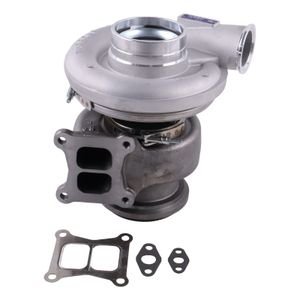
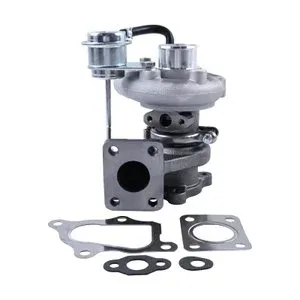
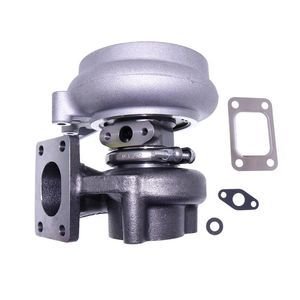
System-Matched Overhaul Kit — Turbocharger variant verified against engine serial number and ECM calibration to prevent bench downtime from missing gaskets.
Technical Specifications
| Parameter |
Value |
| Part Number |
HX55 |
| Product Type |
Turbocharger |
| Cross-Reference (reference only) |
3590044, 3803938, 3536995, 3536996, 590045, 4033813, 178923, 2834419, 4046031, 4033813H, 3803938NX, 178923R, 2080237R, 478923, OTR2080237R |
| Machine Fitment |
Cummins ISM, ISME, M11, B5.9, B5.9-C |
| Turbine Housing Material |
Ni-Resist D5S ductile iron |
| Compressor Wheel Material |
2618 aluminum alloy, T6 heat-treated (110–120 HB) |
| Shaft Assembly |
Dual ceramic ball bearings, ABEC-5 tolerance |
| Actuator Diaphragm |
Viton-reinforced silicone, rated to 200°C continuous |
| Maximum EGT |
720°C |
| Sealing Surface Roughness |
Ra ≤ 0.8 μm (ISO 4287) |
| Boost Pressure Validation |
1.4 bar |
| Turbine Wheel Balance |
G2.5 |
| Condition |
New Aftermarket |
| Warranty |
3–12 months against manufacturing defects |
Application Suitability
| Engine System |
Related Components |
| Intake & Forced Induction |
Intake manifold gaskets, air filter elements, charge air cooler seals |
| Lubrication Supply & Return |
Oil feed line, oil return drain tube, crankcase breather |
| Exhaust & Emission Control |
Exhaust manifold gaskets, V-band clamps, EGR cooler connections |
| Engine Management |
Boost pressure sensor, ECM calibration variant verification |
Why the Turbo Never Fails Alone on an ISM or M11
Turbocharger failure is a symptom of upstream system contamination or downstream thermal stress, not an isolated event.
When an HX55 Turbocharger for Cummins ISM M11 engine rebuild arrives on the bench, the shop often finds the real story written in the oil feed line and the intake plumbing. Compressor wheel erosion typically traces back to compromised air filtration, while turbine housing thermal fatigue points to sustained over-temperature operation driven by incorrect boost mapping or exhaust restriction. Replacing the turbo without correcting these conditions sets the stage for repeat failure [NEED_CITE: root cause analysis methodology for turbocharger failure in heavy-duty diesel engines].
A shop manager once pulled an ISM engine down for low boost, installed a new turbo, and watched it fail again within four hundred hours. The real culprit was carbon buildup in the oil return line starving the bearing housing of drainage, flooding the turbine seal and cooking the shaft assembly from the inside.
Where the HX55 Sits Inside the Engine System
The turbocharger occupies the critical junction between the lubrication, intake, and exhaust systems on the Cummins M11 and B5.9 platforms. Oil from the main gallery feeds the bearing housing under pressure, while gravity drainage through the return line keeps the seals from flooding. The compressor side pressurizes the charge air cooler, and any leak at the intake manifold gaskets directly robs the engine of the air mass the HX55 Turbocharger for Cummins ISM M11 engine rebuild is calibrated to deliver.
Adjacent components that should be inspected or replaced at every turbo service include the oil feed and return lines, the exhaust manifold fasteners and gaskets, and the charge air cooler hoses. Missing even one exhaust manifold gasket can delay a restart by days while the head is still accessible.
Serial Number Variants and Rebuild History Dictate the Correct Fit
Cummins ISM and M11 engines were produced across multiple emissions generations, and the ECM calibration variant determines the target boost curve the actuator must follow. A turbo calibrated for an early mechanical pump may not match the wastegate profile expected by a later full-authority electronic control unit. Providing the engine serial number allows confirmation of the correct HX55 variant before the engine is disassembled [NEED_CITE: Cummins engine family variant identification and ECM calibration matching].
Prior rebuild history also matters. Engines that have been overhauled with oversized bearings or modified oil clearances may present different oil pressure profiles at the turbo feed port, affecting bearing life and seal performance.
What the Specifications Mean for Rebuild Durability
The Ni-Resist D5S ductile iron turbine housing resists thermal cracking at the sustained exhaust gas temperatures typical of vocational ISM and M11 duty cycles. This material maintains structural integrity through repeated heat cycles up to the validated maximum EGT, reducing the risk of housing fracture that plagues lower-grade castings in stop-start transit applications.
The ABEC-5 tolerance on the dual ceramic ball bearing shaft assembly controls radial runout to within three micrometers, keeping the compressor and turbine wheels concentric at operating speed. This precision directly affects boost consistency and bearing longevity.
The Viton-reinforced silicone actuator diaphragm sustains flexibility at continuous exposure to elevated under-hood temperatures, preventing the wastegate from sticking or drifting off calibration during extended high-load operation.
The Hidden Cost of a Missing Gasket on Rebuild Day
When a turbocharger kit ships without the correct exhaust manifold gaskets or the oil return line O-ring, the engine sits on the stand with the head exposed and the shop clock running. The cost is never the gasket itself — it is the labor hours consumed waiting for a single small component, the second teardown to install it, and the scheduling cascade that pushes every downstream job back [NEED_CITE: impact of incomplete overhaul kits on heavy-duty engine rebuild turnaround].
An incorrectly matched actuator variant is worse. The engine starts and runs, but the boost curve is wrong, driving EGT beyond design limits and eroding the turbine wheel over weeks rather than failing immediately. The failure eventually arrives, and the diagnostic trail is long enough to obscure the original procurement error.
Procurement Built Around the Engine Rebuild Sequence
This HX55 turbocharger is supplied with verification of cross-reference numbers against superseded and alternate OEM references, reducing the risk of receiving a variant that physically bolts on but does not match the ECM calibration. The technical team confirms engine serial number compatibility and can advise on grade and variant selection based on rebuild history.
Production on selected lines and qualified sourced supply operate under one account and one warranty structure. The minimum order is one piece, so a single emergency turbo for a down machine ships without MOQ friction. Guangzhou warehouse stock supports fast dispatch on common variants, and sample supply is available for fitment confirmation before a fleet commits to bulk quantity.
Documentation & Verification
- Commercial invoice and packing list itemizing turbocharger part number and variant
- Cross-reference sheet mapping HX55 to superseded OEM numbers (for identification purposes)
- Dimensional and boost validation record from pre-shipment testing
- Warranty terms covering manufacturing defects for the stated period
- Packing photographs confirming anti-static foam and sealed carton condition
- HS code and customs documentation support for destination clearance
Installation & Rebuild Sequence
- Inspect and replace oil feed and return lines before mounting the HX55 turbocharger to prevent carbon restriction
- Verify exhaust manifold gasket surface flatness and torque sequence per engine service manual
- Prime the turbo bearing housing with clean engine oil before first cranking to prevent dry start damage
- Confirm wastegate actuator rod adjustment matches the specific ECM calibration variant
- Run a controlled break-in cycle, monitoring boost pressure and EGT against baseline values
Request the Right Variant
Provide the Cummins engine serial number and any known rebuild history to confirm the correct HX55 Turbocharger for Cummins ISM M11 engine rebuild variant. If the engine data plate is illegible, a photograph of the existing turbo nameplate and the ECM label is sufficient for cross-reference verification.
Frequently Asked Questions
Q: What other engine components should be inspected or replaced when servicing the turbocharger?
A: The oil feed and return lines, exhaust manifold gaskets, intake manifold seals, charge air cooler connections, and crankcase breather should all be evaluated. Carbon buildup in the oil return line or degraded intake seals directly compromise turbo bearing life and boost delivery, so replacing these adjacent components during the same service event prevents early repeat failure.
Q: How do I confirm the correct HX55 variant for my specific Cummins engine serial number?
A: Supply the engine serial number and, if available, the ECM calibration code. Cummins ISM and M11 engines span multiple emissions generations with different boost targets. The serial number maps to the correct actuator profile and cross-reference number, ensuring the turbo matches the engine management system rather than merely bolting to the manifold.
Q: What systemic conditions cause premature turbo failure beyond the turbo unit itself?
A: Intake air contamination from failed filtration, oil coking from degraded return lines, exhaust restriction from damaged aftertreatment components, and incorrect boost mapping from unmatched ECM calibrations are the primary systemic drivers. Each damages the turbo through distinct mechanisms, and correcting only the turbo leaves the root cause active for the next failure cycle.
Q: Are multiple OEM reference numbers for the same turbo interchangeable?
A: The cross-reference numbers listed represent superseded and alternate identifiers assigned over successive production generations. While they often resolve to the same physical fitment, variant differences in actuator calibration or port orientation exist within some number families. Verification against the engine serial number confirms which references are genuinely interchangeable for a specific build.
Q: What performance testing is completed before shipment to verify boost and seal integrity?
A: Each unit undergoes boost pressure validation at the specified bar rating and turbine wheel balance verification to G2.5 grade. Sealing surface roughness is confirmed to the stated Ra standard. These checks are documented in the pre-shipment inspection record provided with the delivery.