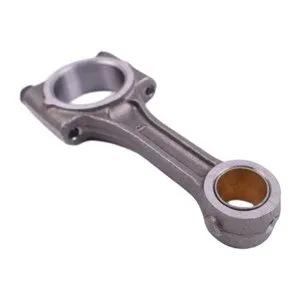
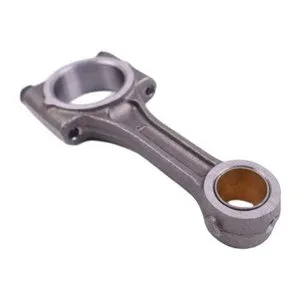
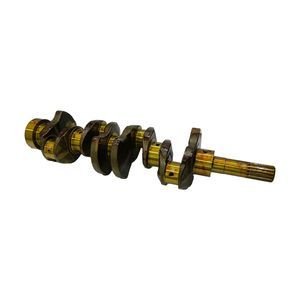
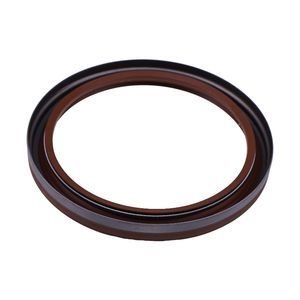
Matched set for Kubota D/V-series rebuild — big-end bore and piston pin sizing verified against your engine serial to avoid grade mismatch after crankshaft regrind.
Technical Specifications
| Parameter |
Value |
| Part Number |
15261-22010, 15531-22010, 15381-22010, 15694-22010 |
| Product Type |
Connecting Rod |
| Cross-Reference |
15261-22010, 15531-22010, 15381-22010, 15694-22010 (reference only) |
| Machine Fitment |
B1550D, B1550E, B1750D, B1750E, B2150D, B4200D, B5100D-P, B5200D, B6100D-P, B6200D, B7100D-P, B7200D, B8200DP, B9200DC-DP, F2000, F2100, GL-4500(S), GL-5500(S), KH-35(H), KH-41 |
| Material |
Forged high-strength steel |
| Condition |
New aftermarket |
| Engine Model Fitment |
D650, D750, D850, D950, V1100, V1200, ZB600 |
| Warranty |
6-month standard warranty against manufacturing defects |
| Standards |
ISO 9001 |
| Key Features |
Matched big-end bore sizing, piston pin bore alignment, balanced for inline multi-cylinder vibration control |
Application Suitability
| Engine System |
Related Components |
| Bottom-End Rotating Assembly |
Crankshaft, Main Bearings, Rod Bearings |
| Cylinder & Piston Assembly |
Piston Sets, Piston Rings, Cylinder Liners |
| Overhaul Gasket System |
Full Engine Gasket Kit, Crankcase Seals, Valve Cover Gasket |
| Lubrication & Cooling |
Oil Pump, Oil Filter, Water Pump, Thermostat |
| Fuel Delivery & Injection |
Fuel Injectors, Injection Pump, Fuel Filter |
Why Rebuilds Stall When the Connecting Rod for Kubota D650 D750 D850 D950 V1100 V1200 Engine Rebuild Arrives Alone
The connecting rod is only half the bottom-end equation; without matched bearing shells and verified crankshaft condition, the rebuild halts before the first torque sequence.
In mining and agricultural applications, an engine rebuild often fails not because of the rod itself, but because the mating components carry hidden history. When a crankshaft has been reground in a prior service life, standard-size bearing shells no longer fit the new journal diameter. This mismatch is rarely documented on the machine's service record, leading to a situation where the new connecting rod for Kubota D650 D750 D850 D950 V1100 V1200 engine rebuild arrives, but the clearance specifications are fundamentally wrong. The shop then faces a secondary teardown or a forced parts substitution that compromises the assembly's longevity. [NEED_CITE: diesel engine crankshaft regrind undersize bearing selection]

Bottom-End Rotating Assembly Integration
A connecting rod for Kubota D650 D750 D850 D950 V1100 V1200 engine rebuild operates within the high-stress environment of the bottom-end rotating assembly. Its primary function is to translate the linear force of the piston into the rotational energy of the crankshaft. When sourcing this component, the focus must remain on the dimensional consistency of the big-end bore and the piston pin bushing. These tolerances dictate the hydrodynamic oil film thickness that prevents metal-to-metal contact during the compression and power strokes.
Crankshaft History and Dimensional Grades
The most frequent cause of post-rebuild failure is the assumption of standard (STD) dimensions. Many D650, D750, D850, D950, V1100, and V1200 engines have undergone previous interventions. If the crankshaft journals were polished or reground, the connecting rod requires undersized bearing shells (0.25mm, 0.50mm, etc.) to maintain proper oil clearance. Failing to verify this history before ordering results in an assembly that either seizes from lack of clearance or knocks from excessive play. [NEED_CITE: engine rebuild tolerance stack-up and crankshaft journal measurement]
Forged Steel and Dynamic Balancing
The use of forged high-strength steel in these connecting rods ensures the component can withstand the cyclical tensile and compressive loads inherent in diesel combustion. Beyond material strength, the mass balancing of the rod is critical. In multi-cylinder platforms like the V1100 and V1200, even minor mass discrepancies between rods lead to secondary vibrations that fatigue the crankshaft and main bearings over time. Our supply protocol includes weight grading to ensure the set installed in your block remains within the manufacturer's balance specifications.
The Hidden Cost of Grade Mismatch
When a connecting rod is installed with the wrong bearing grade, the initial run-in may appear normal. However, the incorrect clearance leads to localized overheating and accelerated wear on the crankshaft journal. This often manifests as a spun bearing or a scored crankshaft within the first few hundred hours. The cost of replacing a single connecting rod is minimal compared to the labor and parts required to address a destroyed crankshaft and a contaminated lubrication system resulting from bearing material circulation. [NEED_CITE: consequences of incorrect bearing clearance in diesel engines]
Why Source the Rebuild Kit From One Account
Sourcing from a single supplier ensures that the connecting rod, piston sets, and overhaul gaskets are verified against the same engine serial number. Our technical team reviews the build sheet to confirm that the rod bolts included are of the correct tensile grade for your specific D/V-series variant. This prevents the common issue where generic fasteners yield under load, leading to big-end cap separation. We maintain cross-reference data for superseded part numbers, ensuring that older engines in the GL-6500S or KH-61H platforms receive the correct updated components.
Documentation & Verification
- Commercial Invoice: Lists matched component sets with specific engine model references for accurate customs valuation.
- Cross-Reference Sheet: Verifies 15261-22010 interchange equivalents (reference only) against your engine serial number.
- Dimensional Inspection: Records big-end bore sizing and piston pin alignment for clearance verification upon receipt.
- Warranty Terms: 6-month coverage against manufacturing defects in forging and machining tolerances.
- Packing Photographs: Confirms protective packaging of bearing surfaces and threaded bolt holes before dispatch.
Installation & Rebuild Sequence
- Cleanliness: Ensure the block and crankcase are free of abrasive debris before installing the new connecting rod assembly.
- Bolt Stretch: Follow the specific torque and angle sequence for rod bolts to ensure proper clamping force without yielding.
- Clearance Check: Verify oil clearance using Plastigauge between the rod bearing shell and the crankshaft journal before final assembly.
- Side Play: Measure connecting rod side clearance against the crankshaft web to ensure it falls within D/V-series specifications.
- Initial Run-in: Use high-zinc break-in oil for the first start to protect the new bearing surfaces during the seating process.
Requesting a Complete Overhaul Proposal
To receive a proposal that addresses the entire bottom-end system, please provide the engine model (e.g., V1100), the engine serial number, and any known history regarding crankshaft regrinds. This information allows us to select the correct bearing grades and verify that the connecting rod for Kubota D650 D750 D850 D950 V1100 V1200 engine rebuild matches your specific block variant. Including photos of the existing rod part number and the engine nameplate ensures we account for any production mid-year changes.
Frequently Asked Questions
Q: What other components must be evaluated when replacing a single connecting rod?
A: When replacing a rod, you must verify the condition of the crankshaft journal and the corresponding bearing shells. It is also standard practice to inspect the piston pin bore for wear and check the piston for skirt scuffing. Replacing the rod bolts is mandatory, as they are torque-to-yield fasteners that cannot be reused safely in a high-compression diesel environment.
Q: How do I determine if my engine requires standard or undersized bearings for this rod?
A: This determination depends entirely on the history of the crankshaft. If the crankshaft has been reground in a previous overhaul, undersized bearings (0.25mm, 0.50mm) are required. The only way to confirm this is by measuring the crankshaft journal diameters or checking the engine's rebuild history. Do not assume standard size based on the engine model alone.
Q: Are the connecting rods for D650 and V1200 engines interchangeable despite similar appearances?
A: No. While they may share visual similarities, the stroke length, big-end bore diameter, and mass balancing requirements differ significantly between inline (D-series) and V-type (V-series) platforms. Installing a rod from the wrong engine family will cause catastrophic clearance issues and severe vibration. Always verify the part number against the specific engine serial number.
Q: Does the aftermarket supply include the rod bolts and the piston pin bushing?
A: Our supply typically includes the connecting rod body, the cap, the rod bolts, and the piston pin bushing installed and honed to size. However, bearing shells are often sourced separately to allow for precise grade selection based on your crankshaft condition. We recommend ordering the rod, bearings, and bolts as a verified set to ensure fitment compatibility.
Q: What engine serial information is critical for confirming fitment?
A: The engine serial number allows us to identify the specific production run of your D650, D750, or V1100 engine. Kubota made incremental changes to rod weight and bolt specifications across different production years. Providing the full serial number ensures we supply a rod that matches the original balance and fastener requirements of your specific block configuration.