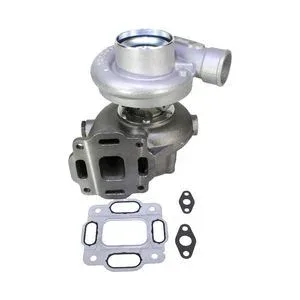
Matched Set Dispatch — Turbocharger ships with verified mating gaskets and oil feed seals matched to the C3.3B engine serial variant.
Technical Specifications
| Parameter |
Value |
| Part Number |
436-1920 |
| Product Type |
Turbocharger |
| Turbo Model |
TD04L4, TD04L4-09TK3-5.0 |
| Compatible Engine |
C3.3B |
| Cross-Reference |
436-1920, CA436-192, 436-192, 436192 (cross-reference only for identification purposes) |
| Machine Fitment |
308, 308.5, 308E2 CR, 308E2 SR, 309, 310, 236D, 236D3, 242D, 242D3, 246D, 246D3, 257D, 257D3, 259D, 259D3, 262D, 262D3, 277D, 279D, 279D3, 287D, 289D, 289D3, AP300F, AP355F, 906M, 907M, 908M |
| Condition |
New Aftermarket |
| Warranty |
3-12 months against manufacturing defects |
| Quality Standard |
ISO 9001 |
Application Suitability
| Engine System |
Related Components |
| Intake and Exhaust |
Turbine housing gaskets, compressor housing seals, exhaust clamp kits |
| Lubrication Circuit |
Oil feed line, oil drain return tube, crankcase breather |
| Air Filtration |
Primary and secondary air filters, intake ducting seals |
| Emission Control |
EGR cooler connections, DPF differential pressure sensor lines |
Why a Turbocharger for CAT C3.3B Engine Rebuild Fails Again Within Weeks
Replacing the turbo without tracing the upstream cause of failure guarantees a repeat teardown.
In the Yangtze Delta equipment repair belt, I have watched overhaul bays pull a second turbo off the same C3.3B block within a single quarter. The root cause usually lives in the oil feed restriction or a collapsed air filter element that starved the first unit. Swapping the rotating assembly without addressing that upstream fault simply hands the next turbocharger for CAT C3.3B engine rebuild the same destructive conditions [NEED_CITE: diesel engine turbocharger oil starvation failure analysis].
A machine that returns to the bench twice burns more labor hours than a careful system sweep would have cost on day one. The pattern repeats across skid steers and mini excavators alike, where compact engine bays concentrate heat and restrict airflow around the bearing cartridge.

System Context: Where the TD04L4 Sits in the C3.3B Air Path
The TD04L4 turbocharger occupies the junction between the exhaust manifold and the charge air cooler, converting waste exhaust energy into boost pressure that the C3.3B combustion cycle depends on. Every mating surface upstream and downstream must seal correctly; a leaking exhaust flange gasket drops turbine inlet pressure, while a cracked charge air hose bleeds boost before it reaches the cylinders. Treating the turbocharger for CAT C3.3B engine rebuild as an isolated swap ignores these adjacent leak paths.
Engine Serial Variants and What They Change
Caterpillar C3.3B engines carry serial-level differences in oil feed port diameter and drain flange bolt pattern across production runs. A turbo unit that physically bolts to one serial range may leave the oil drain misaligned by several millimeters on another, forcing the return oil to back up into the bearing housing. Confirming the exact engine serial number before dispatch prevents this interference fit issue and avoids the gasket trimming that leads to early seepage [NEED_CITE: C3.3B engine serial variant oil port configuration].
Interpreting the TD04L4 Specification Sheet
The TD04L4-09TK3-5.0 designation encodes the compressor wheel trim, turbine housing A/R ratio, and wastegate actuator calibration. The 5.0 cm² turbine housing area suits the C3.3B displacement, balancing low-end spool response against high-RPM exhaust back pressure. Deviating from this A/R value shifts the boost curve, either creating lag at working RPM or over-speeding the shaft at idle. The bearing cartridge uses a full-floating journal design that requires clean oil at a specific feed pressure; any sludge from a neglected crankcase breather accelerates journal wear.
The Hidden Cost of Skipping the Root-Cause Check
A shop that installs a fresh turbo without flushing the oil feed line or replacing the crankcase breather often sees bearing failure within a few hundred operating hours. The second teardown doubles labor cost and erodes customer confidence. Worse, a misidentified serial variant that forces the installer to rework the oil drain flange introduces a stress concentration that can crack the housing under thermal cycling [NEED_CITE: turbocharger housing thermal fatigue cracking].
Why Source This Component Through XUNPO
Our Guangzhou facility produces selected turbocharger lines and sources the remainder from ISO-certified partners, all carrying the same warranty terms. A single account covers the turbocharger for CAT C3.3B engine rebuild alongside every gasket, oil line, and filter in the same job list. One-piece minimum orders let you order a sample for fitment confirmation before committing to fleet quantities. Part identification works from the number, the machine model, or a photograph of the nameplate, and cross-reference verification covers superseded part numbers across production generations.
Documentation & Verification
- Commercial invoice listing each turbo unit and matched gasket set with line-item HS codes
- Cross-reference sheet mapping 436-1920 interchange numbers (reference only) to engine serial ranges
- Dimensional inspection record covering turbine shaft runout and bearing clearance measurements
- Warranty terms document specifying coverage period and exclusions for oil contamination
- Packing photographs showing protective caps on oil ports and compressor inlet before crate closure
Installation & Rebuild Sequence
- Verify oil feed and drain passages are clear before mounting the turbocharger onto the C3.3B block
- Use matched gaskets from the kit; do not reuse crushed exhaust flange gaskets from the previous install
- Prime the bearing cartridge with clean engine oil through the feed port before first cranking
- Torque turbine housing nuts and compressor outlet clamps to C3.3B service manual specifications
- Run the engine at idle for a break-in period and monitor for oil seepage at drain flange joints
Requesting a System-Matched Quote
Provide the C3.3B engine serial number, any known overhaul history including previous bore oversizes, and the machine model. This information lets us confirm the correct turbocharger variant, the right gasket thickness, and any superseded part numbers that apply to your specific engine build.
Frequently Asked Questions
Q: What gaskets and seals should be replaced together with the turbocharger?
A: The full mating set includes the exhaust manifold-to-turbine gasket, compressor outlet flange seal, oil feed banjo washers, and oil drain flange O-ring. Reusing any of these after heat cycling risks blow-by or oil weepage that undermines the new turbo's service life.
Q: How do I confirm the correct turbo variant for my C3.3B engine serial number?
A: Share the engine serial plate photo or the stamped number from the block. We cross-check the oil port configuration and drain bolt pattern against our variant database to ensure the unit matches your specific production run.
Q: What oil system components should I inspect to prevent repeat turbo failure?
A: Inspect the oil feed line for internal sludge or kink damage, verify the crankcase breather is not blocked, and confirm the oil filter bypass valve closes correctly. Any restriction or contamination in these circuits accelerates journal bearing wear.
Q: Does the overhaul kit include the turbo mounting hardware?
A: The standard overhaul kit covers gaskets and seals for the turbo interfaces. Mounting studs and nuts are available as a separate line item; specify your need when requesting the kit contents list so we consolidate everything in one shipment.
Q: Can I get a matched set for the entire intake and exhaust system?
A: Yes. We assemble matched sets covering the air filter, intake duct seals, charge air cooler gaskets, turbocharger, and exhaust clamp kits. Providing the full engine serial and machine model ensures every component in the set is serial-compatible.