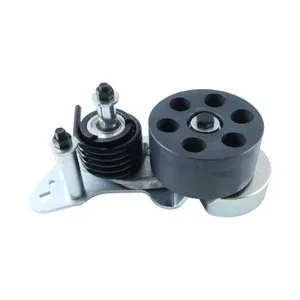
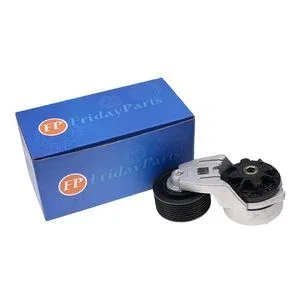
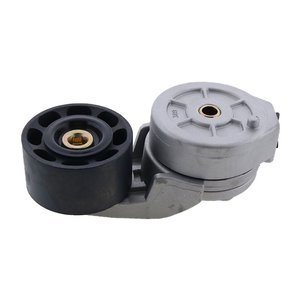
Matched Set for Belt Drive Rebuilds — every tensioner assembly ships with verified spring preload and pulley runout records so the full belt drive system goes back together with known tolerances.
Technical Specifications
| Parameter |
Value |
| Part Number |
7167165 7274780 7273503 |
| Product Type |
Belt Tensioner |
| Cross-Reference |
7167165, 7274780, 7273503, 7196910, 7201887, 7145358, 6564692, 7152658, 53DM12, 3GM12110, 59CM835, 7CM12140, 7273604 (reference only) |
| Machine Fitment |
S510, S530, S550, S570, S590, S595, S630, S650, S740, S750, S770, S850, T550, T590, T595, T630, T650, T740, T750, T770, T870 |
| Condition |
New Aftermarket |
| Pulley Material |
6061-T6 aluminum |
| Pulley Runout Tolerance |
±0.02 mm |
| Rocker Arm Material |
45# carbon steel (normalized) |
| Rocker Arm Hardness |
HRC 38–42 |
| Spring Material |
ASTM A228 music wire |
| Spring Tension Range |
180–220 N |
| Bushing Type |
PTFE-impregnated bronze sintered sleeve |
| Bushing Concentricity |
0.005 mm ID/OD |
| Fastener Grade |
ISO 898-1 Grade 8.8 |
| Operating Temperature Range |
-20°C to +60°C |
| Radial Load Capacity |
Up to 12 kN |
| Warranty |
3–12 months against manufacturing defects |
| Standards |
ISO 9001, ISO 898-1, ISO 6892-1, ISO 4287, ASTM A228 |
Application Suitability
| Engine System |
Related Components |
| Accessory belt drive |
Serpentine belt, idler pulleys, crankshaft pulley |
| Alternator drive circuit |
Alternator mounting bracket, drive belt, wiring harness |
| Water pump drive |
Water pump, coolant hoses, thermostat housing |
| Fan drive system |
Fan clutch, fan blade assembly, shroud mounting |
| A/C compressor drive |
Compressor clutch, refrigerant lines, condenser |
Why Repeat Failures Start With an Incomplete Belt Drive Rebuild
A Belt Tensioner Assembly that fails early is rarely the root cause — it is the symptom of worn pulleys, fatigued springs, or misaligned brackets left in place.
In my years moving from catalog lookup to engine technical support across Latin American mining and construction sites, I have watched the same pattern repeat: a loader comes in with a shredded belt, the tensioner gets swapped, and weeks later the machine is back on the bench with the same complaint. The belt drive system in Bobcat skid steer and compact track loaders operates under continuous high-torque cycling during digging and tramming. When the belt tensioner assembly is replaced without checking pulley runout on the crankshaft and idler positions, or without verifying that adjacent brackets have not shifted, the new unit absorbs loads it was never designed to carry alone. [NEED_CITE: engine belt drive system failure root cause analysis for compact loaders]
The Belt Drive System as an Integrated Assembly
Every Belt Tensioner Assembly in this series serves the same fundamental role across the Bobcat S510 through T870 range — maintaining correct belt tension as the engine cycles through load changes. The tensioner does not work in isolation. It responds to forces transmitted through the serpentine belt from the crankshaft pulley and resisted by each driven accessory. When a rebuild addresses only the failed component, the remaining worn elements shift the load distribution, forcing the replacement tensioner into deflection angles and oscillation frequencies outside its design envelope.
Engine Serial Variants and Cross-Reference Verification
The cross-reference identifiers 7167165, 7274780, and 7273503 (for identification purposes) cover multiple engine serial variants across the Bobcat loader range. Different engine builds within the same machine model may use distinct tensioner mounting patterns or spring preload specifications. An S770 built early in its production run may carry a different engine serial than one assembled later, and the belt drive geometry may have been revised between those builds. Confirming the engine serial number against the service documentation before ordering prevents the situation where the tensioner bolts up but the belt tracks incorrectly. [NEED_CITE: engine serial variant cross-reference procedures for compact loader belt drives]
What the Specifications Mean at the Bench
The pulley is machined from 6061-T6 aluminum with a runout tolerance of ±0.02 mm. In practice, this matters because even minor lateral runout at the tensioner pulley translates into belt edge wear that accelerates over hundreds of operating hours, eventually causing the belt to walk off the pulley grooves during sudden load reversals. The spring is wound from ASTM A228 music wire and preset to deliver between 180 and 220 N of tension. This range is specific: too little tension allows the belt to slip under the peak torque of a digging cycle, generating heat that degrades the belt compound; too much tension overloads the accessory bearings. The PTFE-impregnated bronze bushing at the pivot point maintains concentricity within 0.005 mm between inner and outer diameters, which is what allows the rocker arm to oscillate smoothly without binding — binding is one of the most common causes of uneven belt wear that technicians mistake for a belt quality issue.

The Cost of Skipping the Root Cause
Replacing only the tensioner while leaving a worn crankshaft pulley or a fatigued idler in the belt drive system does not save time — it defers the failure. The new Belt Tensioner Assembly compensates for the worn components, absorbing asymmetric loads that accelerate its own wear. On a mine site or a rental yard, the machine returns to service briefly, then comes back with a thrown belt or a seized tensioner bearing, and the second repair now includes the cost of a second mobilization, a second round of diagnostic time, and the credibility loss with the equipment operator. Addressing the belt drive as a system on the first visit avoids this cycle. [NEED_CITE: repeat repair cost impact from incomplete belt drive system overhaul]
System-Level Supply from One Account
We produce selected belt drive components in our own Guangzhou facility and source the remainder from qualified ISO-certified partners, with both lines carrying the same warranty terms and quality inspection protocol. For an engine rebuild shop quoting a Bobcat loader overhaul, this means the tensioner, matched belt, idler pulleys, and associated fasteners all ship under one account with one set of documentation. Minimum order is one piece, so a single emergency tensioner for a downed machine is handled with the same verification process as a fleet batch. Our technical team confirms compatibility against the specific engine serial variant and cross-reference number you provide, and we supply dimensional inspection records covering spring force, pivot torque, and pulley concentricity before dispatch. Samples are available for fitment confirmation before you commit to bulk quantities.
Documentation & Verification
- Commercial invoice and packing list referencing belt drive system part numbers and quantities
- Cross-reference sheet for 7167165, 7274780, 7273503 and alternates marked reference only
- Quality inspection records covering spring force, pivot torque, and pulley runout measurement
- Warranty terms covering manufacturing defects on tensioner assembly and matched belt drive components
- Packing photographs documenting tensioner and associated components before crate closure
- HS code and customs classification support for belt drive system export documentation
Installation & Rebuild Sequence
- Inspect crankshaft pulley runout and idler bearing play before mounting the new tensioner assembly
- Clean all belt drive mounting surfaces and verify bracket bolt torque to specification
- Install the Belt Tensioner Assembly and route the belt per the engine service diagram
- Rotate the engine by hand two full revolutions and check belt tracking on each pulley
- Run the engine at idle and observe tensioner oscillation — excessive flutter indicates a system issue
- Record initial belt deflection and recheck after the first operating cycle
Request a System-Matched Quote
Provide your engine model and serial number along with any previous rebuild history so we can verify the correct tensioner variant and recommend which adjacent belt drive components should be included in the same shipment. If the original nameplate is illegible, a photograph of the existing tensioner and its mounting bracket is usually sufficient for identification.
Frequently Asked Questions
Q: What other belt drive components should be replaced together with the tensioner assembly?
A: The serpentine belt and all idler pulleys should be evaluated during any tensioner replacement. On high-hour Bobcat loaders, the crankshaft pulley damper and accessory brackets should also be inspected for runout and fatigue cracking. Replacing the Belt Tensioner Assembly as part of a matched set addresses the root cause rather than the symptom and prevents premature repeat failure.
Q: How do engine serial variants affect tensioner fitment across Bobcat S510–T870 models?
A: Bobcat loader engines may carry different serial ranges depending on production date and emission tier, which can change the tensioner mounting pattern or spring specification. Always confirm the engine serial number against service documentation before ordering. Our cross-reference verification covers superseded and alternate numbers to ensure correct fitment.
Q: What root causes in the belt drive system lead to premature tensioner failure?
A: Common causes include excessive pulley runout on the crankshaft or idler positions, worn pivot bushings in adjacent components, bracket fatigue shifting the belt plane, and belt contamination from oil or coolant leaks. Each of these forces the tensioner to compensate beyond its design range, accelerating spring fatigue and bearing wear.
Q: What quality tests are performed on the spring, pulley, and bushings before shipment?
A: Each Belt Tensioner Assembly undergoes dimensional inspection covering pulley runout, bushing concentricity, and spring force within the specified 180–220 N range. Pivot torque is measured to confirm smooth oscillation. Quality inspection records documenting these checks are supplied with every shipment for your rebuild documentation.