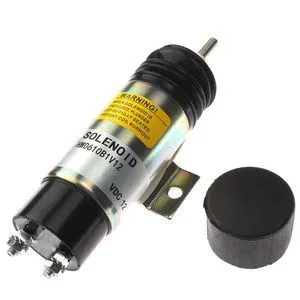
Matched Set Supply — every stop solenoid ships verified against your engine serial to prevent mismatched variants and repeat teardowns
Technical Specifications
| Parameter |
Value |
| Part Number |
1G820-60022 1G820-60012 1G820-60020 |
| Product Type |
Stop Solenoid |
| Cross-Reference |
1G820-60022, 1G820-60010, 1G820-60012, 1G820-60020 (reference only) |
| Machine Fitment |
KX018-4, KX41-3, U15, U17, SCL1000, K008-5 |
| Voltage |
12V |
| Coil Insulation Class |
Class H (180°C) |
| Continuous Duty Ambient Temperature Rating |
up to 85°C |
| Sealing |
Dual EPDM O-rings meeting SAE J1926 |
| Dimensional Tolerance |
±0.05 mm |
| Condition |
New Aftermarket |
| Warranty |
6 months against manufacturing defects |
| MOQ |
1 piece |
| Engine Compatibility |
Kubota D722, D782, D902 |
Application Suitability
| Engine System |
Related Components |
| Fuel Shutoff Control |
Fuel injection pump seals and return line fittings |
| Cylinder Head Interface |
Head gasket set and injector sleeve seals |
| Electrical Harness Circuit |
Wiring connector terminals and protective loom |
| Engine Overhaul Assembly |
Complete gasket kit, piston rings, bearing shells |
Why a Stop Solenoid Fails Before the Engine Does
A replacement solenoid that ignores the root cause of the previous failure will not survive the next service interval.
When a 12V Stop Solenoid engine rebuild replacement is installed without inspecting the fuel return lines or the wiring harness connector, the new unit inherits the same contamination or voltage drop that destroyed its predecessor. I have opened fuel systems where degraded injector return hoses shed particulate directly into the solenoid cavity, causing the plunger to stick within operating hours of a fresh install [NEED_CITE: diesel fuel system contamination pathways in compact engines]. The engine serial number dictates which reference variant applies across superseded numbers, and ordering the wrong variant means the electromagnetic stroke does not match the valve seat geometry.

The Fuel Shutoff Circuit Within the D-Series Engine
The stop solenoid sits at the boundary between the electrical control circuit and the fuel metering system on D722, D782, and D902 engines. Its function is to interrupt fuel delivery to the injection pump when the ignition is switched off, preventing uncontrolled engine run-on. A 12V Stop Solenoid engine rebuild replacement must align precisely with the cylinder head port, and the ±0.05 mm dimensional tolerance ensures the dual EPDM O-rings seat without binding or leaking under 3 bar fuel pressure. When sourcing this component for an overhaul, it belongs in the same procurement cycle as the injection pump seal kit and fuel filter assembly.
Superseded Numbers and Engine Serial Variants
The reference numbers 1G820-60010, 1G820-60012, 1G820-60020, and 1G820-60022 have been applied across different production runs of the same engine family. The physical differences between variants are not visible from the outside — they involve internal plunger stroke length and spring preload, which determine whether the solenoid fully closes the fuel passage on your specific engine serial. I once spent two weeks chasing a shutoff fault on a D902 because the solenoid fitted physically but left a micro-gap in the fuel gallery [NEED_CITE: engine serial variant identification for fuel control solenoids]. Confirming the applicable number against the engine serial before ordering eliminates this class of diagnostic dead end.
Reading the Specifications That Matter at Rebuild
Class H coil insulation rated to 180°C matters because the solenoid body sits adjacent to the cylinder head, where sustained bay temperatures approach its continuous duty limit of 85°C. If the wiring harness connector shows corrosion or pin spread, the voltage reaching the coil drops below the threshold needed for full plunger engagement, producing the erratic shutoff behaviour that mechanics often blame on the solenoid itself. The SAE J1926 sealing standard for the dual EPDM O-rings addresses diesel fuel compatibility across the temperature range the engine produces, and inspecting these seals during a rebuild is an opportunity to check the mating bore for scoring that would compromise any new O-ring. The response time specification governs how quickly the solenoid transitions between energised and de-energised states, which directly affects whether fuel flow stops cleanly or dribbles into the combustion chamber after key-off [NEED_CITE: solenoid response characteristics in diesel engine shutoff circuits].
The Cost of Rebuilding Around a Faulty Shutoff Circuit
When a rebuild proceeds without confirming that the solenoid circuit — wiring, connector, and mating bore — is sound, the engine may pass its initial test run only to exhibit hot-restart flooding or failure to shut down under load. The resulting teardown to re-inspect the fuel system costs more in labour and gasket consumption than a thorough circuit check during assembly. A solenoid that fails prematurely after rebuild is rarely a defective component; it is more often a symptom of voltage drop in a degraded harness or particulate scoring the plunger bore that nobody cleaned during reassembly.
What This Supply Channel Delivers for Your Rebuild
Own production on selected part lines and qualified sourced supply both carry the same quality control and warranty terms, so you receive consistent documentation regardless of which facility produced your solenoid. Part identification works from the reference number, the machine model, a photograph of the nameplate, or a worn label image — whichever is the only starting point you have. Cross-reference verification covers the superseded numbers in this family, confirming which variant matches your engine serial before anything ships. Sample supply is available for fitment confirmation before you commit to bulk quantities for a fleet overhaul programme. The technical team confirms compatibility and variant selection against engine serial data, reducing the risk of a mismatch reaching your bench.
Documentation & Verification
- Commercial invoice listing each solenoid variant with applicable engine serial references
- Cross-reference sheet mapping superseded numbers to current production variant (reference only)
- Functional test record showing voltage response and seal integrity before dispatch
- Warranty terms specifying coverage scope for manufacturing defects
- Packing photographs confirming O-ring protection and coil terminal condition
Installation & Rebuild Sequence
- Clean the cylinder head solenoid bore thoroughly before fitting new EPDM O-rings
- Verify wiring harness connector pins for corrosion and retention before mating
- Confirm plunger stroke engages fully by manual actuation before final assembly
- Test shutoff function with fuel system pressurised before reinstalling adjacent components
- Run the engine through cold and hot shutdown cycles to validate solenoid response
Confirming the Right Variant for Your Engine
Provide the engine model, serial number, and any previous overhaul history so we can identify which reference number applies and whether bore dimensions have been altered by prior machining.
Frequently Asked Questions
Q: What other fuel system components should be inspected or replaced when changing the stop solenoid?
A: The injector return line hoses, fuel filter assembly, and injection pump seals should be checked during the same service event. Degraded return lines introduce particulate that scores the solenoid plunger bore, and contaminated fuel accelerates O-ring wear. Replacing these as a matched set during rebuild prevents the new solenoid from inheriting the failure conditions that destroyed its predecessor.
Q: How do superseded reference numbers affect which solenoid fits my specific engine serial?
A: Reference numbers in this family were applied across different production runs with internal stroke and preload variations that are not externally visible. The engine serial determines which variant closes the fuel gallery correctly. Ordering without confirming serial applicability risks a solenoid that fits physically but leaves a micro-gap causing hot-restart flooding or shutoff failure.
Q: Does a typical engine overhaul kit include this stop solenoid, or is it ordered separately?
A: Most overhaul gasket and bearing kits do not include the stop solenoid, as it is classified within the auxiliary control circuit rather than the internal engine assembly. It must be specified and ordered alongside the fuel system seal kit. Confirming this during the initial parts procurement avoids a partially complete rebuild waiting on a separate order.
Q: What system-level faults cause premature stop solenoid failure beyond the part itself?
A: Voltage drop from corroded wiring harness connectors, particulate contamination from degraded fuel hoses, and scoring in the cylinder head solenoid bore are the most common system causes. The solenoid is often the component that fails, but the root cause lives in the circuit or fuel delivery path surrounding it. Addressing these during rebuild extends component service life.
Q: How do I confirm the correct engine variant when the nameplate is worn or unreadable?
A: A photograph of the engine block casting numbers, the injection pump model plate, or any surviving serial stamping allows identification of the engine variant and applicable solenoid reference. Cross-referencing these against the machine model narrows the correct variant without requiring a legible nameplate.