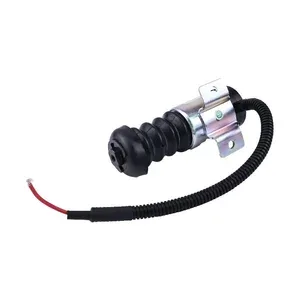
Engine Sequence Variants Confirmed — Cummins 4BT and 6BT production runs carry different electrical interface layouts, and this stop solenoid cross-reference has been mapped to each variant before dispatch.
Technical Specifications
| Parameter |
Value |
| Part Number |
3930658 3932529 SA-4756-12 |
| Cross-Reference (reference only) |
3930658, 3932529, SA-4756-12, SA475612, 3939700, SA-4891-12, SA489112 |
| Machine Fitment |
Cummins 4BT, 6BT diesel engines |
| Product Type |
Stop Solenoid |
| Voltage |
12V |
| Operating Temperature |
Up to 85°C |
| Insulation Class |
IEC 60034 Class B |
| Plunger Tolerance |
±0.02 mm |
| Seal Type |
Dual-lip nitrile rubber |
| Coil Material |
Copper-clad aluminum |
| Core Material |
Cold-drawn low-carbon steel |
| Condition |
New Aftermarket |
| Warranty |
6 months against manufacturing defects |
| Minimum Order |
1 piece |
| Standards |
ISO 9001, IEC 60034 |
Application Suitability
| Engine System |
Related Components |
| Shutdown circuit |
Ignition switch relay, wiring harness, fuel rack linkage |
| Fuel delivery interface |
Fuel shutoff lever, return spring, rack housing seal |
| Electrical supply circuit |
Battery terminal connections, inline fuse, ground strap |
| Engine overhaul (top-end) |
Gasket set, valve stem seals, injector sleeve O-rings |
| Periodic service inspection |
Pull-in voltage test points, cycle response verification |
Why Replacing the Stop Solenoid Alone Leaves the Real Fault Undiagnosed
A failed stop solenoid is usually the symptom, not the root cause — tracing the shutdown circuit upstream prevents the replacement unit from failing within weeks.
I worked on a 6BT-powered haul truck in a Nigerian pit where the stop solenoid had been swapped out on three occasions across one wet season. Each time, the machine ran fine for a handful of shifts before stalling again without warning. The actual failure point was a corroded ground strap behind the engine block, causing voltage drop under load that the solenoid coil could not tolerate. The part was blamed; the circuit was never tested. That pattern repeats across mining and demolition sites where shutdown faults get treated as parts failures rather than system failures [NEED_CITE: diesel engine shutdown circuit diagnostic procedures for off-highway equipment].

Mapping the Shutdown Circuit Before Ordering
Replacing this stop solenoid engine replacement for Cummins 4BT 6BT engines without verifying the ignition relay, wiring continuity, and fuel rack movement leaves the original fault intact. The solenoid sits at the end of a chain that begins at the key switch, passes through a relay, travels along the harness, and terminates at the fuel rack plunger. A binding rack or a relay with pitted contacts will overload the coil in exactly the same way, regardless of whether the solenoid itself is new. Checking these upstream points during the same downtime window costs little and prevents a second teardown.
Engine Serial Variants and What Changes Between Them
Cummins 4BT and 6BT families span multiple production generations, and the stop solenoid mounting interface is not universal across all of them. Connector pin layout, housing bolt spacing, and plunger stroke length can shift between a 4BT3.9 and a 4BTA3.9 even though the base engine block designation appears identical [NEED_CITE: Cummins B-series engine variant identification by serial number prefix]. Confirming the engine serial number before dispatch ensures the unit shipped matches the harness connector and rack housing already on the machine, avoiding the situation where the part arrives and the plug does not seat.
Decoding the Specification Sheet for Field Conditions
The plunger tolerance of ±0.02 mm matters because the fuel rack housing bore may have been honed during a prior rebuild, and an oversized or undersized plunger will either bind or leak fuel vapor into the solenoid cavity. The dual-lip nitrile rubber seal is selected for resistance to diesel vapor and humidity — in coastal or tropical mine environments, single-lip seals deteriorate within a service cycle, allowing vapor to corrode the coil winding from the inside. The copper-clad aluminum coil operates within IEC 60034 Class B insulation limits, rated for sustained thermal loading up to 85°C, which covers the ambient-plus-radiant heat envelope typical around a turbocharged diesel block. Cold-drawn low-carbon steel in the core provides consistent magnetic permeability, meaning pull-in force remains predictable across the operating temperature range rather than weakening as the engine bay heats up.
The Hidden Cost of Skipping the Root-Cause Check
When a workshop installs a new stop solenoid without testing the wiring harness or fuel rack spring tension, the coil on the replacement unit absorbs the same abnormal load that destroyed the previous one. The machine returns to service, accumulates a few hundred operating hours, and then stalls at the worst possible moment — mid-cycle in a quarry, or loaded on a ramp underground. A second teardown doubles the labor cost and erodes confidence in the parts supply chain, when the real failure point was a ten-dollar relay or a frayed wire loom that a multimeter would have caught in minutes [NEED_CITE: electrical fault isolation methods for diesel engine shutdown solenoids].
What This Supply Channel Delivers
Selected part lines are produced in-house while the remainder is sourced from qualified ISO-certified manufacturing partners, and both carry the same QC and warranty terms — this stop solenoid ships under that single warranty umbrella. Eight product categories mean the shutdown circuit relay, fuel rack seal, and harness connector can all appear on one commercial invoice rather than three separate orders. Minimum order sits at one piece, so an emergency single-unit requirement does not get blocked by volume thresholds. Guangzhou warehouse stock enables fast dispatch on common Cummins-compatible references. Part identification works from a part number, a machine model, a photograph of the nameplate, or an image of the old unit on the bench. Cross-reference verification covers superseded numbers like 3939700 and SA-4891-12, so legacy references do not result in wrong shipments.
Documentation & Verification
- Commercial invoice listing stop solenoid part number and engine compatibility statement
- Cross-reference sheet mapping OEM references (for identification purposes) to shipped unit
- Quality inspection record covering pull-in voltage, holding current, and cycle test results
- Six-month warranty terms with photo-based claim process and brief failure description
- Packing photographs showing solenoid condition and seal protection before crate closure
- HS code and customs documentation support for destination-country import clearance
Installation & Rebuild Sequence
- Disconnect battery ground before removing the existing solenoid from the fuel rack housing
- Inspect the rack bore for scoring and verify plunger slides freely without lateral binding
- Confirm wiring harness connector pins are clean and match the new solenoid pin layout
- Torque mounting fasteners to specification and check that the dual-lip seal seats evenly
- Apply 12V directly at the coil terminals to verify pull-in and release before reassembly
- Run the engine through three shutdown cycles to confirm consistent rack return and fuel cutoff
Requesting a Quotation with the Right Information
Provide the Cummins engine serial number and the production code stamped on the block, along with any prior rebuild history that may have altered the fuel rack housing bore dimension. If the nameplate is missing, send a photograph of the existing solenoid connector and mounting flange so the variant can be confirmed before dispatch.
Frequently Asked Questions
Q: What else should I check when the stop solenoid fails repeatedly?
A: Test the ignition relay contacts for pitting, measure voltage drop across the wiring harness under load, and verify the fuel rack return spring has not lost tension. A corroded ground strap is a frequent hidden cause — tracing the full shutdown circuit prevents the new stop solenoid from absorbing the same overload that destroyed the previous unit.
Q: Does my Cummins 4BT3.9 vs. 4BTA3.9 use the same solenoid?
A: Not always. The connector type, bolt spacing, and plunger stroke can differ between naturally aspirated and turbocharged variants even within the same displacement family. Provide the full engine serial number so the correct variant is confirmed against cross-reference records before the unit ships.
Q: How do I test whether the fault is the solenoid or the wiring?
A: Apply 12V directly to the solenoid terminals with the engine off. If the plunger actuates cleanly, the solenoid is functional and the fault lies upstream — check harness continuity, relay operation, and ignition switch output voltage under load to isolate the actual failure point.
Q: Is this solenoid included in a complete engine overhaul kit?
A: Standard overhaul kits typically cover internal wear components such as pistons, rings, bearings, and gaskets. The stop solenoid is classified as an engine auxiliary component and is ordered separately. Specify it alongside your overhaul kit to consolidate dispatch under one shipment and one warranty.
Q: How do I confirm my engine model when the nameplate is unreadable?
A: Send a photograph of the fuel pump mounting face, the block casting number, or the existing solenoid connector shape. These visual references allow the engine variant to be identified and matched to the correct stop solenoid cross-reference without relying on the serial plate alone.