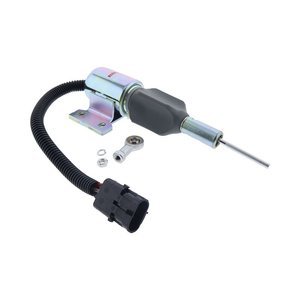
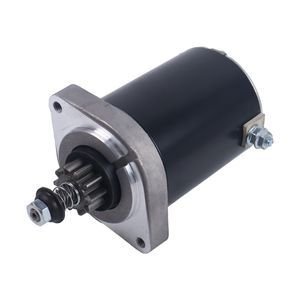
Engine Grade Match — Flywheel ring gear tooth profile and battery circuit verified alongside every Kubota V2203/V3300 starter unit before dispatch.
Technical Specifications
| Parameter |
Value |
| Part Number |
6676957 6685190 |
| Product Type |
Starter Motor |
| Cross-Reference |
6676957, 6685190, SPR0010, VTM000A28901, V600932, 6881399, DSL6676957, 113727, 410-40014, 18486, TM000A28901, 600932, 7283321, STR54124, 2-2306-MD, 22306MD (reference only) |
| Machine Fitment |
Bobcat 751, 753, 763, 773, A300, A770, S100–S850, T110–T870, V417, 5600, 5610; Kubota V2203, V2203EB, V2203TEB, V3300, V3300DI |
| Voltage |
12 Volts |
| Power |
2.7 kW |
| Type |
PLGR (Planetary Gear Reduction) |
| Rotation |
CW |
| Teeth/Splines |
11 Teeth |
| Pinion OD |
40.2 mm / 1.583 in |
| Mounting Holes |
3 × 11.7 mm ID Unthreaded |
| Condition |
New Aftermarket |
| Warranty |
3–12 months against manufacturing defects |
| Standards |
ISO |
Application Suitability
| Engine System |
Related Components |
| Kubota V2203/V3300 starting circuit |
Flywheel ring gear, battery cables, solenoid relay |
| Bobcat skid steer electrical system |
Battery terminals, wiring harness, ignition switch |
| Engine overhaul auxiliary group |
Starter motor, alternator, engine gasket kit |
| Track loader cold-start system |
Heavy-duty battery, battery isolator, charge circuit |
Why a New Starter Fails Weeks After an Engine Rebuild
A replaced starter motor that fails again usually points to an upstream fault left undiagnosed during the rebuild.
In engine rebuild shops, the pressure to return equipment to service can mean swapping the starter motor engine rebuild replacement and sending the machine straight back out. Yet repeat no-crank complaints within a few hundred hours often trace back to corroded battery terminals, undersized cables, or a worn flywheel ring gear that was never inspected. I once saw a Bobcat T770 fitted with a fresh starter that still cranked sluggishly — the root cause turned out to be voltage drop at the battery posts, not the motor itself. Overlooking the charging and cranking circuit during a Kubota V3300 overhaul means the new starter absorbs the same electrical stress that killed the original [NEED_CITE: cranking system voltage drop diagnostic standards for diesel equipment]. Addressing the system as a whole prevents the next failure from arriving on schedule.

The Starter Motor's Position Inside the Engine Auxiliary System
The starter motor sits at the intersection of the electrical and mechanical sides of the engine. During a Kubota V2203 or V3300 rebuild, its condition must be assessed together with the flywheel ring gear and the entire cranking circuit. A starter motor engine rebuild replacement that ignores mesh condition on the ring gear invites accelerated tooth wear on both components.
Engine Serial Variants and Mounting Flange Differences
Kubota V2203EB, V2203TEB, and V3300DI variants carry different mounting flange configurations across production runs. The 3 × 11.7 mm unthreaded mounting hole pattern must align precisely with the bell housing on your specific engine serial. Ordering without confirming the serial number risks receiving a unit whose bolt pattern is offset, forcing a return and extending the rebuild timeline. Cross-referencing superseded numbers against the exact build date closes this gap [NEED_CITE: Kubota V-series engine serial variant mounting identification guide].
Reading the Spec Sheet for Real-World Fitment
The 2.7 kW output at 12 V defines the cranking torque available to spin a cold Kubota V3300 — sufficient for most ambient conditions but marginal when battery health is already compromised. The PLGR design multiplies torque through a planetary gear set, reducing current draw compared to a direct-drive unit. The 11-tooth pinion must match the flywheel ring gear profile exactly; a mismatched tooth count causes partial engagement and rapid wear. Clockwise rotation is standard for these Kubota platforms, and the 40.2 mm pinion OD determines engagement depth with the ring gear. The three-hole mounting pattern distributes cranking loads evenly across the bell housing face.
The Hidden Cost of Ignoring Root-Cause Diagnosis
When a no-crank fault is resolved by replacing only the starter, upstream electrical faults remain active in the circuit. Corroded terminals and voltage drop force the new motor to draw higher current, generating excess heat in the windings and solenoid. This repeat-failure pattern is common in Bobcat S650 and T770 platforms where battery box environments accumulate moisture. Rebuild shops that skip the voltage-drop test end up processing warranty claims on units that were never defective to begin with [NEED_CITE: starter motor failure root cause analysis in mobile diesel applications].
What Makes This Supply Chain Different for Engine Shops
Selected starter motor lines are produced in our own facility while remaining SKUs come from ISO-certified manufacturing partners — both carry identical warranty terms. Eight product categories mean you can add flywheel components, gasket kits, and alternators to the same order under one account. Orders start from a single unit for emergency rebuilds. Cross-reference verification covers superseded and alternate numbers, so you receive a part confirmed against your engine serial. Sample units ship ahead of bulk commitments for fitment trials on unfamiliar engine builds. Our technical team confirms compatibility and grade before anything leaves the warehouse.
Documentation & Verification
- Commercial invoice listing each starter motor with engine serial cross-reference noted
- Part compatibility sheet mapping OEM reference numbers (reference only) to your specific Kubota build
- Quality inspection record covering load test results and pinion engagement measurement
- Warranty terms document specifying coverage for manufacturing defects and verified fitment
- Packing photographs taken before crate closure showing protective blocking
- HS code and customs documentation prepared for international engine parts shipments
Installation & Rebuild Sequence
- Inspect flywheel ring gear teeth for wear or chipping before mounting the new starter motor
- Clean bell housing mating surface and verify 3 × 11.7 mm bolt holes are free of debris
- Perform voltage-drop test across battery cables and terminals with starter engaged
- Torque mounting bolts to specification and confirm pinion-to-ring-gear clearance
- Run a loaded cranking test to verify current draw stays within rated limits
Request a System-Level Quote
Provide the engine model, serial number, and any known rebuild history so we can confirm the correct mounting variant and cross-reference match. Include the failure symptoms of the original unit so our technical team can flag upstream faults worth investigating before installation.
Frequently Asked Questions
Q: What other engine auxiliary components should I inspect when replacing the starter motor?
A: Check the flywheel ring gear for tooth damage, measure voltage drop across battery cables and terminals under cranking load, and inspect the solenoid relay for contact wear. On Kubota V2203 and V3300 platforms, also verify alternator output to confirm the battery reaches full charge between start cycles.
Q: Do different Kubota V2203 engine serial variants use different starter mounting patterns?
A: Yes. V2203EB, V2203TEB, and V3300DI variants can carry different bell housing flange configurations across production runs. Provide your engine serial number so we can confirm the 3 × 11.7 mm mounting hole pattern matches your specific build before shipping.
Q: How do I confirm whether a superseded OEM reference number still applies to my engine?
A: Superseded numbers may apply to earlier or later production runs of the same engine family. Send us the engine serial and the number from your old unit. We cross-reference against production date ranges to identify the correct current replacement.
Q: What upstream electrical faults can cause premature starter motor failure?
A: Corroded battery terminals, undersized cables, weak batteries, and faulty solenoid relays all force the starter to draw excess current. This overheats windings and shortens service life. A full cranking-circuit voltage-drop test during the rebuild prevents these repeat failures.
Q: Can I get a sample unit to verify fitment before committing to a bulk order?
A: Yes. We ship sample starter motors so your rebuild shop can confirm the mounting flange pattern, pinion engagement, and electrical connector type on the actual engine block before you place a larger order for your inventory.