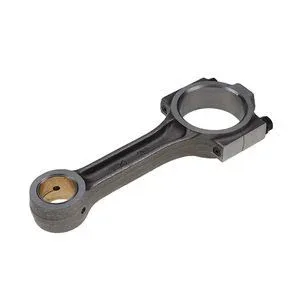
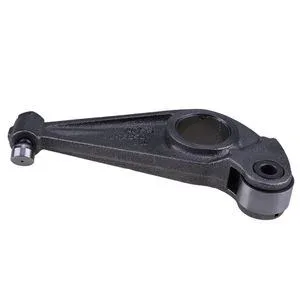
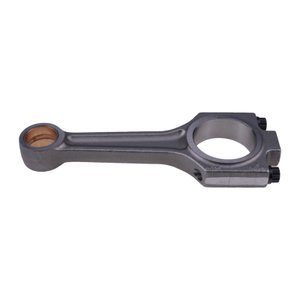
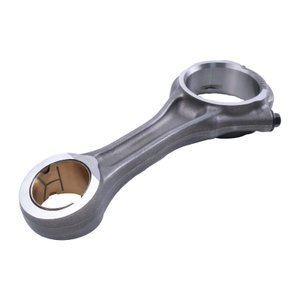
Matched Component Set — Timing belt, push rods, and pins verified against Deutz 1011F engine serial variants before dispatch.
Technical Specifications
| Parameter |
Value |
| Part Number |
02929933 |
| Product Type |
Timing Kit |
| Cross-Reference |
02109085, 100700, 02937741, 2937741, 04270987, 6670555, 6666715 (reference only) |
| Machine Fitment |
Deutz 1011 Series (F2L1011, F3L1011, F4L1011, F2M1011, F3M1011, F4M1011, BF4L1011); 1011F Series (F2L1011F, F3L1011F, F4L1011F, BF4L1011F, F2M1011F, F3M1011F, F4M1011F, BF4M1011F, BF3M1011F); Bobcat 863, 863G, 864, 864G, 873, 873G, 883, T200, S250, A220, A300 |
| Brand Compatibility |
Deutz, Bobcat |
| Condition |
New Aftermarket |
| Kit Contents |
1X Timing Belt Kit 02929933; 8X Push Rods 02109085; 2X Timing Pins 100700 |
| Push Rod Material |
Hardened 4140 steel |
| Push Rod Dimensional Tolerance |
±0.02mm |
| Timing Belt Reinforcement |
Aramid fiber |
| Timing Pin Surface Treatment |
Zinc phosphate coating |
| Warranty |
3-12 months against manufacturing defects |
| MOQ |
1 piece |
| Quality Standard |
ISO 9001 |
Application Suitability
| Engine System |
Related Components |
| Valve Train (Deutz 1011F) |
Rocker arms, valve springs, camshaft bearings, valve stem seals |
| Timing Drive (Deutz 1011F) |
Timing tensioner, idler pulley, crankshaft seal, camshaft seal |
| Cylinder Head Assembly (Bobcat T200) |
Head gasket set, valve cover gasket, injector sleeve seals |
| Lower End Rebuild (1011 Series) |
Main bearings, rod bearings, thrust washers, piston cooling jets |
Why the Timing Belt and Push Rods Must Be Replaced as One Engine Rebuild Set
Matching wear states across the valve train prevents the second teardown that single-part purchases almost always cause.
I have pulled bent push rods out of Deutz 1011F engines in Nigerian mining camps where the crew had just replaced the timing belt weeks earlier. The belt was fresh, but the old push rods — carried over from a previous overhaul with unknown history — had accumulated enough runout to shift valve timing under load. The result was valves contacting pistons, a destroyed head, and a machine sitting idle while a second set of parts was flown in [NEED_CITE: valve train failure modes in air-cooled diesel engines under high ambient temperature].
A Timing Belt Kit with Push Rods engine rebuild approach eliminates this mismatch. When the belt, rods, and pins all start at zero wear, the valve events stay synchronized through the full service interval instead of drifting as the weakest reused component degrades first.
System-Level Component Matching for Deutz 1011F Overhauls
This kit addresses the valve timing system as a complete loop rather than isolated wear items. The timing belt sets the rotational relationship between crankshaft and camshaft. The push rods translate cam lobe profiles into valve motion. The timing pins lock the camshaft and crankshaft in position during assembly so the belt can be tensioned without the gears drifting off mark.
Replacing any one of these while reusing the others introduces a tolerance stack. A new belt on worn push rods still produces valve float at high RPM. New push rods on a stretched belt still allow timing drift under thermal expansion. A Timing Belt Kit with Push Rods engine rebuild ensures all three elements share the same installation date and wear trajectory [NEED_CITE: timing system component interaction in multi-cylinder diesel overhaul practice].
Accounting for Previous Rebuild History and Serial Variants
The Deutz 1011F family spans multiple displacement variants — F2L, F3L, F4L, and their turbocharged BF counterparts — each with different cylinder counts and corresponding push rod quantities. This kit ships with eight push rods, which covers the four-cylinder F4L1011F and BF4L1011F configurations. Two-cylinder and three-cylinder variants will have surplus rods; the timing belt and pin specifications remain consistent across the 1011F range.
More critically, engines that have been through a prior overhaul may have non-standard clearances. If the previous shop used oversized bearings or regrind the camshaft, the push rod length requirement can shift. Before ordering, check the engine data plate for the full serial number and cross-reference against the build record if available. The hardened 4140 steel rods in this kit hold ±0.02mm dimensional tolerance, which matches factory specification for standard-grade rebuilds.
Specification Rationale for the Three Core Components
The push rods use hardened 4140 chromium-molybdenum steel, chosen for its fatigue resistance under the repetitive compressive loading that valve train components experience. In air-cooled Deutz engines running in tropical climates, thermal cycling amplifies the stress on these rods. The ±0.02mm length tolerance keeps valve lash within the adjustment range of the rocker screw, meaning the mechanic can set clearance without shimming or rejecting individual rods during assembly.
The timing belt uses aramid fiber reinforcement rather than standard glass fiber. Aramid resists tensile elongation under the sustained heat of an air-cooled engine compartment, where ambient temperatures in mining and agricultural applications regularly exceed standard operating assumptions [NEED_CITE: aramid versus glass fiber reinforcement in high-temperature timing belt applications]. This matters because even small belt stretch shifts valve opening and closing events, reducing volumetric efficiency and increasing exhaust gas temperature.
The zinc phosphate coating on the timing pins prevents corrosion seizure in the alignment bore. In dusty environments — quarry faces, grain handling facilities, laterite mining sites — bare steel pins corrode into the bore between service intervals, making the next teardown require drilling or extraction. The phosphate layer provides a sacrificial barrier that maintains pull-out force within serviceable limits.

The Hidden Cost of Mixing Old and New Valve Train Parts
When a workshop replaces only the timing belt and reuses the existing push rods, the failure rarely shows up at first start. It appears after several hundred hours, when the worn rods develop enough axial play to cause intermittent valve float. The symptom — misfire under load, elevated exhaust temperature — mimics injector problems, sending the diagnostic process down the wrong path entirely.
By the time the actual cause is identified, the engine has typically suffered valve-to-piston contact on at least one cylinder. The repair scope expands from a belt replacement to a full head rebuild: new valves, guides, seats, and potentially a piston set. The machine downtime doubles or triples, and the cost of the second teardown exceeds what the complete kit would have cost in the first place [NEED_CITE: cumulative cost of valve train misdiagnosis in mobile equipment fleet maintenance].
Why This Kit Ships From a Single Account With One Warranty
XUNPO produces selected part lines in-house and sources the remainder from ISO 9001-certified manufacturing partners, with both streams carrying identical quality control and warranty terms. For this kit, that means the timing belt, push rods, and pins are inspected and packed as a matched set rather than assembled from random warehouse picks.
Part identification works from the engine number, machine model, a photograph of the data plate, or even a worn nameplate image — useful when paint overspray or abrasion has obscured the original stamping on a Bobcat T200 or 863. Cross-reference verification covers superseded numbers across the 1011 and 1011F generations, so an older reference like 02937741 or 04270987 is confirmed against current application data before the kit ships. Sample supply is available for fitment confirmation before any bulk commitment, and the technical team handles compatibility and grade questions directly rather than routing through a sales desk.
Documentation & Verification
- Commercial invoice and packing list itemizing belt, rods, and pins separately for customs clearance
- Part compatibility sheet listing Deutz 1011F sub-models with reference-only cross-reference numbers
- Dimensional inspection record covering push rod length tolerance and belt tooth profile
- Warranty terms document specifying coverage period and manufacturing defect scope
- Packing photographs showing kit contents verified before carton sealing
- HS code and export documentation support for destination country requirements
Installation & Rebuild Sequence
- Lock crankshaft and camshaft with timing pins 100700 before removing the old belt to preserve reference position
- Verify each new push rod against the ±0.02mm tolerance record before installation into the tappet bore
- Route the aramid-reinforced belt following the original rotation direction marking if reusing any adjacent pulleys
- Torque the tensioner to specification and rotate the engine two full cycles by hand before removing timing pins
- Set initial valve lash on all cylinders cold, then recheck after the first heat cycle to confirm push rod seating
- Log the installation date and hour meter reading to establish the next timing belt replacement interval
Request a Compatibility Confirmation
Send the full Deutz engine serial number from the data plate — not just the model designation — along with any previous overhaul records you have on file. If the plate is unreadable, a clear photograph of the engine block casting number and the machine model plate is sufficient for our team to confirm which 1011F variant you have and whether this eight-rod kit matches your cylinder count.
Frequently Asked Questions
Q: What exactly does this timing kit contain, and does the push rod count fit all 1011F sub-models?
A: The kit includes one timing belt assembly (02929933), eight hardened 4140 steel push rods (02109085), and two zinc-phosphate-coated timing pins (100700). Eight rods cover four-cylinder variants like F4L1011F and BF4L1011F. Two-cylinder and three-cylinder models will have surplus rods. Confirm your exact sub-model serial number before ordering to ensure complete coverage.
Q: My Deutz engine was overhauled before — could that change which push rod specification I need?
A: Yes. If the previous rebuild involved camshaft regrinding, oversized bearings, or non-standard valve work, the effective push rod length requirement may differ from factory standard. Share the engine serial number and any rebuild documentation you have. Our technical team will verify whether this standard-tolerance kit matches your engine's current configuration.
Q: Can I replace just the timing belt and keep the existing push rods?
A: Technically possible but not recommended. Reused push rods carry accumulated wear and potential bending that shifts valve timing under load. This causes valve float, misfire symptoms, and eventually valve-to-piston contact. Replacing both as a matched set ensures synchronized wear and avoids a second teardown within the same service interval.
Q: Are the timing kits for F2L1011F and F4L1011F interchangeable?
A: The timing belt and pin specifications are consistent across the 1011F range, but push rod quantity differs by cylinder count. The F2L1011F requires four rods; the F4L1011F requires eight. This kit ships eight rods. For two-cylinder models, confirm your requirement before ordering so we can adjust the kit contents or advise on the correct configuration.
Q: How do I confirm which kit version matches my engine when the data plate is worn?
A: Provide a photograph of the engine block casting numbers, the machine model plate, and any visible serial markings. Our team cross-references these against Deutz production records and Bobcat application data to identify your exact engine variant. This verification step prevents mis-shipment before the kit leaves the warehouse.