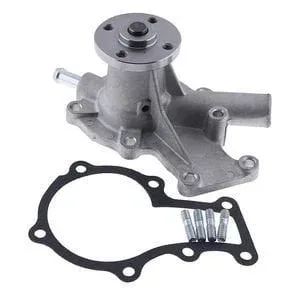
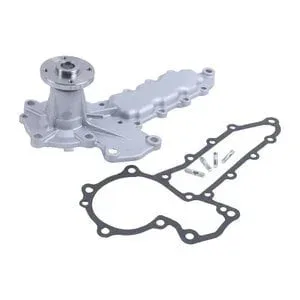
Engine Serial Variants Confirmed — every water pump dispatch includes cross-reference verification for D722 and D902 serial range differences before shipment.
Technical Specifications
| Parameter |
Value |
| Part Number |
1E051-73036 |
| Product Type |
Water Pump |
| Cross-Reference |
1E051-73036, 1E05173036, 1E051-73510, 1E05173510 (reference only) |
| Gasket Cross-Reference |
16871-73430, 1687173430 (reference only) |
| Engine Compatibility |
Kubota D722, D902 |
| Machine Fitment |
BX1880, BX1880-1, GR2120-2, GR2120B-2, SCL1000, RTV-X900G, RTV-X900R, RTV-X900W, ZD1011, ZD1011-3, ZD1021, ZD1021-3, ZD1011-AU |
| Condition |
New Aftermarket |
| Impeller Design |
Balanced |
| Bearing Assembly |
Low-friction |
| Included Hardware |
Gasket |
| Warranty |
3–12 months against manufacturing defects |
| Minimum Order |
1 piece |
Application Suitability
| Engine System |
Related Components |
| Coolant circulation loop |
Thermostat, radiator, coolant hoses, radiator cap |
| Belt drive and accessory drive |
Drive belt, tensioner, pulley alignment |
| Engine block sealing surface |
Block gasket, sealant, mounting fasteners |
| Thermal management during overhaul |
Cylinder head gasket, core plugs, freeze plugs |
Why the Same Cooling Failure Returns After a Water Pump Replacement
Replacing the pump without diagnosing the root cause of overheating guarantees a repeat visit to the repair bay.
In Shandong repair shops I spent years watching Kubota D722 and D902 engines come back with the same coolant leak within weeks of a water pump swap. The new pump was fine—the real problem sat elsewhere: a thermostat stuck closed, radiator fins clogged with chaff, or coolant passages corroded from years of neglected flush intervals. The pump was only the first component to show symptoms of a system already failing upstream or downstream [NEED_CITE: engine cooling system diagnostics sequence for small displacement diesel platforms]. A water pump engine rebuild replacement that ignores the rest of the thermal loop simply shifts the failure point to the next weakest link.
The Cooling System as a Closed Loop
This water pump belongs to the engine cooling system, where proper coolant circulation is critical during any engine rebuild or cooling system service to prevent overheating and subsequent damage to internal engine components. The pump draws coolant from the radiator and forces it through passages cast into the cylinder block and head. If any segment of that loop—thermostat, hose, radiator core, or the passages themselves—restricts flow, the pump works against higher back-pressure and its bearing assembly absorbs the excess load. Understanding this system context is the difference between a lasting water pump engine rebuild replacement and a recurring overheating complaint.
Gasket Sealing and Block Surface Condition
The included gasket (cross-reference 16871-73430, reference only) seals the interface between the pump housing and the engine block mounting face. On D722 and D902 engines that have seen multiple overheating events, that mounting face can develop pitting or warping from thermal cycling. Installing a new pump against a degraded surface invites seepage at the joint regardless of gasket quality. During the teardown, the block face must be inspected for flatness and cleaned of old gasket residue before the replacement goes on [NEED_CITE: cylinder block gasket surface preparation standards for cast iron blocks]. Skipping this step is the most common reason a freshly fitted pump weeps coolant within the first few heat cycles.
Impeller Balance and Passage Protection
The balanced impeller design matters beyond smooth operation. An unbalanced impeller creates cavitation—microscopic vapor bubbles that collapse against the impeller blades and the adjacent water passages in the block. Over hundreds of hours this erosion widens passages unevenly, reducing cooling efficiency and accelerating wear on the cylinder liner area. The low-friction bearing assembly complements this by reducing parasitic drag on the belt drive system, keeping accessory load predictable and belt wear within normal intervals [NEED_CITE: cavitation erosion mechanisms in centrifugal coolant pumps]. Together these features protect not only the pump itself but the passages and components downstream of it.

What a Missed Root Cause Costs the Next Overhaul
When a water pump engine rebuild replacement is treated as an isolated fix, the undiagnosed system fault keeps attacking. A stuck thermostat that goes unnoticed allows localized hot spots to form in the cylinder head, eventually warping it beyond the service limit. Corroded passages that nobody flushed continue to shed debris into the new pump's impeller chamber, scoring the seal face. The result is not a second pump failure—it is a more expensive repair involving the head, the liner, or both. Shops that replace the pump and then verify flow, thermostat opening temperature, and radiator condition as a single procedure avoid these cascading costs [NEED_CITE: cooling system failure cascade analysis in compact diesel engines].
Why Procurement Starts with System Verification
Our production lines and qualified sourced supply both carry the same QC and warranty terms, so whether this pump is self-produced or sourced from a certified partner, the inspection standard is identical. Eight product categories mean a complete cooling system order—pump, gasket, thermostat, hoses, radiator cap—ships under one account with one warranty. Minimum order is one piece, which matters when a single D902 in the field needs an emergency swap. Guangzhou warehouse stock covers common items for fast dispatch, and our technical team confirms compatibility by engine serial number, not just by catalog number. We verify cross-references including superseded numbers so you do not receive a pump that physically bolts on but routes coolant incorrectly for your engine variant.
Documentation & Verification
- Commercial invoice listing pump part number and gasket cross-reference for customs clearance
- Compatibility sheet mapping D722 and D902 serial ranges to correct pump variant
- Quality inspection record covering impeller balance runout and bearing axial play
- Warranty terms document specifying coverage period and manufacturing defect conditions
- Packing photographs showing pump and gasket condition before crate closure
- HS code and export documentation support for international freight forwarding
Installation & Rebuild Sequence
- Clean the engine block mounting face thoroughly before positioning the new gasket
- Verify bolt thread condition in the block—chased threads prevent false torque readings
- Torque mounting fasteners in the specified cross-pattern to avoid housing distortion
- Fill and bleed the cooling system slowly to purge air from the cylinder head passages
- Run the engine to operating temperature and confirm thermostat opens before full-load operation
- Inspect all hose connections and the pump weep hole for seepage after the first thermal cycle
Before You Request a Quote
Send us the engine model (D722 or D902), the full engine serial number, and any overhaul history you have on file. If the nameplate is worn or painted over, a clear photograph of the block casting number and the existing pump housing helps us confirm the correct variant. Include the machine model from your equipment list so we can cross-check the fitment range and flag any superseded numbers that apply to your serial range.
Frequently Asked Questions
Q: What else should be inspected when replacing the water pump?
A: Check the thermostat for proper opening temperature, flush the radiator and block passages, inspect coolant hoses for internal collapse, and verify the radiator cap holds rated pressure. On D722 and D902 engines the block mounting face should be checked for flatness after thermal cycling damage. Addressing these items during the same service window prevents the new pump from inheriting a pre-existing system fault.
Q: Does the included gasket fit all D722 and D902 variants?
A: The gasket cross-referenced as 16871-73430 (reference only) covers the standard mounting pattern across the D722 and D902 families. However, serial number ranges can introduce minor variations in bolt spacing or port orientation. Confirming your exact engine serial before dispatch ensures the gasket matches your block face without modification or additional sealant.
Q: How do I confirm my engine model if the nameplate is worn?
A: Photograph the block casting number, the cylinder head casting mark, and any visible stamping on the injection pump mounting flange. These locations often retain identification marks even when the main nameplate is painted over or corroded. Our technical team cross-references these marks against Kubota engine family records to confirm whether you have a D722 or D902.
Q: What causes repeat water pump failure after replacement?
A: Undiagnosed system faults—stuck thermostat, clogged radiator fins, collapsed hoses, or corroded block passages—force the new pump to operate under abnormal back-pressure or contaminated coolant. The seal face scores prematurely and the bearing absorbs excess load. Resolving these upstream issues during the same service event is essential for lasting repair.
Q: Can I order matching cooling system components together?
A: Yes. Thermostats, coolant hoses, radiator caps, and related gaskets can ship in the same consignment as the water pump. Consolidating the order avoids split freight and ensures all components arrive before the engine goes back into service. Provide your full repair list and we will match part numbers to your engine serial range.