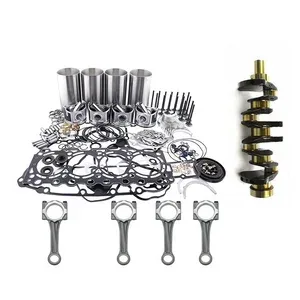
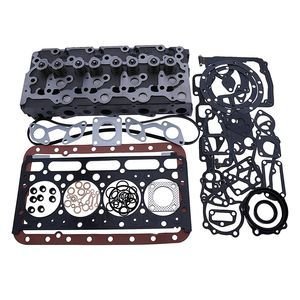
Matched Overhaul Sets — crankshaft, rods, pistons, and bearings verified as a tolerance-matched group before dispatch, eliminating grade mismatches that cause early scuffing on V3307 rebuilds.
Technical Specifications
| Parameter |
Value |
| Product Type |
Overhaul Kit |
| Engine Fitment |
Kubota V3307, V3307T, V3307-DI, V3307-DI-TE3, V3307-CR-TE4-SL2-Q (Tier 4), V3307-CR-TE4-SL2 (Tier 4) |
| Machine Fitment |
Kubota KX080-3, KX080-4, SSV75, SSV75C, SSV75P, SSV75PC, M6040, M6060, M7060; Bobcat S630, S650, T650 |
| Brand Compatibility |
Kubota, Bobcat |
| Kit Contents |
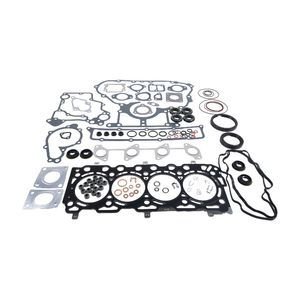
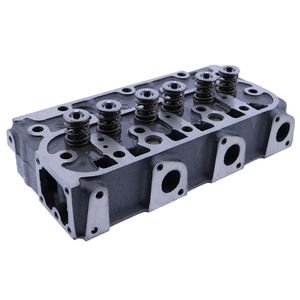
Overhaul gasket kit, semi-finished cylinder liners, standard pistons set, piston pins set, snap rings set, rod bushings set, standard piston rings set, main bearings set (STD), rod bearings set (STD), thrust washer set (STD), intake/exhaust valves set, valve guides set, intake/exhaust valve seats set, 4x connecting rods, alloy crankshaft |
| Crankshaft Material |
42CrMo forged alloy steel |
| Connecting Rod Material |
40Cr steel |
| Cylinder Liner Material |
Gray cast iron (HT250), semi-finished |
| Bearing Construction |
Tri-metal (steel backing, copper-lead alloy, indium-tin overlay) |
| Bearing Standards |
SAE J300, ISO 6826 |
| Oversize Grade |
STD (standard); oversize grades available upon measurement confirmation |
| Condition |
New Aftermarket |
| Warranty |
12-month warranty against manufacturing defects |
| MOQ |
1 piece |
Application Suitability
| Engine System |
Related Components |
| Bottom-end rotating assembly |
Crankshaft, connecting rods, main and rod bearings, thrust washers |
| Cylinder and piston group |
Semi-finished liners, pistons, rings, pins, snap rings, rod bushings |
| Valve train |
Intake and exhaust valves, valve guides, valve seats |
| Sealing and gasketing |
Complete overhaul gasket set covering block, head, and ancillary joints |
Why Rebuilds Fail Before the First Oil Change
Most V3307 teardown failures trace back to mismatched component grades, not defective individual parts.
In workshops across the Pearl River Delta, I have pulled apart freshly rebuilt V3307 engines that scuffed within the first fifty hours. The crankshaft had been ground to an undersize in a previous repair, yet the new overhaul kit shipped standard-grade bearings. The piston-to-liner clearance was wrong because someone ordered a standard piston set for a block that had already been bored. These are not rare mistakes — they represent a pattern of treating the V3307 engine overhaul kit rebuild as a simple parts swap rather than a system-level matching exercise [NEED_CITE: engine rebuild tolerance stack-up and grade verification procedures].
Every component inside this V3307 engine overhaul kit rebuild is grouped at standard grade, and we verify the set against your engine serial number and teardown measurements before dispatch. The goal is to address the fault that destroyed the last set of components, not simply replace the visible damage.

The System Behind the Failure
A V3307 engine overhaul kit rebuild belongs to the core rotating and reciprocating assembly — the system where combustion pressure, bearing oil film, and thermal expansion interact continuously. When a single element in this system is out of tolerance, the failure cascades. A worn thrust washer allows axial crankshaft movement that accelerates main bearing wear. Undersized rod bearings starve the big-end journal of oil film, generating heat that distorts the connecting rod bore. This V3307 engine overhaul kit rebuild bundles every component in that failure chain so the rebuild shop replaces the full system in one verified set.
Matching Grade to Rebuild History
Engines that have been through prior overhauls rarely sit at factory-standard dimensions. A crankshaft ground to 0.25 mm undersize requires matching undersize main and rod bearings. A block honed to accept oversize pistons demands the corresponding piston and ring set. The semi-finished cylinder liners in this kit allow the machine shop to bore to the exact diameter your block requires, accommodating previous wear or prior rebuild work. Before we ship, our technical team confirms your engine serial variant — because V3307-DI, V3307-DI-TE3, and V3307-CR-TE4 Tier 4 versions differ in piston crown profile, compression ratio, and valve train specification [NEED_CITE: Kubota V3307 series variant identification and internal component differences across emission tiers].
What the Specifications Mean on the Bench
The forged 42CrMo alloy steel crankshaft provides the fatigue strength needed for sustained high-rpm operation and peak combustion pressures typical of the V3307 turbocharged variants. Tri-metal bearing construction — a steel backing with copper-lead alloy and an indium-tin overlay — gives the embeddability to tolerate minor contamination while maintaining load capacity under the V3307's firing loads. The 40Cr steel connecting rods are heat-treated to resist the bending and tensile stresses at the big end, where bore distortion under load is a common root cause of bearing failure. Semi-finished HT250 gray cast iron liners, bored to final dimension on your hone, produce the surface finish and geometry that standard piston rings need to seat correctly during break-in.
The Cost of Skipping the Teardown Measurement
Ordering an overhaul kit without measuring journal diameters and bore sizes after teardown is a bet that the previous rebuild left everything at standard. In practice, I have seen shops receive a standard-grade kit only to discover the crankshaft main journals were ground two sizes under during a prior repair. The result is a second order for undersize bearings, another week of machine downtime, and a crankshaft that has been sitting in a partially assembled block collecting contamination [NEED_CITE: consequences of grade mismatch during diesel engine overhaul reassembly]. The teardown measurement step is not optional — it is the decision point that determines whether your V3307 engine overhaul kit rebuild ships standard or requires specific oversize selections.
Why Rebuild Shops Source This Kit Through Us
Our own production lines cover selected components in this kit, with the remainder sourced from ISO-certified manufacturing partners — both carry the same 12-month warranty and quality inspection terms. Eight product categories under one account mean the gasket set, valve train components, and bottom-end hardware ship as one consignment, not three separate orders from three vendors. Minimum order is one piece, so a single emergency rebuild does not force you into bulk commitments. We identify the correct kit from engine serial number, machine model, or a photograph of the nameplate when the plate is worn or painted over. Cross-reference verification covers superseded part numbers and alternate references across V3307 variants, marked as reference only for identification purposes. Before bulk commitment, sample supply is available so your shop can confirm fitment on the bench before we ship the full order.
Documentation & Verification
- Commercial invoice and packing list itemizing every kit component by description and quantity
- Part compatibility sheet listing verified V3307 engine variant fitment, cross-reference only
- Dimensional inspection records covering crankshaft runout and bearing clearance checks
- 12-month warranty terms covering manufacturing defects across all kit components
- Packing photographs showing kit contents verified against the dispatch checklist
- HS code and customs documentation support for international engine parts shipments
Installation & Rebuild Sequence
- Verify crankshaft journal diameters and block bore sizes before opening the sealed kit components
- Hone semi-finished cylinder liners to final bore dimension matching the piston set grade
- Assemble connecting rods with new rod bushings and verify big-end bore tolerance after torque
- Install tri-metal bearings with correct oil film clearance confirmed by plastigauge measurement
- Follow manufacturer torque sequence for main caps and head bolts during reassembly
- Run initial break-in cycle at moderate load to allow piston rings and bearing surfaces to seat
Requesting a Quote for Your Rebuild
Send us the engine serial number and emission tier designation from your V3307 nameplate, along with any teardown measurements you have already taken on the crankshaft journals and cylinder bores. If the nameplate is unreadable, a photograph of the engine block casting numbers and the old piston crown markings is usually enough to confirm the correct variant. We will respond with the matched kit contents list and confirm whether standard or oversize components are required for your specific rebuild scope.
Frequently Asked Questions
Q: What exactly is included in this V3307 overhaul kit, and are there items I still need to source separately?
A: The kit covers the full rotating assembly, cylinder group, valve train, and gasket set as listed in the specifications table. Items not included are engine-specific external components such as the oil pump, water pump, turbocharger, injectors, and engine mounts. If your rebuild scope extends to those systems, request a supplementary parts list matched to your engine serial variant.
Q: My crankshaft has been ground before — how do I determine whether I need standard or oversize bearings and pistons?
A: Measure every main and rod journal after teardown with a micrometer and compare against factory-standard dimensions. Any journal ground undersize requires the corresponding undersize bearing shells. Similarly, measure cylinder bore diameter to determine whether oversize pistons and rings are needed. Share these measurements with us and we will adjust the kit contents accordingly before dispatch.
Q: Do different V3307 engine variants use the same internal components across Tier 3 and Tier 4?
A: No. The V3307-DI, V3307-DI-TE3, and V3307-CR-TE4 Tier 4 variants differ in piston crown design, compression ratio, and in some cases valve train specification. Confirming the exact engine variant through the serial number is essential to receiving the correct matched set. We verify variant identity before every kit ships.
Q: What system-level fault checks should I perform before reassembly to avoid repeat failure?
A: Beyond dimensional checks, inspect the oil pump for wear and verify oil pressure delivery to the main gallery. Check the cooling system for blockages that caused thermal overload in the previous failure. Examine the turbocharger and intake system for contamination paths that may have introduced abrasive particles into the cylinder bore. Addressing these root causes prevents the new components from failing prematurely.