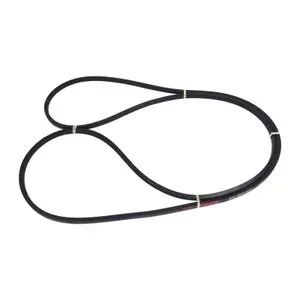
Matched Set Dispatch — This transaxle variation belt ships with verified compatibility across Husqvarna and Ariens transmission serial variants, paired with adjacent drive components for a complete hydrostatic system refresh.
Technical Specifications
| Parameter |
Value |
| Part Number |
587086101 |
| Product Type |
Belt |
| Cross-Reference |
532426740, 580486301, 584973901, 21548469, 21548408, 21549005, 587884401, 587884501, 426740, GT 37401 (reference only) |
| Machine Fitment |
Husqvarna, Ariens lawn tractors (serial variants 917.289081, 917250830, 917203780, 917203850, 917203910, 917203920, 917203930, 917253790, 917253792, 917289080, 580486201, 582491201, 936048–936095 series, RS800-SD series) |
| Condition |
New Aftermarket |
| Warranty |
3-12 months against manufacturing defects |
| Minimum Order |
1 piece |
| Manufacturing Standard |
ISO-certified production |
Application Suitability
| Engine System |
Related Components |
| Hydrostatic transmission power transfer |
Drive pulleys, tensioner assemblies, idler brackets |
| Lawn tractor transaxle engagement |
Transaxle input shaft seals, cooling fan belts |
| Residential and commercial mowing drive |
Belt guides, sheave bearings, clutch hardware |
| Seasonal drive system overhaul |
Matched belt sets, pulley alignment shims, tension springs |
What Causes a Transaxle Variation Belt to Fail Again Within Weeks
A replacement belt that snaps prematurely almost always signals an unaddressed fault in the pulley path or tensioner circuit, not a defective belt.
I have pulled belts off Husqvarna and Ariens tractors in Shandong workshops that were replaced three times in one mowing season. Each time the installer swapped only the belt without checking whether the idler pulley was binding or whether the transaxle input shaft seal had begun leaking hydraulic fluid onto the sheave. A belt operating in a contaminated or misaligned drive path fails quickly regardless of its cord construction [NEED_CITE: hydrostatic drive belt premature failure root cause analysis]. Repeating the same single-component replacement simply resets the failure clock while the underlying system fault continues to degrade every new belt installed.

The Belt's Position Inside the Hydrostatic Drive Circuit
This transaxle variation belt sits at the critical junction between engine output and hydrostatic pump input, transmitting rotational force through a routing path that includes multiple idler pulleys and a spring-loaded tensioner. When planning a transaxle belt rebuild, the belt must be evaluated as one element within this entire power transfer chain rather than as an isolated wear item. Adjacent components — pulley bearings, tensioner springs, belt guides — all influence belt tracking and load distribution. Replacing the belt while leaving a seized idler or a fatigued tensioner spring in place guarantees that the new belt inherits the same uneven loading that destroyed its predecessor.
Serial Variant Differences That Determine Fitment
Husqvarna and Ariens lawn tractors sharing the same model designation can carry different transaxle configurations depending on production date and serial range. The 936-series machines, for instance, appear with suffix variations from 960460010-00 through 960480089-00, each potentially specifying a different belt routing geometry or pulley diameter. The RS800-SD variants map to three distinct cross-reference numbers depending on build configuration. Confirming the exact machine serial against the fitment table before ordering prevents the common situation where a belt that is dimensionally close still tracks incorrectly on a variant with a different sheave profile [NEED_CITE: lawn tractor serial variant identification for drive belt selection].
Cross-Reference Verification and Superseded Numbers
The identifier 587086101 carries multiple cross-reference designations including 532426740, 580486301, 584973901, and GT37401, reflecting part number supersessions across production generations. An older tractor may have been serviced with a now-superseded number that still appears on the worn belt label. Cross-reference verification must account for these generational changes rather than relying on a single number match. When the old belt label is illegible, the machine serial number and transaxle model plate provide the reliable starting point for identification.
Reinforced Cord Construction and Thermal Load Demands
A transaxle variation belt in a hydrostatic drive system must transmit variable torque loads while maintaining tooth engagement across the pulley profile. The reinforced cord construction resists tensile elongation under the cyclic loading that occurs during directional changes and load fluctuations in mowing operation. The tooth profile must match the sheave groove geometry precisely — even minor profile deviation causes the belt to ride higher in the groove, generating heat and accelerating edge wear. Thermal stability across seasonal temperature extremes matters because a belt that stiffens in cold morning starts places higher shock loads on the cord structure, while midsummer operating heat softens the elastomer and reduces grip.
The Hidden Cost of Skipping System-Level Inspection
Replacing only the belt without inspecting pulley condition and tensioner function leads to repeat failures that compound downtime across an entire mowing season. Each repeat failure means the tractor returns to the bench, the deck comes off again, and labor hours accumulate without addressing the actual fault. For a repair center servicing a landscaping fleet, this pattern erodes customer confidence and inflates warranty claims [NEED_CITE: fleet maintenance cost impact of repeat drive belt failures]. The cost is not the belt itself — it is the repeated teardown labor and the machine's absence from revenue-generating work.
Sourcing From a Single Account With System-Level Verification
Our Guangzhou facility produces selected part lines directly and sources remainder from qualified ISO-certified partners, so both self-produced and sourced supply carry identical quality control and warranty terms for this transaxle variation belt. Eight product categories under one account mean that the belt, tensioner spring, idler pulley, and transaxle seal can ship as a single consignment rather than arriving from separate suppliers on mismatched timelines. Part identification is confirmed from the machine serial number, a photograph of the worn belt, or the nameplate image when the original label is gone. Cross-reference verification covers superseded and alternate numbers, preventing the situation where an older part number is incorrectly rejected as obsolete. A sample unit is available for fitment confirmation before any bulk commitment.
Documentation & Verification
- Commercial invoice and packing list with full cross-reference traceability for belt batch
- Compatibility sheet mapping machine serial variants to confirmed belt routing geometry
- Dimensional inspection record verifying belt length, tooth profile, and cord tensile rating
- Warranty terms covering manufacturing defects for 3-12 months from delivery
- Packing photographs showing belt condition and protective packaging before dispatch
- HS code classification and customs documentation support for international shipment
Installation & Rebuild Sequence
- Verify transaxle input shaft seal condition before routing the new transaxle variation belt to prevent fluid contamination
- Inspect all idler pulley bearings for free rotation and replace any showing drag or play
- Confirm tensioner spring length against specification to maintain correct belt tracking pressure
- Route the belt through the full pulley path referencing the machine service diagram for variant-specific routing
- Run the drive system at idle for initial seating, then recheck tension after the first operating cycle
Requesting a System-Matched Quote
Provide the machine model, serial number, and any visible cross-reference numbers from the old belt label to receive a fitment-confirmed quote. If the belt label is illegible, a photograph of the transaxle nameplate or the full machine nameplate enables identification. Include any known repair history — previous belt replacements, pulley changes, or transaxle work — so that the quote addresses the complete drive system condition rather than repeating a single-component swap.
Frequently Asked Questions
Q: What else should I inspect or replace when changing this transaxle belt?
A: Check all idler pulleys for bearing play and free rotation, verify the tensioner spring has not fatigued beyond its specification length, and inspect the transaxle input shaft seal for hydraulic fluid weeping. Contamination from a leaking seal onto the sheave surface is a frequent root cause of premature belt failure. Belt guides should also be examined for wear grooves that could misdirect the new belt during operation.
Q: How do I confirm which cross-reference number matches my specific tractor build?
A: Provide the full machine serial number from the nameplate, not just the model designation. Husqvarna and Ariens tractors can share a model number while using different transaxle configurations and belt specifications depending on production date. We verify the serial against our fitment table and cross-reference the superseded and alternate part numbers to confirm exact match before shipping.
Q: Why did the previous belt fail prematurely — is there a system-level cause?
A: Premature failure typically indicates misaligned pulleys, a seized idler bearing, a fatigued tensioner spring, or hydraulic fluid contamination from a leaking transaxle seal. Swapping only the belt without diagnosing these system faults means the replacement inherits identical operating conditions. We recommend a full drive path inspection alongside belt replacement to address the actual failure cause.
Q: Are Husqvarna and Ariens transmission variants interchangeable for this belt?
A: Not automatically. While the 587086101 cross-reference covers both brands, specific transmission serial variants within each brand may use different pulley diameters or routing geometries. The RS800-SD series alone maps to three distinct cross-reference numbers depending on build configuration. Confirm your exact serial variant before assuming cross-brand interchangeability.
Q: What warranty coverage applies if the belt fails within the coverage period?
A: The belt carries a 3-12 month warranty against manufacturing defects. Coverage applies to failures attributable to material or production faults, not to failures caused by misaligned pulleys, contaminated sheaves, or incorrect installation. We supply a quality inspection record with each shipment documenting dimensional and tensile verification at dispatch.