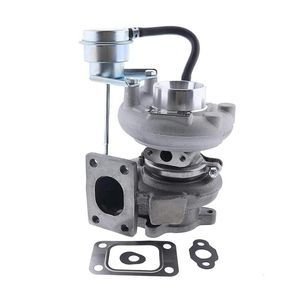
System-Matched Sizing — TD04HL turbocharger verified against CAT 3044C and Mitsubishi S4S engine serial variants for flange and port configuration before dispatch.
Technical Specifications
| Parameter |
Value |
| Part Number |
TD04HL |
| Product Type |
Turbocharger |
| Cross-Reference |
234-4894, 235-4964, 314-9972, 314-9898, 49189-02710, 49189-02711, 49189-02720, 49189-02721, 49189-10530 (reference only) |
| Machine Fitment |
CAT 236B, 236B2, 236B3, 242B3, 246B, 246C, 248B, 252B, 252B3, 256C, 257B3, 259B3, 262B, 262C, 262C2, 267B, 268B, 272C, 277B, 277C, 277C2, 279C, 279C2, 287B, 287C, 287C2, 289C, 289C2, 297C |
| Turbo Model |
TD04HL-13G-8.5, TD04HL-13G |
| Compressor Wheel Material |
Forged aluminum alloy (A380) |
| Turbine Housing Material |
High-silicon ductile iron (ASTM A536 Grade 100-70-03) |
| Journal Bearing Coating |
PTFE-impregnated bronze |
| Dynamic Balance Grade |
ISO 1940 G2.5 |
| Bearing Bore Surface Hardness |
HRC 58–62 |
| Assembly State |
New Aftermarket |
| Warranty |
3–12 months against manufacturing defects |
Application Suitability
| Engine System |
Related Components |
| Intake Boost Loop |
Intercooler piping, intake manifold gaskets, boost pressure sensor |
| Lubrication Feed & Return |
Oil feed line, oil return hose, crankcase breather |
| Exhaust Path |
Exhaust manifold gasket, manifold studs, flex pipe |
| Emission Control |
EGR valve assembly, exhaust gas temperature sensor |
Why the Same Turbo Fails Again Within Weeks
A replacement turbo installed without resolving the root cause will repeat the failure pattern almost immediately.
I used to handle the warranty claims that came back after a "complete" turbo swap. The most common scenario: a workshop pulls a burnt TD04HL off a Mitsubishi S4S, bolts on a new unit, and sends the machine back to work. Three hundred hours later, the new turbo is back on the bench with the same heat-blued shaft and coked bearing bore. The oil feed restriction or the cracked exhaust manifold that killed the first unit was never touched [NEED_CITE: turbocharger failure root cause analysis for diesel engines]. The TD04HL turbocharger engine rebuild demands system-level diagnosis before the new cartridge ever leaves the box.

The Intake Boost Loop and Its Weak Links
This TD04HL turbocharger sits at the center of a pressurized loop that starts at the air filter and ends at the intake valves. Every joint in that loop carries boost pressure, and every seal degrades with heat cycling. When an intake manifold gasket leaks, the compressor works harder to maintain target boost, spinning at higher RPM and generating excess bearing load. Replacing the turbo without pressure-testing the intake tract leaves the new unit absorbing the same overwork condition that destroyed its predecessor.
Oil Starvation and the Return Line Bottleneck
The journal bearings inside this turbo rely on a steady flow of clean oil at adequate volume, not just adequate pressure. A partially blocked oil return line creates backpressure inside the center housing, forcing oil past the turbine-end seal ring into the exhaust stream. The visible symptom is blue smoke at idle; the hidden consequence is carbon buildup inside the bearing bore that starves the journal surface. Any TD04HL turbocharger engine rebuild must include flushing or replacing the return hose and verifying unrestricted drainage into the crankcase [NEED_CITE: turbocharger oil return line diagnostic procedure].
Reading the Specs That Matter on the Bench
The compressor wheel is forged A380 aluminum alloy, chosen for fatigue resistance under repeated surge events rather than peak flow alone. The turbine housing uses high-silicon ductile iron meeting ASTM A536 Grade 100-70-03, which resists thermal cracking through the extreme temperature swings between loaded and idle operation. The PTFE-impregnated bronze journal bearing coating provides a sacractory boundary layer during the first seconds of cold startup before full oil film develops. Dynamic balance to ISO 1940 G2.5 keeps shaft vibration within limits that protect the bearing bore surface, hardened to HRC 58–62 for wear resistance across extended service intervals.
The Cost of Skipping System Diagnosis
When a rebuild shop installs a new turbo without addressing the fault that caused the original failure, the outcome follows a predictable pattern. Oil-starved bearings score the shaft within the first fifty hours. Foreign object damage from a disintegrating air filter scores the compressor wheel blades, unbalancing the assembly and initiating bearing wear that compounds every operating cycle. A cracked exhaust manifold flange allows hot gas to bypass the turbine, reducing efficiency and forcing the engine to over-fuel, which raises exhaust gas temperatures beyond the housing's thermal limit [NEED_CITE: exhaust manifold crack effects on turbocharger thermal load]. Each of these scenarios sends the machine back to the shop for a second teardown, doubling labor cost and eroding customer confidence.
What We Verify Before the Unit Ships
Own production on selected turbo lines plus qualified sourced supply operate under one account and one warranty, so accountability does not shift between suppliers. Eight product categories mean the turbo, exhaust gasket set, oil feed line, and intake manifold seals all ship in one consignment rather than arriving on different schedules. Minimum order from one piece supports the single-machine emergency rebuild as well as fleet stocking. Our Guangzhou warehouse holds common variants for fast dispatch, and our technical team confirms flange configuration and port orientation against your engine serial number before the crate closes.
Documentation & Verification
- Commercial invoice and packing list itemizing turbo model, cross-reference numbers, and engine compatibility
- Part compatibility sheet confirming TD04HL variant against provided engine serial number
- Dimensional and dynamic balance inspection record included with each unit
- Warranty terms covering manufacturing defects for the stated coverage period
- Packing photographs taken before crate closure for condition verification on receipt
Installation & Rebuild Sequence
- Flush oil feed and return lines before connecting the new TD04HL center housing to prevent debris ingestion
- Verify exhaust manifold flange flatness and replace studs if thread stretch is detected
- Pre-lube the turbo bearing bore with clean engine oil before initial cranking to avoid dry startup
- Torque compressor housing and turbine housing bolts to specification in a star pattern
- Run the engine at idle for initial minutes to establish full oil film before applying load
- Check all intake and exhaust joints for leaks with the engine at operating temperature
Request a System-Matched Quotation
Provide your engine model, serial number, and any previous overhaul history so we can confirm the correct TD04HL variant, flange configuration, and matched gasket set for your specific build. Including oil feed and return line condition notes helps us recommend whether ancillary components should ship with the turbo to prevent a repeat failure.
Frequently Asked Questions
Q: What other engine components should be replaced alongside the turbocharger?
A: The oil feed line, oil return hose, exhaust manifold gasket, and intake manifold seals should all be inspected and typically replaced during a turbo swap. Reusing degraded seals or restricted lines reintroduces the conditions that caused the original failure, so we recommend bundling these items in the same order to ensure compatibility and consolidated dispatch.
Q: How do I confirm my CAT 3044C versus C3.4 engine variant?
A: The engine serial number plate identifies the specific build variant, which determines turbo flange configuration and oil port orientation. Photographing the nameplate and sending it to our technical team allows us to cross-check against our variant database and ship the correct TD04HL configuration for your engine.
Q: What caused the previous turbo to fail, and how do I prevent it?
A: Common root causes include oil starvation from restricted feed lines, foreign object damage from degraded air filters, and exhaust gas contamination from cracked manifolds. Inspecting these system-level components before installing the replacement turbo prevents the same failure mode from destroying the new unit within its first service interval.
Q: Are oil feed line gaskets and exhaust manifold studs included?
A: The turbocharger ships as a standalone assembly unless a bundled kit is requested. We can add matched gaskets, studs, and seal kits to the same consignment based on your engine model, ensuring all mating-surface hardware arrives together and is verified for your specific flange variant.
Q: Can I get a sample unit for bench verification before committing to fleet quantity?
A: Yes, sample supply is available for fitment confirmation. You can verify flange orientation, port positions, and overall dimensions on your bench before authorizing a larger production run or stocking order, reducing the risk of a mismatched variant reaching your workshop floor.