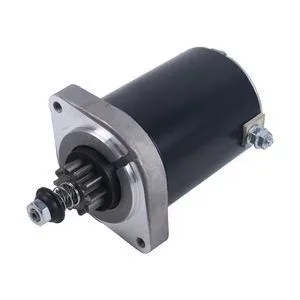
System-Matched Dispatch — Every 21163-0749 starter motor is verified against engine serial prefix and variant list before packing, preventing misfit on mixed-fleet rebuilds.
Technical Specifications
| Parameter |
Value |
| Part Number |
21163-0749 21163-0711 21163-0714 21163-7035 |
| Product Type |
Starter Motor |
| Cross-Reference |
21163-0749, 21163-0711, 21163-0714, 21163-7035, FR691V-AS04, MIA11761, MIA11949, MIA11984, MIA12214, MIA12455, MIA12485, MIA12926 (reference only) |
| Machine Fitment |
John Deere S240, X300, X300R, X304, X305R, X310, X320, X324, X350, X350R, X354, X360, X370, X380, X384, X390, X394, Z530M, Z530R; Cub Cadet LTX1046, LTX1050, RZT46, RZT50, RZT54, Z-Force 48, Z-Force 54, Z-Force 60 |
| Condition |
New Aftermarket |
| Insulation Class |
Class H rated to 180°C |
| Housing Material |
Die-cast aluminum with anodized finish |
| Bearing Type |
Sealed double-row units rated for 10,000+ start cycles |
| Cranking Torque Minimum |
12.5 N·m at 10V |
| Voltage |
12V/24V (bench tested) |
| Balance Standard |
ISO 1940-1 |
| Warranty |
3–12 months against manufacturing defects |
Application Suitability
| Engine System |
Related Components |
| Kawasaki FR691V auxiliary refresh |
Flywheel ring gear, battery cables, ignition switch |
| Kawasaki FS600V cold-start circuit |
Solenoid wiring harness, starter relay, ground strap |
| John Deere X300 series overhaul |
Overhaul gasket set, crankshaft seal, flywheel bolts |
| Cub Cadet Z-Force fleet maintenance |
Battery terminals, charging stator, voltage regulator |
When a Starter Motor Fails Repeatedly After Rebuild
The failure is often upstream in the starting circuit, not inside the motor itself.
Engine rebuild shops frequently replace the Starter Motor engine rebuild replacement unit only to see it fail again within weeks. The root cause usually traces back to excessive resistance in battery cables, a worn flywheel ring gear with damaged teeth, or a voltage drop across corroded ground connections. [NEED_CITE: electrical circuit voltage drop diagnostic procedures for small engine starting systems] Diagnosing these systemic issues before installing the new starter prevents repeat comebacks and protects the warranty period.

Electrical Load Matching Across the Starting Circuit
A Starter Motor engine rebuild replacement must receive adequate voltage under load to produce rated cranking torque. When battery cables have internal corrosion or undersized gauge, the voltage at the starter terminal can drop well below the minimum threshold, forcing the motor to draw excessive current. This thermal stress degrades the Class H insulation over time. Checking cable resistance and terminal condition during every starter installation is a system-level practice that prevents misdiagnosis.
Engine Serial Variants and Starter Configuration Differences
The Kawasaki FR and FS engine families have multiple starter configurations across production runs, even within the same base model designation. An FR691V engine assembled in one year may use a different mounting flange pattern or solenoid connector than one built the following year. [NEED_CITE: Kawasaki FR/FS engine serial prefix variation and starter interchange requirements] Confirming the exact engine serial prefix against the compatibility list ensures the Starter Motor engine rebuild replacement arrives with the correct bolt pattern and electrical interface.
Cranking Torque and Thermal Endurance Specifications
The 12.5 N·m minimum cranking torque at 10V ensures the motor can overcome compression resistance in high-displacement V-twin engines during cold starts. Class H insulation rated to 180°C prevents thermal breakdown when extended cranking cycles occur in hot-weather mowing conditions. Die-cast aluminum housing with anodized finish dissipates heat while resisting corrosion from humidity and grass clippings. Sealed double-row bearings sustain alignment across thousands of engagement cycles without requiring lubrication maintenance.
The Cost of Overlooking Adjacent System Components
Installing a new starter without inspecting the flywheel ring gear often leads to gear tooth grinding and premature drive gear wear. A damaged ring gear forces the starter pinion to engage unevenly, creating impact loads that shorten bearing life. Similarly, reusing old battery cables with hidden internal resistance causes the replacement starter to operate under undervoltage conditions, accelerating brush and commutator wear. [NEED_CITE: small engine starter drive gear and ring gear wear pattern analysis] These system-level oversights convert what should be a straightforward auxiliary component swap into a repeat repair.
Why Source This Starter Motor From Guangzhou XUNPO
Own production lines and qualified sourced supply operate under one warranty account, so whether your order is a single unit or a fleet replenishment batch, the quality inspection standard remains identical. Eight product categories mean you can add overhaul gaskets, seals, and electrical connectors to the same consignment rather than managing separate suppliers. Minimum order starts from one piece, accommodating both emergency single-unit replacements and planned inventory builds. The Guangzhou warehouse holds stock of fast-moving starter configurations for rapid dispatch. Part identification is available from engine serial number, machine model, or a photograph of the nameplate when the original label is worn. Cross-reference verification covers superseded numbers and alternate references to confirm exact fitment before shipping.
Documentation & Verification
- Commercial invoice listing each starter variant and quantity per engine serial group
- Cross-reference sheet mapping 21163-0749 and alternates marked reference only
- Bench test record showing cranking torque and current draw at rated voltage
- Warranty terms specifying coverage period and manufacturing defect conditions
- Packing photographs confirming housing condition and connector integrity before crating
- HS code and customs classification support for international shipment clearance
Installation & Rebuild Sequence
- Clean mounting flange surface and verify bolt hole alignment before positioning the Starter Motor engine rebuild replacement
- Inspect flywheel ring gear teeth for chipping or uneven wear that would damage the new pinion gear
- Torque mounting fasteners to manufacturer specification and confirm solenoid connector seating
- Measure voltage at starter terminal during cranking to verify adequate circuit delivery
- Run initial start cycles and observe engagement noise for abnormal grinding or hesitation
Request a Fitment-Confirmed Quote
Provide the engine model, serial number prefix, and any previous rebuild history so the technical team can verify the correct starter variant and adjacent component requirements. Include photographs of the existing nameplate or connector if the original markings are unclear. This information enables accurate cross-reference confirmation and system-level recommendations before dispatch.
Frequently Asked Questions
Q: What other engine auxiliary parts should I inspect when replacing the starter?
A: Inspect the flywheel ring gear for damaged teeth, test battery cables for internal resistance, and check the ignition switch contacts for voltage drop. These components form the starting circuit and can cause premature starter failure if degraded. Addressing them during the same service window prevents repeat comebacks and protects the new unit warranty.
Q: My engine serial is different from the listed models — will this starter still fit?
A: Kawasaki FR and FS engines have multiple starter configurations across production runs. Provide your exact engine serial prefix so the technical team can verify flange pattern, solenoid connector type, and pinion gear specification against the compatibility database. A sample unit can be dispatched for fitment confirmation before bulk commitment if uncertainty remains.
Q: How do I know if the failure is the starter or something else in the starting circuit?
A: Measure voltage at the starter terminal during a cranking attempt. If voltage drops significantly below battery terminal voltage, the issue lies in cables, connections, or the ignition switch rather than the starter itself. A bench test of the removed unit under load confirms whether the motor produces rated torque or has internal faults.
Q: Does the overhaul kit include starter-related hardware or is it ordered separately?
A: Engine overhaul kits typically cover internal components such as pistons, rings, bearings, and gaskets. Starter motors and associated electrical hardware are classified as auxiliary components and ordered separately. Confirm your rebuild parts list includes both the engine system kit and the required starter configuration for a complete assembly refresh.
Q: How do I confirm the correct starter variant when superseded part numbers are involved?
A: Provide all visible numbers from the old unit along with the engine serial prefix. The cross-reference verification process maps superseded and alternate numbers against the current production configuration, identifying which variant matches your specific engine build. This prevents receiving a unit with incorrect mounting or connector geometry.