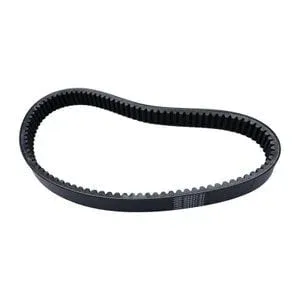
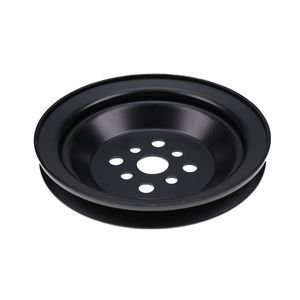
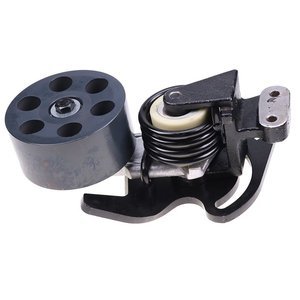
System-Matched Supply — Drive Clutch Belt kits ship with tensioner and sheave hardware verified to the same engine serial variant.
Technical Specifications
| Parameter |
Value |
| Part Number |
J0D-G6241-00-00 |
| Product Type |
Belt |
| Cross-Reference |
J0DG62410000 (reference only) |
| Machine Fitment |
Yamaha Gas Golf Cart Drive2 (2017 and newer models) |
| Application |
Engine Power Transmission |
| Material |
Precision-molded rubber compounds with high-tensile polyester cords |
| Operating Temperature |
-30°C to 80°C (-22°F to 176°F) |
| Condition |
New Aftermarket |
| Quality Standard |
ISO 9001 |
| Warranty |
3-12 months |
Application Suitability
| Engine System |
Related Components |
| Primary Drive / CVT |
Drive clutch sheaves, driven clutch assembly, tensioner hardware |
| Engine Output Coupling |
Crankshaft drive pulley, cooling fan belt, torque converter linkage |
| Power Transmission |
Clutch slider weights, drive spring, primary shaft bearings |
Root Cause of Drive System Failure
Replacing the belt without inspecting the sheaves and tensioners leaves the original fault unaddressed. A drive clutch belt replacement job often requires a system-level review of the entire power transmission assembly. When the primary drive sheaves exhibit scoring or the slider weights show uneven wear, the new belt will fail prematurely under the same misalignment or heat buildup that destroyed the original.
In my experience working with fleet operators, overlooking the sequence-specific build differences between early and late Drive2 models has caused repeated teardowns. A shop might stock a single belt profile, unaware that Yamaha revised the primary clutch geometry mid-production. [NEED_CITE: Yamaha Golf Cart Drive2 CVT service bulletins]

System Context for the Drive2 CVT
The drive clutch belt is the critical link transferring engine output to the continuously variable transmission in the Yamaha Gas Golf Cart Drive2. It must maintain precise engagement with the primary and secondary clutch sheaves across the entire RPM range. A mismatch in tooth profile or cord tension leads to slip, heat generation, and eventual delamination under the load of a fully laden cart on an incline.
Addressing the Engine Serial Variant
Yamaha Gas Golf Cart Drive2 models from 2017 onward feature specific engine serial variants that dictate belt dimensions and sheave engagement profiles. Sourcing a belt based solely on the model year often results in fitment issues if the underlying engine block has been swapped or if the cart was built during a transition period. We require the engine serial number to confirm the exact belt specification and the associated clutch hardware variant. [NEED_CITE: Yamaha engine serial number decoding for Drive2 platforms]
Dimensional Accuracy and Material Stability
The precision-molded rubber compounds and high-tensile polyester cords are engineered to handle the operating temperature range from -30°C to 80°C. This stability is vital for the engine power transmission system, where friction and ambient heat can cause inferior belts to expand, altering the pitch and causing the CVT to hunt for the correct ratio. The structural integrity of the cords ensures the belt maintains its length and tracking over extended service intervals.
The Cost of Mismatched Components
A drive clutch belt installed without verifying the condition of the primary sheave faces often leads to immediate edge wear and a return to the workshop within weeks. If the failure root cause—such as a seized tensioner or a worn drive spring—is ignored, the entire engine power transmission system remains compromised. This results in repeated downtime, wasted labor, and a dissatisfied end-user who questions the quality of the replacement part rather than the diagnosis. [NEED_CITE: CVT belt failure analysis and root cause identification]
Verified System Compatibility
Our approach to the Drive Clutch Belt J0D-G6241-00-00 involves cross-referencing the engine serial variant to ensure the belt matches the specific sheave geometry of the Drive2 platform. We provide matched sets that include the belt, tensioner hardware, and clutch springs to address the entire system. Our technical team verifies the tooth profile and cord construction against OEM reference numbers for identification purposes. We offer sample supply for fitment confirmation before a bulk order is finalized, ensuring the part meets the exact requirements of your rebuild shop.
Documentation & Verification
- Commercial invoice listing matched components for Drive2 CVT overhaul
- Cross-reference sheet for Yamaha J0D-G6241-00-00 and superseded numbers (reference only)
- Quality inspection record verifying belt pitch, width, and cord tension
- Packing photographs showing individual belt protection and carton sealing
- Warranty terms covering material and dimensional defects for 3-12 months
Installation & Rebuild Sequence
- Inspect primary and secondary sheaves for scoring or glazing before installing the new drive clutch belt
- Verify drive spring tension and slider weight condition to ensure proper CVT engagement
- Confirm alignment of the drive clutch belt on the engine output pulley and transmission input
- Torque clutch mounting bolts to Yamaha Drive2 specifications to prevent sheave wobble
- Perform low-speed engagement test to check for vibration or ratio hunting before full-load operation
Sourcing for Fleet Maintenance
Provide the engine model year, serial number, and any known history of previous CVT rebuilds to ensure we supply the correct drive clutch belt variant. We recommend including tensioner and sheave wear components in your inquiry for a comprehensive system match.
Frequently Asked Questions
Q: What other drive system parts should be inspected or replaced with the belt?
A: The primary and secondary clutch sheaves must be inspected for scoring. Slider weights, the drive spring, and primary shaft bearings should be checked for wear. Replacing these components as a matched set prevents the new belt from failing due to misalignment or improper tension from worn hardware.
Q: How do I identify the correct belt if the engine has variants?
A: Provide the engine serial number rather than just the cart model year. Yamaha used different primary clutch geometries across production runs of the Drive2. We cross-reference the serial against manufacturing records to ensure the belt tooth profile matches the specific engine variant installed.
Q: Does the clutch sheave need resurfacing if the belt fails?
A: Yes, belt failure often deposits rubber or causes glazing on the sheave faces. If the sheaves are not resurfaced or replaced, the new belt will slip and wear prematurely. We supply sheave assemblies and resurfacing tools as part of a complete drive system overhaul kit.
Q: What operating conditions accelerate drive clutch belt wear?
A: High ambient temperatures, frequent heavy-load towing, and aggressive acceleration profiles increase thermal stress on the belt cords. Operating in dusty environments without proper air filtration can also lead to contamination within the CVT housing, accelerating abrasive wear on the belt edges.