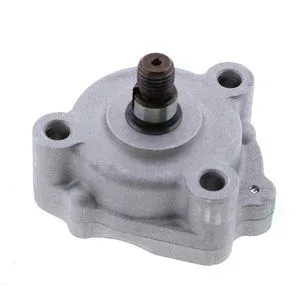
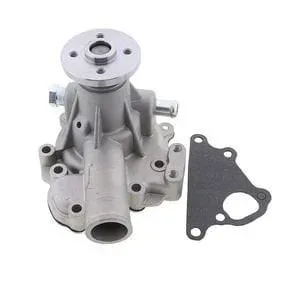
Matched Sets Dispatched — Every cooling circuit component ships verified against your specific Volvo Penta engine serial variant.
Technical Specifications
| Parameter |
Value |
| Part Number |
21212799, 3812519 |
| Cross-Reference |
21212799, 3812519 (reference only) |
| Product Type |
Water Pump |
| Condition |
New Aftermarket |
| Brand Compatibility |
Fits Volvo Penta marine engines |
| Engine Fitment |
4.3L, 5.0L, 5.7L Volvo Penta series |
| Warranty |
3-12 months against manufacturing defects |
| Standards |
ISO manufacturer certified |
Application Suitability
| Engine System |
Related Components |
| Raw-water cooling circuit |
Sea water hoses, clamps, and intake strainers |
| Heat exchanger system |
Thermostat, gaskets, and heat exchanger seals |
| Engine block cooling passages |
Freeze plugs, coolant temperature sensor |
| Exhaust manifold cooling |
Exhaust manifold gaskets and water jackets |
Why the Same Sea Water Pump Fails Within Months
The pump is the symptom. The cooling system restriction is the disease.
When a sea water pump fails prematurely on Volvo Penta marine engines, the root cause often sits upstream or downstream—corroded heat exchanger tubes, collapsed intake hoses, or debris-clogged raw water strainers. Replacing the pump without addressing these restrictions means the new unit faces the same destructive conditions. I have watched workshops in Southeast Asia replace sea water pumps twice in one season because the diagnosis stopped at the obvious failed part. [NEED_CITE: marine engine cooling system failure analysis procedures]
A proper sea water pump engine rebuild replacement requires mapping the entire raw-water flow path. This prevents the costly cycle of repeat failures that vessel operators know too well.

The Raw-Water Circuit Position
This sea water pump occupies the critical first stage of the raw-water cooling loop in Volvo Penta 4.3L, 5.0L, and 5.7L marine engines. It draws seawater through the hull intake, pushes it through the heat exchanger, then routes it to exhaust manifold cooling before discharge. When planning a sea water pump engine rebuild replacement, understanding this position reveals why associated components—thermostat housings, heat exchanger cores, exhaust manifold water jackets—must be evaluated together. The pump does not work in isolation.
Engine Serial Variants and Fitment Accuracy
Volvo Penta produced numerous variants within each displacement family—4.3GL-G, 4.3GXi-F, 5.0OSi-J, 5.7GiC-300-P—each potentially requiring specific pump configurations. The suffix codes indicate model year, fuel system type, and cooling circuit revisions that affect mounting patterns and port orientations. Confirming your exact engine serial number against cross-reference 21212799 and 3812519 (for identification purposes) prevents receiving a pump that physically bolts on but has reversed inlet/outlet positions or incompatible pulley alignment. [NEED_CITE: Volvo Penta engine serial number identification standards]
Impeller Material and Marine Corrosion Resistance
The impeller inside this sea water pump faces continuous saltwater exposure, making material selection critical for service interval length. Marine-grade corrosion-resistant materials prevent the pitting and erosion that gradually reduce flow rate over thousands of operating hours. The stainless steel shaft resists seizing under sustained high-RPM marine operation, while the mechanical seal maintains a tight barrier against the high-pressure cooling circuit conditions. Pre-shipment flow rate and pressure testing verify the pump meets cooling system performance thresholds before it reaches your workshop. These specifications determine whether the pump survives one season or several.
The Cost of Skipping Root Cause Diagnosis
Workshops that install a new sea water pump without inspecting the heat exchanger tubes, intake strainer, and exhaust manifold water jackets often see the replacement fail within months. The same corrosion, debris, or flow restriction that destroyed the original pump attacks the new one immediately. This pattern repeats across commercial fishing fleets and luxury yacht operations alike—vessels return to dock with overheating alarms because the repair addressed the symptom, not the system. [NEED_CITE: marine vessel cooling system preventive maintenance protocols]
The hidden expense is not the second pump. It is the emergency haul-out, the cancelled charter, the crew downtime while the vessel sits inoperative awaiting parts and diagnosis.
Why Procurement From Here Works
Own production lines and qualified sourced supply operate under unified quality control and warranty terms, so whether your sea water pump comes from our facility or a partner plant, the standards remain consistent. Eight equipment categories mean your complete cooling system overhaul—pump, thermostat, gaskets, hoses—ships as one consignment from the Guangzhou warehouse. Minimum order starts at one piece for emergency replacements, yet scales to fleet-level stocking programs. Part identification works from your engine serial number, a photograph of the old pump, or the nameplate image when corrosion has obscured the original markings. Cross-reference verification covers superseded numbers and alternate references across model generations. Technical support confirms compatibility and appropriate grade before you commit to bulk orders.
Documentation & Verification
- Commercial invoice listing each cooling system component with individual part numbers
- Fitment sheet confirming engine serial variants compatible with cross-reference 21212799 and 3812519 (reference only)
- Dimensional inspection record covering port spacing and shaft alignment specifications
- Warranty terms specifying coverage duration for marine-duty operating conditions
- Packing photographs documenting protective packaging before container loading
- HS code documentation supporting customs clearance for international marine parts shipments
Installation & Rebuild Sequence
- Verify heat exchanger tubes are clear and exhaust manifold water jackets are flushed before pump installation
- Inspect intake strainer and replace collapsed hoses to prevent immediate restriction on the new pump
- Torque mounting bolts to specification and confirm pulley alignment before tensioning the drive belt
- Prime the raw-water circuit and verify flow at the exhaust discharge before returning vessel to service
Quotation Request Guidance
Provide your Volvo Penta engine model (4.3GL-G, 5.0GXi-J, 5.7GiC-300-R, or your specific variant), the engine serial number, and any previous cooling system work history. This allows confirmation of the correct pump configuration and identification of related components that should ship together in your overhaul kit.
Frequently Asked Questions
Q: What other cooling system components should be replaced alongside the sea water pump?
A: Heat exchanger gaskets, thermostat assemblies, and raw-water hoses typically require replacement during a complete cooling circuit refresh. Inspect exhaust manifold water jackets for corrosion. Ordering matched sets ensures all components arrive together, avoiding the split shipments that extend vessel downtime.
Q: Does my specific Volvo Penta model variant require a different pump configuration?
A: Yes. Suffix codes like -G, -J, -P indicate cooling circuit revisions that affect port orientation and mounting. Provide your complete engine model designation and serial number to confirm the correct variant. Cross-reference verification covers superseded numbers across model generations.
Q: What typically causes premature sea water pump failure in marine engines?
A: Upstream restrictions—clogged intake strainers, collapsed hoses, corroded heat exchanger tubes—force the pump to work against abnormal backpressure. Debris ingestion damages impeller vanes. Addressing these root causes during replacement prevents the new pump from suffering the same fate within months.
Q: Can I order matched cooling system overhaul parts in one shipment?
A: Complete overhaul kits including the sea water pump, thermostat, gaskets, and seals ship as consolidated consignments. This eliminates the mismatched lead times that occur when sourcing from multiple suppliers, keeping your vessel out of the water for the minimum necessary duration.