Block & Internal Parts
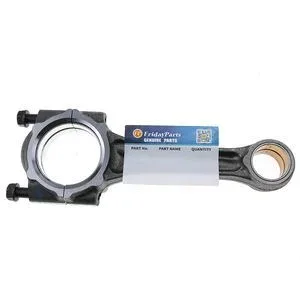
Connecting Rod 1G924-22014 | Engine Grade for Kubota V2003
<p><strong>1G924-22014</strong></p>
View Details
<p><strong>3052170 Rocker Arm Assembly, ISO 9001 certified, New Aftermarket</strong> — compatible with Cummins NT855, N14, NH855, and NTA855A engine families. Valve train replacement requires inspecting pushrods, cam lobes, and valve clearance settings to address root-cause wear rather than swapping the arm alone. Engine serial variants may dictate specific rocker configurations, so verification prevents fitment mismatch.</p> <ul> <li>Overhaul kit contents verified item-by-item before dispatch</li> </ul>
MOQ
1 Piece
Lead Time
2-5 Business Days
Shipping
120+ Countries
Warranty
3-12 Months
Compatible Brands
Matched Valve Train Sets — Rocker arm variants confirmed against engine serial before dispatch to prevent tolerance mismatch during Cummins 855/N14 overhaul.
| Parameter | Value |
|---|---|
| Part Number | 3052170 |
| Product Type | Rocker Arm |
| Cross-Reference | 3052170rx, 3047479 (for identification purposes) |
| Machine Fitment | NT855, N14, NH855, G855, NTA855A, CM558, 6810, 6910 |
| Brand Compatibility | Compatible with Cummins and John Deere engine platforms |
| Condition | New Aftermarket |
| Standard | ISO 9001 |
| Warranty | 3-12 months against manufacturing defects |
| MOQ | 1 piece |
| Engine System | Related Components |
|---|---|
| Valve Train Actuation | Pushrods, valve stems, camshaft lobes |
| Cylinder Head Overhaul | Valve seals, head gasket, injector sleeves |
| Top-End Rebuild Kit | Rocker shaft assembly, adjusting screws, lock nuts |
| Emission & Exhaust Interface | Exhaust valves, crossheads, valve rotators |
Replacing a worn rocker arm without tracing the root cause invites repeat failure within the first few hundred hours.
In Shandong engine rebuild bays, I have torn down freshly overhauled Cummins NT855 and N14 heads only to find the new rocker arm already pitted on the valve contact face. The pushrod was slightly bent from a prior over-speed event, transferring off-axis loading straight into the rocker pivot. [NEED_CITE: valve train misalignment failure modes in heavy-duty diesel engines] A rocker arm assembly engine overhaul rebuild must therefore include pushrod straightness checks, cam lobe profile inspection, and valve clearance verification before the new components are fitted. Ignoring these adjacent variables turns a planned rebuild into a cycle of repeated teardowns and warranty disputes.
The rocker arm sits at the top of a force-transmission chain that begins at the camshaft and ends at the valve face. In Cummins 855 and N14 families, this component translates pushrod lift into the precise valve opening event required for intake and exhaust timing. A rocker arm assembly engine overhaul rebuild should therefore treat this part as one node in a larger kinematic loop. When one node degrades, the load redistributes to adjacent surfaces, accelerating wear on pushrod tips and valve stem caps.
Within the NT855 and N14 engine families, production changes across serial ranges altered rocker shaft diameter, adjusting screw thread pitch, and valve bridge configuration. An early-production G855 may require a different rocker arm profile than a later N14, even though both share the same base displacement. [NEED_CITE: Cummins engine serial range variant identification for overhaul parts] Ordering by engine serial number, not just model designation, prevents receiving a component that physically mounts but produces incorrect valve geometry. Previous rebuilds may also have introduced non-standard clearances that must be accounted for when selecting replacement components.
The pivot bore and valve-stem contact pad on this rocker arm assembly engine overhaul rebuild component are finished to maintain dimensional stability under the thermal cycling typical of continuous heavy-load operation in mining trucks and marine vessels. Heat-treated contact surfaces resist spalling when valve spring forces peak during high-RPM operation. Precision-machined pivot interfaces support correct valve clearance adjustment, which in turn reduces parasitic loading on the camshaft and pushrod. Proper surface geometry here directly influences how evenly the valve seats, affecting compression and combustion efficiency across the cylinder head.
I once saw a workshop replace all six rocker arms on an NH855 without checking the camshaft. The engine returned with valve train noise in under a month — the worn cam lobe on cylinder three was hammering every new component above it. [NEED_CITE: camshaft lobe wear propagation effects on valve train components] When a rocker arm fails prematurely, the fault usually lives somewhere else in the system. Treating the symptom rather than the cause leads to repeated teardowns, wasted gasket sets, and machine downtime that compounds with each return visit to the bench.
Selected part lines are produced in our own facility, with the remainder sourced from ISO-certified manufacturing partners — both carry identical QC and warranty terms, so a mixed-order valve train kit arrives under one accountability. Eight core categories mean the rocker arms, pushrods, seals, and head gaskets for a complete N14 top-end job ship as one consignment. Minimum order starts at one piece, allowing emergency single-cylinder repairs without forcing a full-set purchase. The technical team verifies compatibility by engine serial number and can confirm grade and variant before bulk commitment. Guangzhou warehouse stock enables fast dispatch on common items, and cross-reference verification covers superseded and alternate numbers to catch catalog errors before the box ships.
To confirm the correct rocker arm variant for your Cummins or John Deere engine, provide the engine model, serial number, and any known rebuild history. If the engine has undergone previous overhauls, note whether oversize or undersize components were installed. Photographs of the existing rocker arm and nameplate help resolve ambiguity between serial-range variants. This information allows the technical team to match the component to your specific engine build before dispatch.
Q: What other valve train components should be inspected when replacing rocker arms? A: Inspect pushrod straightness, camshaft lobe profile, valve stem cap condition, and rocker shaft bore wear. Off-axis loading from a bent pushrod or worn cam lobe transfers directly into the new rocker arm, causing premature contact surface failure. A complete valve train inspection prevents repeat teardowns and ensures the rocker arm assembly engine overhaul rebuild addresses the system fault, not just the visible damage.
Q: How do engine serial variants within NT855/N14 affect rocker arm compatibility? A: Production changes across serial ranges can alter rocker shaft diameter, adjusting screw thread, and valve bridge configuration. Two engines sharing the same model designation may require different rocker arm profiles. Verification by engine serial number — not model alone — ensures correct fitment and prevents installing a component that mounts but produces incorrect valve geometry during operation.
Q: What root causes lead to premature rocker arm failure beyond normal wear? A: Common causes include pushrod misalignment from prior over-speed events, worn camshaft lobes generating irregular lift profiles, incorrect valve clearance settings creating impact loading, and contaminated lubrication accelerating pivot bore wear. Diagnosing these system-level faults before installing new components prevents the replacement rocker arm from inheriting the same destructive conditions that destroyed the original.
Q: Can I order a matched set of rocker arms, pushrods, and valve seals together? A: Yes. Consolidating valve train components into a single order ensures compatibility across the entire cylinder head and avoids split-shipment delays. The matched set ships under one warranty and one quality inspection record, so every component in the rocker arm assembly engine overhaul rebuild is traceable and verified against the same engine serial reference.
Q: How do I confirm the correct rocker arm variant for my specific engine build? A: Provide the engine model, full serial number, and details of any previous rebuilds including oversize or undersize component usage. Photographs of the existing rocker arm, nameplate, or cylinder head casting help resolve ambiguity. The technical team cross-references this data against variant tables to supply the exact configuration your engine requires.
<p><strong>1G924-22014</strong></p>
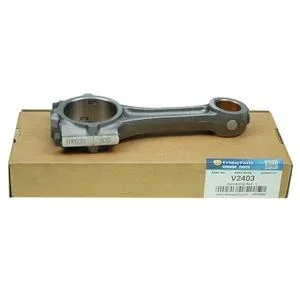
View Details<p><strong>Connecting Rod 1J700-22012 for Kubota V2607, forged alloy steel</strong> — designed for the crankshaft linkage system in V2607 and V2607T engines. During overhauls, match rod big-end bore tolerance with crankshaft journal grade and con rod bearing size (STD / 0.25 / 0.50). Pair with piston sets, bearing shells, and gasket kits for system-level rebuild accuracy. Overhaul kit contents verified item-by-item before dispatch to prevent missing components on arrival</p>
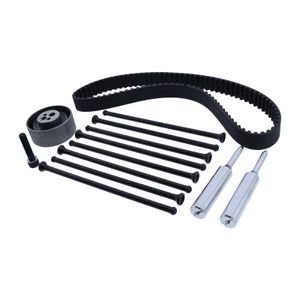
View Details<p>Stop engine downtime and timing-related failures with the <strong>Deutz 1011 timing belt kit</strong> — precision-engineered to restore OEM-level synchronization in under 2 hours, even for high-mileage F2L1011F or BF4M1011F engines. We include the exact timing pins (100700) that lock the cam and crank sprockets at true TDC — a detail often overlooked in generic kits but critical to avoid bent valves or piston-to-valve contact.</p> <ul> <li>Complete set: 1x timing belt (02929933), 8x hardened push rods (02109085), and 2x factory-spec timing pins (100700)</li> <li>Fits Deutz 1011/1011F series and Bobcat skid steers including 863, 873G, T200, and S250 — no guesswork on cross-references</li> <li>Built to match Deutz’s original torque specs and belt tooth profile — eliminates premature stretch and slippage common with non-OEM-equivalent kits</li> <li>Ships same day from our Guangzhou warehouse — no waiting weeks for OEM backorders</li> </ul>
View Details<p><strong>04132003 Main Bearing for Deutz TD D2.9 4L</strong> — supplied in standard and oversize grades to match crankshaft regrind history.</p> <ul> <li>Forms the core of the crankshaft support system; pair with matched con rod bearings and overhaul gasket set for consistent oil clearances across the bottom end</li> <li>Verify engine serial variant to confirm correct bearing shell width and oil groove configuration before ordering</li> <li>Oversize selection (STD / 0.25 / 0.50) guided by micrometer readings and prior rebuild records</li> </ul> <p>Overhaul kit contents cross-checked against your specific D2.9 4L build before dispatch.</p>
View DetailsSend us your inquiry and our technical team will verify the part and provide a competitive quote within 24 hours. MOQ starts from 1 piece.
Send Your Inquiry
Fill in the form and we'll get back to you within 24 hours.