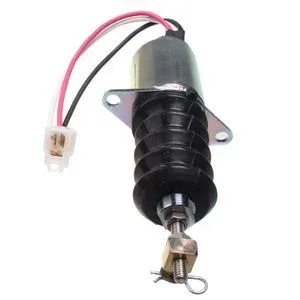
Engine Sequence Variants Verified — Cross-referencing AM882277 against John Deere compact tractor engine serial prefixes prevents connector mismatch and repeated no-start callbacks.
Technical Specifications
| Parameter |
Value |
| Part Number |
AM882277 |
| Product Type |
Stop Solenoid |
| Cross-Reference |
AM876416, P610-C5V12, P610C5V12 (reference only) |
| Machine Fitment |
John Deere 670, 770, 870, 970, 1070 Compact Utility Tractors |
| Voltage |
12V DC |
| Housing Material |
Precision-machined brass |
| Plunger Material |
Hardened stainless steel (HRC 42–46) |
| Sealing Material |
FKM fluoroelastomer |
| Sealing Temperature Range |
-20°C to +150°C |
| Coil Insulation Class |
Class B (130°C) per IEC 60034 |
| Dimensional Tolerance |
±0.05 mm |
| Actuation Time |
≤35 ms |
| Hold Current |
≤0.85A |
| Test Cycles |
500+ at 12V ±10% |
| Condition |
New Aftermarket |
| Standards |
ISO 9001, IEC 60034 |
Application Suitability
| Engine System |
Related Components |
| Diesel fuel delivery and cutoff |
Injection pump, fuel lines, fuel filter elements |
| Electrical control circuit |
Wiring harness connectors, relay switches, ignition circuit |
| Engine shutdown mechanism |
Fuel rack linkage, governor assembly components |
| Cold-start and idle control |
Glow plugs, throttle position sensor, idle speed adjuster |
When the Stop Solenoid Fails, the Real Fault May Be Deeper in the Fuel System
A replacement solenoid solves nothing if the injection pump or wiring harness caused the original failure.
In the repair bays around Riyadh, I have watched technicians swap out a fuel stop solenoid only to have the same no-start condition return within weeks. The root cause often traces back to voltage drop across corroded wiring, a sticking fuel rack inside the injection pump, or degraded connectors that cannot deliver clean 12V DC to the coil. Replacing the solenoid without tracing these upstream faults means the new unit absorbs the same electrical abuse and fails prematurely [NEED_CITE: diesel fuel system electrical diagnostic procedures for compact tractors]. This stop solenoid engine rebuild replacement fits the John Deere 670 through 1070 compact utility tractor range, but confirming the engine serial prefix before ordering is essential — connector styles shifted across production runs within the same model designation.

The Fuel Cutoff Role Inside the Diesel Injection System
The stop solenoid sits at a critical junction between the electrical control circuit and the mechanical fuel delivery path. When energized, the hardened stainless steel plunger retracts to allow fuel flow into the injection pump; when de-energized, spring pressure seats the plunger and cuts fuel supply within 35 milliseconds. This rapid actuation is what prevents diesel run-on after the ignition is switched off. During an engine rebuild or fuel system service, this stop solenoid engine rebuild replacement should be bench-tested alongside the injection pump to confirm matched response timing.
Why Engine Serial Prefixes Determine Fitment Across the 670–1070 Range
The same base tractor model can carry different engine serial variants depending on production year, and these variants use solenoids with different connector pin configurations and mounting orientations. A John Deere 770 from an early production batch may require a different plug style than a later unit, even though the OEM reference numbers overlap. Before confirming this stop solenoid engine rebuild replacement, I always request the engine serial plate photograph to match the connector type and verify whether the superseded number AM876416 or the current AM882277 applies [NEED_CITE: John Deere compact tractor engine serial prefix identification guide]. Sending a unit based solely on the tractor model name has cost me enough misfits to make serial verification non-negotiable.
Sealing Materials and Coil Insulation Under Sustained Thermal Load
FKM fluoroelastomer seals handle the full range of diesel and biodiesel blends without swelling or cracking, which matters when fleet operators switch fuel formulations seasonally. The sealing range of -20°C to +150°C covers both cold-start conditions and sustained operation under heavy PTO load where engine bay temperatures climb significantly. Class B coil insulation rated to 130°C per IEC 60034 prevents winding breakdown during extended cranking cycles — a common scenario when a tractor with glow plug issues requires multiple start attempts. The precision-machined brass housing dissipates coil heat effectively and maintains the ±0.05 mm dimensional tolerance that keeps the plunger centered in the bore [NEED_CITE: IEC 60034 insulation class standards for solenoid coils in mobile equipment].
The Cost of Skipping Root-Cause Diagnostics Before Replacement
Installing a new solenoid onto a fuel system with an unresolved electrical fault is a short-term fix. If the wiring harness has corroded terminals delivering intermittent voltage, the solenoid coil experiences repeated partial-actuation cycles that generate excess heat and degrade the insulation prematurely. Similarly, a sticky fuel rack inside the injection pump forces the solenoid plunger to work against higher-than-designed resistance, accelerating wear on the stainless steel plunger surface. These secondary failure modes do not appear in the first week but surface as intermittent stalling or failure to shut down — problems that get blamed on the replacement part rather than the untreated system fault. Checking hold current draw and pull-in voltage at the connector before installation separates a clean electrical path from one that will destroy the next solenoid too [NEED_CITE: diesel injection pump fuel rack inspection procedures].
Why Procurement Here Supports Engine System-Level Service
Selected part lines are produced in our own facility while the remainder is sourced from qualified ISO-certified manufacturing partners, with both carrying identical QC and warranty terms. This means the stop solenoid ships under the same six-month warranty as matched fuel filters, seal kits, and injection pump service components ordered on a single account. Orders start from one piece — no minimum order quantity blocks a single emergency replacement while the rest of the overhaul kit is still being planned. Part identification works from the OEM number, the tractor model, a photograph of the old unit, or a nameplate image, and cross-reference verification covers superseded numbers like AM876416. Technical support is available to confirm connector compatibility and voltage specification before dispatch, reducing the chance of a fitment mismatch on arrival.
Documentation & Verification
- Commercial invoice listing AM882277 with cross-reference numbers marked reference only
- Compatibility sheet mapping engine serial prefixes to connector variants across 670–1070 range
- Quality inspection record confirming actuation time and hold current test results per unit
- Warranty terms covering manufacturing defects with documented replacement procedure
- Packing photographs showing brass housing condition and connector integrity before crating
- HS code classification and customs documentation support for international agricultural parts shipments
Installation & Rebuild Sequence
- Verify wiring harness delivers clean 12V DC at the connector before mounting the new solenoid
- Clean the injection pump mounting bore to remove carbon deposits that could jam the plunger
- Confirm FKM seal seats flush against the brass housing shoulder with no pinching during assembly
- Torque mounting fasteners to specification and check ±0.05 mm dimensional alignment
- Test full fuel cutoff response by cycling ignition three times before starting the engine
- Run the tractor at idle for initial break-in and monitor solenoid surface temperature
Requesting a Fitment-Confirmed Quotation
Provide the engine model, serial number, and any available photographs of the existing solenoid connector and nameplate. This allows verification of the correct variant for your specific production run within the 670–1070 range and confirms whether the unit ships with the applicable connector type. Include details of any previous engine rebuilds or injection pump work so the correct dimensional match can be confirmed before dispatch.
Frequently Asked Questions
Q: What other fuel system components should be inspected when replacing the stop solenoid?
A: Check the injection pump fuel rack for free movement, inspect wiring harness terminals for corrosion or voltage drop, and verify the relay switch delivers consistent 12V DC under cranking load. Fuel filter elements should be evaluated for restriction that could cause cavitation upstream of the solenoid. These checks prevent the new unit from inheriting the same fault conditions that destroyed the previous solenoid.
Q: How do engine serial variants affect solenoid fitment across the 670–1070 range?
A: Production changes across model years introduced different connector pin configurations and mounting orientations for the same tractor model. The engine serial prefix determines which variant applies, and relying solely on the model number risks receiving a unit with an incompatible plug style. Providing the serial plate photograph allows exact matching against the correct cross-reference number.
Q: Can this solenoid be included in a broader engine service parts kit?
A: Yes, this stop solenoid can ship alongside matched fuel filters, gasket sets, injection pump seal kits, and electrical connectors as a consolidated fuel system service package. Combining these items under one account simplifies documentation and ensures compatibility across all components. Request a consolidated kit quotation based on your engine serial number and rebuild scope.
Q: What diagnostic steps confirm the solenoid is the root cause versus a wiring or pump fault?
A: Measure voltage at the solenoid connector during cranking to confirm adequate supply, then check hold current draw against the rated ≤0.85A specification. If voltage is correct but the plunger does not actuate, the fault is internal to the solenoid. If voltage is low, trace the wiring harness and relay for resistance before replacing any components.
Q: How do I verify the correct voltage and connector type for my tractor's electrical system?
A: Confirm your tractor operates on a 12V DC system and photograph the existing solenoid connector alongside the engine nameplate. Different production runs within the same model used varying connector styles, and the engine serial number is the reliable identifier. This verification prevents receiving a unit that requires adapter wiring on installation.