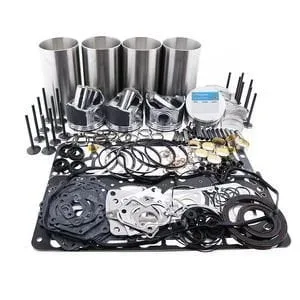
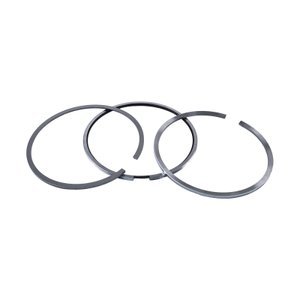
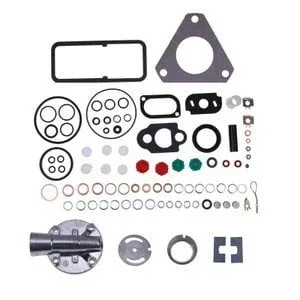
Matched Tolerances — Every V2203 rebuild kit leaves our warehouse with liner, piston, and ring grades verified against the specific engine serial, preventing mismatched clearances that cause repeat teardowns.
Technical Specifications
| Parameter |
Value |
| Product Type |
Overhaul Kit |
| Engine Fitment |
Kubota V2203, V2203E, V2203T, V2203DI, V2203-M-DI, V2203-M-DI-E2B, V2203-M, V2203-M-E2B, V2203-M-E3B, V2203-M-E3BG |
| Machine Fitment |
Kubota KX121-2, KX161-2, L4350DT, L4400DT, L4740, L5240, MX5100; Bobcat 753C, 753F, 753G, 763, 763C, 763F, 763G, 773, 773C, 773F, 773G, S130, S150, S160, S175, S185, 331, 334, 337, 341 |
| Condition |
New Aftermarket |
| Liner Type |
Semi-finished |
| Liner Material |
Centrifugally cast GGG-40 nodular iron |
| Piston Material |
Forged A380 aluminum alloy with phosphate coating |
| Gasket Construction |
Multi-layer steel (MLS) with Viton elastomer sealing beads |
| Gasket Temperature Rating |
250°C |
| Bore Finish Tolerance |
Ra 0.4–0.8 μm |
| Taper Tolerance |
≤0.01 mm |
| Liner Roundness |
±0.005 mm |
| Standards |
ISO 9001, ISO 3006, Kubota JIS B8201, SAE J303 |
| Warranty |
6 months against manufacturing defects |
| MOQ |
1 set |
Application Suitability
| Engine System |
Related Components |
| Cylinder Block & Bore |
Semi-finished liners require final honing to match piston grade and block condition |
| Fuel Delivery |
Injector nozzle condition and pump timing affect combustion pressure on new piston crowns |
| Cooling Circuit |
Thermostat, water pump, and radiator cap must be verified to prevent thermal overload on new rings |
| Lubrication System |
Oil pump relief valve and filter bypass integrity protect new bearing surfaces during break-in |
| Valve Train |
Valve seat concentricity and guide clearance influence cylinder sealing and oil consumption |
When the Overhaul Kit Claims to Be Complete but Isn't
The Kubota V2203 engine overhaul rebuild kit is configured as a matched set, so liner bore allowance, piston grade, and gasket variant align with the exact engine serial rather than a generic parts list.
Rebuild shops regularly open a teardown, measure the bore, and realize the "complete" kit sitting on the bench lacks the correct oversize pistons or the specific MLS head gasket their engine variant requires. The result is a machine sitting on the floor for days while a second order ships [NEED_CITE: engine overhaul kit completeness verification for compact diesel platforms]. Cross-reference tables copied between sellers often carry forward errors from earlier V2203 generations, meaning a kit ordered by a superseded number may deliver E-series components into an M-E3B block. I have walked into workshops where the block was already honed to accept a standard liner, only to find the supplied pistons were graded for a previous rebuild — forcing either a re-bore or a complete parts swap.

System-Level Component Matching Across V2203 Variants
The V2203 family spans naturally aspirated, turbocharged, and direct-injection variants, each imposing different thermal and mechanical loads on cylinder components. A Kubota V2203 engine overhaul rebuild kit must account for these differences: the V2203T runs higher combustion pressures that demand specific piston crown geometry and ring tension, while the V2203-M-DI-E2B uses a different injection pattern that changes heat distribution across the piston skirt. Sourcing cylinder components as isolated line items without confirming the engine variant serial often delivers parts that physically fit but operate outside their design envelope, leading to accelerated ring wear or crown cracking within the first few hundred hours.
Semi-Finished Liners and the Rebuild History Problem
Semi-finished liners in this kit carry a honing allowance that lets the machinist finish the bore to match the actual block condition after previous rebuilds. This matters because many V2203 engines in rental fleets and agricultural tractors have already been through one or more overhauls, and the block may no longer be at standard dimension [NEED_CITE: cylinder bore measurement procedures after multiple engine rebuilds]. Ordering a kit without knowing the prior rebuild history — whether the block was previously bored to 0.25 or 0.50 oversize — risks receiving pistons that do not match the liner's final honed diameter. The semi-finished approach gives the rebuild shop flexibility, but only when the oversize grade is confirmed against the current bore measurement before the kit ships.
Material and Tolerance Specifications That Matter During Assembly
The centrifugally cast GGG-40 nodular iron liners provide the graphite nodule structure needed for consistent oil retention during the honing process, with bore finish held to Ra 0.4–0.8 μm to support proper ring seating without excessive wear during break-in. The forged A380 aluminum pistons carry a phosphate coating that reduces scuffing risk during initial startup when oil film is thin. Taper tolerance at ≤0.01 mm ensures the liner-to-piston clearance remains uniform along the full stroke, preventing localized hot spots that accelerate ring land degradation. The MLS head gasket with Viton sealing beads maintains combustion seal integrity at 250°C, addressing the crossover failure mode where coolant migrates into the cylinder during sustained high-load operation common in compact excavators.
The Hidden Cost of Mismatched Cylinder Components
When a rebuild shop sources liners, pistons, and rings from separate orders, the tolerance stack-up between components can fall outside the design clearance even if each part individually meets its specification. A liner honed to the tight end of its tolerance band paired with a piston at the large end of its range produces excessive clearance, showing up as blow-by and oil consumption within weeks of returning the machine to service [NEED_CITE: piston-to-liner clearance effects on blow-by in small diesel engines]. Conversely, tight clearance causes piston scuffing under thermal load. These failures rarely appear during the initial test run; they emerge after the engine has cycled through several heat-up and cool-down phases, meaning the machine is already back on a job site when the problem surfaces — turning a planned overhaul into an unplanned second teardown.
Why This Overhaul Kit Arrives as a Verified System
Our selected production lines and qualified sourcing partners operate under one warranty account, meaning every component in this V2203 kit carries the same quality terms whether produced in-house or sourced. The eight-category inventory means adjacent rebuild items — seal kits, fuel system components, cooling system parts — consolidate into one shipment, eliminating the partial-delivery problem that stalls rebuilds. Minimum order is one set, so an emergency single-engine rebuild ships without MOQ barriers. Our technical team verifies compatibility against engine serial numbers and cross-references superseded part numbers before dispatch, reducing the risk of receiving components that belong to a different V2203 variant. Sample supply is available for shops that want to confirm fitment on a bench before committing to fleet-level rebuild quantities.
Documentation & Verification
- Commercial invoice listing each kit component by line item for customs and inventory reconciliation
- Compatibility and cross-reference sheet marked reference only, mapping kit contents to engine serial ranges
- Dimensional inspection records covering liner roundness, bore taper, and piston-to-ring clearance
- Warranty terms specifying coverage scope for matched-set components under normal rebuild conditions
- Packing photographs documenting kit contents and protective packaging before crate closure
- HS code and customs documentation support for international shipments of engine overhaul components
Installation & Rebuild Sequence
- Measure block bore at multiple depths and clock positions to confirm the correct oversize grade before opening liner packaging
- Verify semi-finished liner honing allowance matches the target final bore dimension for the supplied piston grade
- Clean all oil galleries and coolant passages with solvent flush before installing new bearings and gaskets
- Torque head bolts in the manufacturer-specified sequence, re-checking after the first heat cycle to address MLS gasket relaxation
- Run initial break-in under graduated load, monitoring oil pressure and coolant temperature for the first operating hours
- Re-torque head fasteners and adjust valve lash after the break-in period to compensate for component seating
Request a Kit Configured for Your Engine
Provide your V2203 engine serial number, any known rebuild history, and current bore measurements if available. This information allows us to confirm the correct oversize grade, verify gasket variant compatibility, and ensure the Kubota V2203 engine overhaul rebuild kit ships with every component your specific block requires.
Frequently Asked Questions
Q: What exactly is included in this V2203 overhaul kit?
A: The kit contains semi-finished cylinder liners, matched pistons with rings, main and con-rod bearings, and a full gasket set including the MLS head gasket with Viton beads. Contents are configured to the specific V2203 variant identified by engine serial. We provide a detailed packing list so you can verify every item against your rebuild checklist before starting disassembly.
Q: My engine has been rebuilt before — how do I determine the correct oversize grade?
A: Measure the current bore diameter at several depths and orientations. If the block was previously machined to 0.25 or 0.50 oversize, the pistons in this kit must match. We ask for your bore measurements and any available rebuild records, then configure the kit with the correct piston grade and corresponding semi-finished liner allowance before dispatch.
Q: Do different V2203 variants use the same internal cylinder components?
A: No. The V2203T turbocharged variant, the V2203DI direct-injection, and the later M-E3B emissions-calibrated engines each have distinct piston crown profiles, ring sets, and gasket specifications. We verify your exact variant by engine serial number to ensure the Kubota V2203 engine overhaul rebuild kit delivers components matched to your engine's combustion characteristics.
Q: What system-level checks should I perform to prevent repeat failure?
A: Before installation, inspect the cooling system for flow restriction, verify oil pump relief valve function, and check injector spray pattern. After assembly, monitor break-in oil pressure and temperature closely. Addressing the root cause of the original failure — whether thermal overload, lubrication breakdown, or fuel wash — prevents the new cylinder components from failing under the same conditions.
Q: How do I confirm my exact engine model when the nameplate is missing?
A: Send photographs of the block casting numbers, the injection pump mounting configuration, and any remaining serial stamps on the block or flywheel housing. Our technical team cross-references these visual identifiers against V2203 production records to confirm the variant and configure the correct overhaul kit accordingly.