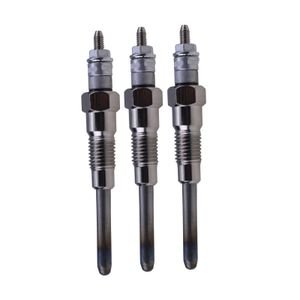
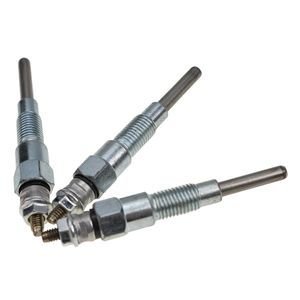
System-Matched Set Dispatch — every glow plug in this listing ships with verified resistance and thermal rise data matched to the specific Kubota D-series engine variant.
Technical Specifications
| Parameter |
Value |
| Part Number |
19077-65510 |
| Product Type |
Glow Plug |
| Cross-Reference |
19077-65510, 19077-65511, 19077-65512, 19077-65513 (reference only) |
| Machine Fitment |
Kubota L2600, L2800, L3240, L3300, L3400, L3410, L3430, L3540, L3600, L3830, L3940, L4200, L4240, L4300, L4310, L4330, L4610, L4630, L4740, L5030, L5040, L5240, L5740, M4700, M4800, M4900, M5400, M5700, MX5000, KX121-2, KX121-3, KX121-3S, KX161-2, KX161-3, KX161-3S, KX91-3, KX91-3S, U35, U35S, U45S, R510, R510B |
| Condition |
New Aftermarket |
| Heating Coil Resistance |
1.2–1.5 Ω at 20°C |
| Operating Voltage Range |
10.5V to 14.5V |
| Thread Specification |
M10×1.25 |
| Thermal Rise Time |
<12 sec to 850°C |
| Cycle Life |
>10,000 cold starts |
| Ceramic Insulator Thermal Shock Resistance |
up to 1,000°C |
| Salt Spray Test |
96-hour NSS per ASTM B117 |
| Warranty |
3–12 months against manufacturing defects |
Application Suitability
| Engine System |
Related Components |
| Cold-start preheating (Kubota D1403, D1503, D1703, D1803) |
Glow plug relay, timer module, wiring harness connectors |
| Fuel delivery and atomization during cranking |
Injector nozzles, return line seals, fuel filter element |
| Compression integrity for ignition support |
Cylinder head gasket, valve stem seals, piston ring set |
| Electrical supply circuit under cranking load |
Battery terminals, alternator output, main fuse links |
Why a Single Failed Glow Plug Signals a System-Level Fault
Replacing one plug without tracing the root cause almost guarantees a repeat failure within weeks.
When a glow plug burns out prematurely, the fault usually sits upstream — a sticking relay that holds voltage past the timer cutoff, a corroded harness connector that drops voltage below the coil's operating threshold, or a leaking injector that floods the pre-chamber and quenches the thermal element. Swapping the plug alone addresses the symptom. The underlying electrical or fuel delivery anomaly remains active, and the new unit absorbs the same abuse. I have seen engines come back with three sequential plug replacements on the same cylinder before the relay was finally bench-tested and found welded closed [NEED_CITE: diesel cold-start system relay failure diagnostics].
A Glow Plug engine rebuild approach means treating the preheating circuit as a closed system: verify relay cutoff timing, measure voltage at each plug terminal during the glow cycle, and check injector spray pattern on the affected cylinder. Only after those variables are confirmed does the replacement plug stand a reasonable chance of reaching its rated cycle life.

The Preheating Circuit as Part of the Overhaul Sequence
During a full engine overhaul on Kubota D1403 through D1803 series blocks, the glow plugs sit at an intersection between the electrical system and the combustion chamber. They are typically removed before head resurfacing and reinstalled after valve seats are cut and injector sleeves are confirmed. This Glow Plug Kubota D1403 D1703 D1803 overhaul component must be evaluated alongside the head gasket torque sequence, valve guide clearance, and injector protrusion depth — all of which influence the thermal environment the plug operates within once the engine is reassembled.
Matched Sets and Sequential Misfire Prevention
When one plug in a multi-cylinder D-series engine fails after years of identical thermal cycles, the remaining units are approaching the same fatigue threshold. Replacing only the failed cylinder shifts the imbalance: the new plug heats faster and draws different current than the aged units, creating uneven cylinder contribution during cold cranking. A matched set replacement restores uniform thermal rise across all cylinders, eliminating the staggered misfire pattern that operators often mistake for a fuel delivery problem [NEED_CITE: diesel engine cold-start cylinder contribution balance].
Reading the Specifications Against the Service Manual
The 1.2–1.5 Ω resistance window at 20°C is the baseline for identifying a healthy coil — values outside this range indicate either an open circuit or a shorted winding that will trip the relay prematurely. The M10×1.25 thread must match the cylinder head boss exactly; forcing a mismatched pitch damages the aluminum head thread, requiring a helicoil repair before the engine can be sealed. The thermal rise time of under 12 seconds to 850°C is critical in sub-zero environments where cranking speed alone cannot achieve compression ignition. Ceramic insulator integrity up to 1,000°C protects the heating coil from thermal shock during repeated start-stop cycles typical in construction and standby generator duty [NEED_CITE: glow plug ceramic insulator thermal cycling standards].
The Hidden Cost of Skipping the Electrical Diagnosis
A workshop that installs fresh plugs without verifying relay timing and harness voltage will see the same cylinder fail again — often within a few hundred start cycles. The cost is not just the replacement unit; it is the repeated teardown, the head gasket that must be replaced each time the plug is accessed through a tight engine bay, and the operator downtime while the machine sits cold and unstartable on a winter morning. Fleet operators running multiple D-series units in low-temperature regions absorb this compounding loss across the entire equipment roster [NEED_CITE: fleet maintenance repeat failure cost analysis for diesel cold-start systems].
Why Source This Component Through XUNPO
XUNPO supplies both self-produced and qualified-sourced glow plug lines under one account and one warranty structure, so a complete overhaul kit ships as a single consignment. Cross-reference verification covers superseded numbers across the 19077-65510 through 19077-65513 series, with each number checked against the specific engine serial to confirm thread and voltage match. Sample supply is available for fitment confirmation before bulk commitment — critical when dealing with variant differences between early and late production D1703 blocks. The technical team can confirm compatibility and resistance grade from a photograph of the engine nameplate when the original part number is unreadable. Minimum order starts from a single piece, so an emergency single-cylinder replacement does not require purchasing a full set. Guangzhou warehouse stock enables fast dispatch on common D-series references.
Documentation & Verification
- Commercial invoice listing each glow plug reference number and applicable engine serial range
- Cross-reference sheet mapping 19077-65510 family to superseded variants (reference only)
- Resistance and thermal rise test records for the supplied batch
- Warranty terms covering material defects and premature thermal failure
- Packing photographs showing individual blister pack and carton labeling
- HS code and customs documentation support for international engine parts shipment
Installation & Rebuild Sequence
- Remove all plugs before head work to prevent ceramic debris entering cylinders
- Clean thread bosses with M10×1.25 chase tap before installing new units
- Apply anti-seize compound to thread only — keep heating element and tip clean
- Torque to engine service manual specification to avoid crushing the sealing cone
- Verify relay cutoff timing after installation using a timing light on the glow bus bar
- Perform initial cold-start test at ambient temperature before returning machine to service
Request a System-Level Quotation
Provide the full engine model designation (e.g., D1703-M-E2B), engine serial number, and any previous rebuild history. This allows confirmation of the correct thread specification, voltage rating, and whether adjacent components such as the relay or injector return seals should be included in the same shipment for a complete system refresh.
Frequently Asked Questions
Q: What other engine components should be inspected or replaced when changing glow plugs?
A: The glow plug relay timer, wiring harness connectors, and battery terminals should all be tested for voltage delivery and cutoff timing. On the fuel side, inspect injector nozzles for leakage that could flood the pre-chamber and quench the thermal element. If the head is already accessible during a major overhaul, replacing head gaskets and valve stem seals at the same time prevents a second teardown.
Q: How do I confirm which superseded reference number applies to my specific engine serial?
A: Kubota assigned multiple reference numbers across production runs of the D1403 through D1803 series. Provide the exact engine serial and model suffix — the final digits determine which thread pitch and voltage variant was fitted at the factory. Cross-reference tables copied between sellers often carry forward errors, so verification against the engine service manual is essential before ordering.
Q: Should I replace all glow plugs as a matched set or only the failed unit?
A: When the failed plug has accumulated significant thermal cycles, the remaining units are approaching similar fatigue thresholds. Replacing only one creates an imbalance in heating rate and current draw across cylinders during cold cranking. A matched set restores uniform preheating and prevents the staggered misfire pattern that operators misdiagnose as a fuel system problem.
Q: What electrical system checks should accompany glow plug replacement to address root cause?
A: Measure voltage at each plug terminal during the glow cycle to confirm the harness is not dropping below the operating threshold. Verify relay cutoff timing with a timing light — a welded relay holds voltage past the timer window and burns out the coil. Check battery terminal condition and alternator output, as weak cranking voltage forces the plugs to compensate beyond their design envelope.