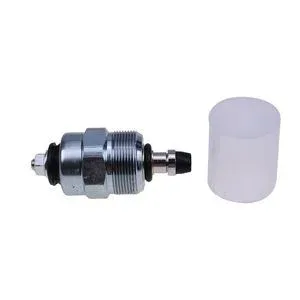
Matched Set Dispatch — This fuel shutoff solenoid ships with verified engine serial alignment for New Holland F4CE9484C and F4CE9484L J600 rebuilds, eliminating tolerance mismatches during system reassembly.
Technical Specifications
| Parameter |
Value |
| Part Number |
2852741 |
| Product Type |
Stop Solenoid |
| Cross-Reference |
2852741 (reference only) |
| Machine Fitment |
New Holland Engine F4CE9484C J600, F4CE9484L J600 |
| Voltage |
12V |
| Condition |
New Aftermarket |
| Armature Core Material |
Low-carbon steel |
| Coil Insulation Class |
Class H (180°C) |
| Housing Material |
Zinc-plated cast aluminum |
| O-Ring Material |
Viton rated to 150°C |
| Operating Pressure |
Up to 5 bar |
| Warranty |
3–12 months against manufacturing defects |
| Standards |
ISO 9001, SAE J1455, ISO 4414 |
Application Suitability
| Engine System |
Related Components |
| Fuel shutoff circuit at injection pump |
Fuel line fittings, sealing O-rings, injection pump gasket set |
| Engine electrical harness |
Wiring connectors, relay contacts, fuse rating verification |
| Complete fuel system refresh |
Fuel filters, supply lines, return line check valves |
| Engine overhaul — top end |
Valve cover gasket, injector seals, fuel rail hardware |
Why a Stop Solenoid Fails Again Right After Replacement
The root cause usually lives in the wiring harness or fuel supply, not the solenoid itself.
In Guangzhou supporting fuel system rebuilds over the years, I have seen stop solenoid replacements fail within weeks because the installer addressed the symptom rather than the source. One F4CE9484C engine came back after a stop solenoid engine rebuild because the 12V circuit had a voltage drop across a corroded connector — the new unit received insufficient current and overheated internally. The second teardown cost the shop more than the first [NEED_CITE: common electrical fault patterns in diesel fuel shutoff circuits]. When the same part fails twice in sequence, the failure trace almost always leads upstream into the harness or downstream into contaminated fuel reaching the armature bore.

Fuel Shutoff Circuit Position and System Dependencies
This stop solenoid sits at the injection pump inlet on the New Holland F4CE9484-series engine, controlling fuel flow during shutdown sequences. As part of a stop solenoid engine rebuild, it must function in coordination with the injection pump's internal timing — a mismatched response delay can leave residual fuel in the combustion chamber, causing run-on or flooding at restart. The Viton O-ring seals against fuel exposure up to 150°C, which matters in high-load applications where return fuel carries heat back through the circuit.
Engine Serial Variants That Change Internal Fuel Configuration
The F4CE9484C and F4CE9484L J600 variants share the same external solenoid mounting pattern but may carry different internal fuel system configurations depending on production batch and emissions tier. I once had a rebuild shop order based on engine family alone, only to find the connector pin orientation differed between their C-variant and L-variant cores [NEED_CITE: engine serial variant differences in fuel system component compatibility]. Confirming the full engine serial — not just the family designation — before ordering prevents this mismatch. A bench test of the old solenoid's connector against the replacement unit catches pin layout differences before the engine goes back on the stand.
Electrical and Material Specifications That Matter at Rebuild
The Class H insulation rating at 180°C provides thermal headroom above typical under-hood temperatures, but repeated voltage spikes from a failing relay can exceed this threshold locally within the coil winding. The low-carbon steel armature core must move freely within its bore — any fuel varnish or particulate contamination from upstream filters increases drag and delays the 12V actuation response. The zinc-plated cast aluminum housing resists corrosion from fuel splash and ambient moisture, which is relevant for engines operating in quarry or agricultural environments where washdown is routine. These material choices only deliver their intended performance when adjacent system components — connectors, filters, fuel lines — are in acceptable condition at the time of installation.
The Hidden Cost of Skipping Root-Cause Diagnosis
When a stop solenoid engine rebuild replaces only the failed unit without tracing the failure origin, the new solenoid inherits the same stress conditions that destroyed the previous one. Voltage drop across a damaged harness connector generates excess heat inside the coil, degrading insulation progressively until the unit shorts internally. Contaminated fuel passing through a bypassed filter scores the armature bore surface, creating drag that eventually stalls the core mid-travel. The cost is not the part — it is the second teardown, the second set of gaskets, and the machine owner's eroded confidence in the shop [NEED_CITE: cumulative cost impact of repeat diesel fuel system failures].
Why Rebuild Shops Source This Component Through XUNPO
Our selected production lines and qualified sourced supply both carry identical QC and warranty terms, so a stop solenoid ships with the same inspection standard regardless of which line produced it. Eight product categories under one account means the O-rings, fuel line fittings, and injector seals for the same rebuild job consolidate into a single dispatch. Minimum order from one piece supports emergency single-engine repairs without blocking on batch quantities. The Guangzhou warehouse holds common fuel system components for fast release on standard variants. Cross-reference verification covers superseded and alternate numbers, catching cases where a parts catalog carries outdated listings. Technical support confirms engine serial compatibility and grade selection before the order ships, reducing the chance of a mismatch reaching the workshop bench.
Documentation & Verification
- Commercial invoice listing stop solenoid 2852741 with cross-reference notation for customs clearance
- Compatibility sheet matching engine serial F4CE9484C or F4CE9484L J600 against solenoid variant
- Quality inspection record documenting coil resistance, actuation response, and O-ring seal integrity
- Warranty terms covering manufacturing defects for 3–12 months from dispatch date
- Packing photographs showing anti-static protective layer and retail box condition before sealing
- HS code and customs documentation support for cross-border fuel system component shipments
Installation & Rebuild Sequence
- Verify connector pin orientation matches the engine wiring harness before seating the stop solenoid into the injection pump
- Clean the armature bore and fuel passage at the mounting face to remove varnish or particulate before installing the new Viton O-ring
- Confirm 12V supply at the connector under load — voltage drop readings above specification indicate harness work is needed before the engine runs
- Torque the mounting hardware to the injection pump manufacturer specification, then bench-cycle the solenoid to verify full armature travel before final fuel line connection
- During first engine start, monitor shutoff response timing and listen for residual fuel delivery after the key-off command
Request a Compatibility Confirmation Before Ordering
Send the engine model designation, full serial number from the nameplate, and any available photograph of the existing solenoid and its connector. If the nameplate is worn or painted over, a photo of the injection pump mounting face and harness plug is sufficient for cross-reference verification. For rebuild shops planning a full fuel system refresh, include the overhaul scope so matched components ship together.
Frequently Asked Questions
Q: What other fuel system parts should be replaced alongside this stop solenoid?
A: During a fuel shutoff circuit repair, inspect the supply and return line O-rings, the injection pump mounting gasket, and the upstream fuel filter element. Contaminated fuel that damaged the original solenoid likely passed through a degraded filter. Replacing these adjacent seals and filters as a set prevents the new solenoid from inheriting the same contamination pathway.
Q: Do F4CE9484C and F4CE9484L J600 use the identical stop solenoid?
A: They share the same base part number but may differ in connector pin orientation or internal fuel passage configuration depending on production batch. Always confirm the full engine serial number rather than ordering by engine family alone. A cross-reference check against your specific serial eliminates variant-level mismatches before the part ships.
Q: How do I confirm the engine serial number if the nameplate is illegible?
A: Send a photograph of the injection pump data plate, the engine block casting number, or any remaining stamping on the valve cover. These secondary identification points often carry enough information to resolve the full engine serial. Our technical team cross-references these against build records to confirm solenoid compatibility.
Q: What wiring issues cause repeated stop solenoid failure after replacement?
A: Corroded connector pins, damaged harness insulation near heat sources, and undersized relay contacts all create voltage drop that starves the solenoid coil during actuation. This incomplete energization generates excess heat inside the winding, degrading insulation over time. Checking circuit voltage under load — not just at rest — identifies these faults before the replacement unit is installed.
Q: Can I order a sample unit for bench testing before committing to a bulk rebuild supply?
A: Sample supply is available for fitment and functional confirmation on your bench before placing a production order. This allows rebuild shops to verify connector layout, armature travel, and seal compatibility against a known-good core. Bulk orders then ship with the same specifications validated during sampling.