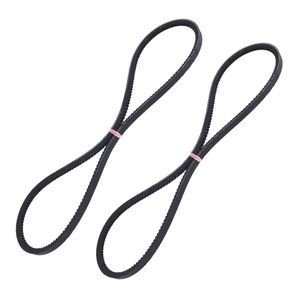
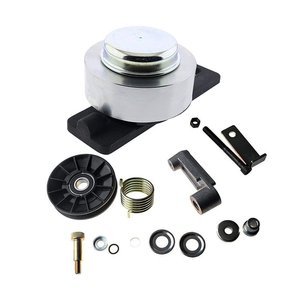
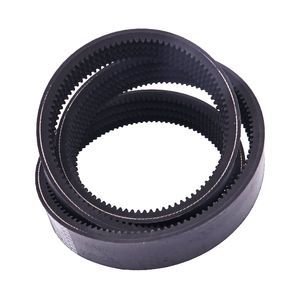
Matched System Components — Every tensioner assembly is verified against engine serial and adjacent belt drive parts to prevent rebuild mismatches.
Technical Specifications
| Parameter |
Value |
| Part Number |
6735884 |
| Product Type |
Belt Tensioner |
| Cross-Reference |
6711698 (reference only) |
| Machine Fitment |
T140, T180, T190, T550, T590 |
| Brand Compatibility |
Compatible with Bobcat compact track loaders |
| Material |
High-strength steel |
| Bearing Type |
Precision-machined bearings |
| Spring Mechanism |
Temperature-compensating tensioner spring |
| Condition |
New Aftermarket |
| Quality Standard |
ISO 9001 |
Application Suitability
| Engine System |
Related Components |
| Belt Drive – Primary Accessory Drive |
Drive belts, idler pulleys, crankshaft pulley |
| Front Cover Assembly |
Front cover gaskets, seal sets, timing cover hardware |
| Cooling System Interface |
Water pump drive belt, fan pulley alignment |
| Overhaul Sequencing |
Valve train components, thermostat housing seals |
System-Level Faults That Cause Repeat Tensioner Failure
Replacing the belt tensioner pulley assembly without diagnosing root cause guarantees a short service life.
A belt tensioner pulley assembly engine rebuild parts swap is only effective when the underlying failure mode is addressed. In compact track loader engines operating under heavy load in construction and mining environments, premature tensioner failure often traces back to contamination ingress, misaligned accessory brackets, or degraded crankshaft pulley damping [NEED_CITE: belt drive system failure root cause analysis in diesel engines]. I have seen tensioners replaced three times in a single season because the adjacent idler pulley was running out of true, creating cyclic loading that fatigued the spring mechanism long before its design life. The same pattern repeats when belt dressing or coolant contamination degrades the belt compound, forcing the tensioner to work beyond its compensating range.

Belt Drive System Context Within the Engine Rebuild
This belt tensioner pulley assembly engine rebuild parts component sits at the center of the accessory drive system, maintaining correct belt deflection across the full operating temperature range. The tensioner interacts directly with the drive belt, idler pulleys, and crankshaft pulley as a matched set — changing one element without inspecting the others introduces tension imbalance that accelerates wear on all contact surfaces.
Identifying the Root Cause Before Swapping the Part
Bearing wear, spring fatigue, and contamination each produce distinct symptoms on the tensioner face and mounting bracket. Scoring on the pulley groove indicates belt slip from insufficient spring force, while lateral runout at the bearing suggests bracket distortion or prior impact damage [NEED_CITE: diagnostic procedures for belt drive component wear patterns]. Confirming which failure mode occurred determines whether replacement alone resolves the fault or whether adjacent bracket and pulley work is required.
Cross-Reference Verification Across Engine Serial Variants
The interchange reference between 6735884 and 6711698 covers engine serial variants where mounting geometry or spring rate differs between production runs. Machines that have undergone prior rebuilds may carry components from a different build specification than the original nameplate indicates, making engine serial confirmation essential before ordering.
Specification Interpretation for Belt Drive Rebuilds
The precision-machined bearings in this assembly are dimensioned to control lateral runout within tight tolerances, preventing cyclic loading that fractures standard-grade bearings under continuous vibration. The temperature-compensating tensioner spring adjusts belt deflection as the engine block expands and contracts, maintaining consistent drive engagement from cold start through sustained high-load operation. High-strength steel construction in the pulley body resists deformation under peak belt tension during sudden accessory load changes, such as compressor clutch engagement or hydraulic pump pressure spikes [NEED_CITE: material specifications for belt drive pulley assemblies in mobile equipment]. These three parameters — bearing precision, spring compensation range, and structural rigidity — must be evaluated together rather than in isolation.
The Cost of Mismatched Grade and Unverified Rebuild History
Engines that have been rebuilt once already often carry oversize or undersize belt drive mounting surfaces that alter the tensioner's working angle. Installing a standard-specification belt tensioner pulley assembly engine rebuild parts unit into a block with prior machining history can produce belt tracking issues that mimic tensioner failure within weeks [NEED_CITE: engine rebuild documentation standards for aftermarket parts verification]. The hidden cost is not the part itself but the second teardown, second gasket set, and second round of machine downtime while the correct variant is sourced and fitted.
Why This Supply Channel Supports Rebuild Accuracy
Own production on selected belt drive lines plus qualified sourced supply ensures consistent dimensional control across every batch under a single warranty account. Cross-reference verification covers both active and superseded numbers, with documentation tracing which engine serial ranges each variant applies to. Technical team confirmation is available before dispatch to validate the correct tensioner variant against your specific engine build record [NEED_CITE: aftermarket parts cross-reference verification methodology]. Sample supply allows fitment confirmation on the bench before bulk commitment, eliminating the risk of ordering a full overhaul set around an incorrect tensioner specification.
Documentation & Verification
- Commercial invoice listing each belt drive component with cross-reference numbers marked reference only
- Compatibility sheet mapping 6735884 and 6711698 to specific engine serial ranges
- Quality inspection record covering bearing runout measurement and spring force test
- Warranty terms document covering dimensional accuracy and material conformance
- Packing photographs showing tensioner assemblies secured against transit damage
- HS code and customs classification support for international engine parts shipments
Installation & Rebuild Sequence
- Clean mounting surface and verify bracket flatness before tensioner installation to prevent angular misalignment
- Torque mounting fasteners to specification before applying belt load to the pulley assembly
- Check belt tracking across all pulleys after installation, adjusting idler positions as required
- Run engine at idle for initial break-in period to seat bearing and verify spring response
- Re-torque mounting hardware after first thermal cycle as specified in rebuild procedures
Request a System-Matched Quote
Provide your engine model, serial number, and any prior rebuild history to confirm the correct tensioner variant and identify which adjacent belt drive components should ship in the same consignment. Include photographs of the existing tensioner face and mounting bracket if the nameplate is no longer legible.
Frequently Asked Questions
Q: What other belt drive components should be replaced together with this tensioner?
A: The drive belt, idler pulleys, and front cover seals should be inspected and typically replaced during the same service event. Belt compound degrades on a similar timeline to spring fatigue, and reusing an aged belt with a new tensioner accelerates wear on both. We supply matched sets verified against your engine serial to avoid tolerance stack-up.
Q: How do I confirm whether 6735884 or 6711698 applies to my engine serial?
A: Provide the engine serial number from the block stamping, not just the machine model. Production changes across serial ranges altered mounting geometry and spring rate between these two references. Our cross-reference documentation maps each variant to specific engine builds, including machines that have undergone prior rebuilds with swapped components.
Q: What system-level faults cause premature tensioner failure?
A: Contamination from coolant leaks, misaligned accessory brackets, and degraded crankshaft pulley damping all force the tensioner beyond its design compensation range. Diagnosing which root cause is present determines whether replacement alone resolves the fault or whether adjacent component work is necessary to prevent repeat failure within weeks.
Q: Does the overhaul gasket kit include seals adjacent to the tensioner mounting area?
A: Gasket kit contents vary by engine serial and rebuild scope. Some kits omit the specific front cover seal that interfaces with the tensioner bracket. Confirm your exact engine build with us so we verify kit completeness against your service requirements before dispatch.