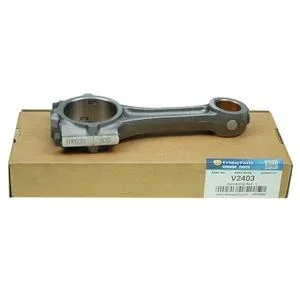
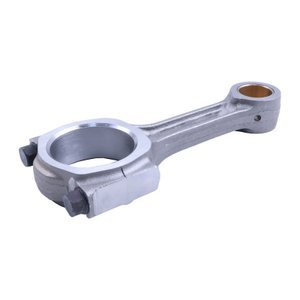
Matched Grade Sizing — Connecting Rod 1G924-22014 (cross-reference only) ships with verified big-end bore dimensions aligned to your crankshaft journal condition and prior rebuild history.
Technical Specifications
| Parameter |
Value |
| Part Number |
1G924-22014 |
| Product Type |
Connecting Rod |
| Cross-Reference |
1G924-22013, 1G924-22012, 1G924-22010 (reference only) |
| Engine Fitment |
Kubota V2003, V2203, V2403 (compatible with) |
| Machine Fitment |
R430, KX040-4, L5040GST, L5240HST, L5460HST, M5140DT, M5640SU, M59, M62, MX5100, MX5400, MX6000 series |
| Material |
Heat-treated alloy steel |
| Surface Treatment |
Corrosion-resistant finish |
| Assembly State |
Individual rod, pre-machined big end bore |
| Condition |
New Aftermarket |
| Warranty |
12-Month |
| Testing |
Magnaflux crack detection, dimensional verification, hardness testing |
| Certification |
ISO 9001 manufacturing |
| Minimum Order |
1 piece |
Application Suitability
| Engine System |
Related Components |
| Rotating Assembly (V2003/V2203/V2403) |
Con rod bearings (STD / 0.25 / 0.50 oversize), piston assemblies, wrist pins, snap rings |
| Lubrication & Cooling |
Oil pump, main bearings, crankshaft seals, overhaul gasket kit |
| Cylinder Head & Valvetrain |
Head gasket, valve stem seals, injector sleeves |
| Complete Overhaul |
Full engine rebuild kit matched to engine serial variant and emission-era configuration |
What Stalls an Overhaul Before the First Bolt Turns
A connecting rod arrives, but the bearing shells are the wrong grade for a reground crankshaft.
In African mining camps where a skid steer or compact excavator sits dead on the pad, I have seen teardowns stall because the rebuild kit assumed a standard crankshaft, but the previous shop had already ground the journals to 0.25 oversize. The replacement connecting rod engine rebuild then waits weeks for the correct undersized bearings to ship. The rod itself may be dimensionally perfect, yet the assembly cannot close [NEED_CITE: engine rebuild tolerances and bearing grade selection for reground crankshafts]. Variant differences across the V2003, V2203, and V2403 family also mean a wrist pin bore or snap ring groove may not match the piston set sitting on the bench. Without serial-number-level confirmation, the entire job list fractures into backorders and split freight.

Matching the Rod to the Crankshaft Journal History
Every connecting rod in this series must be paired with con rod bearing shells that reflect the actual journal diameter, not the factory specification. A crankshaft that has been through one regrind requires 0.25 oversize bearings; two regrinds demand 0.50. I once opened a V2203 in a loader where the previous mechanic had polished the journals but left them near-standard, yet the rebuild kit contained 0.25 shells — the clearance was too tight and the bearings wiped within hours. Confirming journal measurements with a micrometer before ordering the rod-and-bearing set prevents that costly second teardown. The connecting rod engine rebuild sequence depends on this measurement being settled first.
Piston-to-Rod Compatibility Across Engine Variants
The V2003, V2203, and V2403 share a common block architecture, but piston pin diameters and snap ring profiles shifted across production runs and emission-era updates [NEED_CITE: Kubota V-series engine serial variant differences in piston and rod assemblies]. Reusing an existing piston on a new rod requires verifying the wrist pin bore diameter and the snap ring groove width. A mismatch here does not show up until the engine is buttoned up and the first cylinder fires — the pin floats or binds, and the damage propagates to the cylinder wall. Sending the engine serial number allows the correct rod variant to be identified before anything ships.
Interpreting the Specification Sheet
The heat-treated alloy steel construction provides the fatigue strength needed for the cyclic loading in a diesel rotating assembly, where each combustion stroke subjects the rod to tensile and compressive reversal. The pre-machined big end bore arrives at a standard diameter ready for honing to match the specific bearing shell grade selected for your crankshaft. Magnaflux crack detection screens for subsurface fractures that visual inspection misses — a hairline crack near the bolt boss can propagate under load and split the cap. The corrosion-resistant finish protects the rod during storage and initial run-in before the oil film fully establishes [NEED_CITE: magnaflux inspection standards for diesel engine connecting rods]. Dimensional verification confirms center-to-center length and big-end roundness fall within the tolerance band required for balanced operation across all cylinders.
The Hidden Cost of Skipping Root-Cause Inspection
A connecting rod rarely fails on its own. The failure usually traces back to oil starvation — a worn oil pump, excessive main bearing clearance bleeding pressure, or a blocked gallery feeding that specific journal. Installing a new rod without addressing the upstream cause means the replacement will suffer the same fate. I pulled a rod from a V2403 in a tractor that had spun its bearing; the oil pump pickup screen was half-packed with debris from a previous rebuild [NEED_CITE: diesel engine oil starvation root cause analysis in connecting rod bearing failure]. The new rod lasted until the next service interval. Checking oil pump output and main bearing clearance before reassembly is non-negotiable when the failure mode points to lubrication breakdown.
Why Source This Rod Through a Single Account
Production on selected lines and qualified sourced supply both carry the same QC protocol and 12-month warranty, so the rod and its matched bearings arrive under one accountability. Eight product categories mean the overhaul gasket kit, piston ring sets, crankshaft seals, and con rod bearings consolidate into a single consignment rather than trickling in from separate vendors. The minimum order is one piece, so a single-cylinder repair does not force a bulk commitment. Guangzhou warehouse stock enables fast dispatch on common V-series components. Part identification works from the number, machine model, photograph, or nameplate image — useful when the stamping on the old rod is worn or painted over. Cross-reference verification covers superseded numbers like 1G924-22013 and 1G924-22012, confirming they resolve to the same physical part.
Documentation & Verification
- Commercial invoice listing each rod by part number and bearing grade for customs and job costing
- Cross-reference sheet mapping 1G924-22010 through 1G924-22014 variants with interchange reference notes
- Dimensional inspection record showing big-end bore diameter, center distance, and magnaflux results
- 12-month warranty terms covering material defects and dimensional conformity
- Packing photographs of the rod and matched components before crate closure
- HS code and customs documentation support for international engine parts shipment
Installation & Rebuild Sequence
- Clean the rod and cap as a matched set; never swap caps between rods during the connecting rod engine rebuild
- Verify big-end bore diameter with a bore gauge before selecting the bearing shell grade
- Confirm rod bolt stretch or torque-to-yield values match the engine service manual specification
- Check side clearance between the rod big end and the crankshaft journal web after assembly
- Prime the oil system and verify pressure at idle before applying load during initial break-in
Requesting a Matched Quote
Provide the engine model (V2003, V2203, or V2403), the engine serial number, and any known crankshaft regrind history so the correct bearing grade and rod variant can be confirmed. If the nameplate is missing, a photograph of the old rod stamping or the block casting number allows cross-reference identification. Specify whether you need the rod alone or a matched set including bearings, piston assemblies, and overhaul gaskets for a consolidated shipment.
Frequently Asked Questions
Q: What other parts should I replace when installing a new connecting rod?
A: Replace the con rod bearings matched to your crankshaft journal grade, the rod bolts if they are torque-to-yield type, and the piston ring set if the cylinder has been honed. An overhaul gasket kit covering head, sump, and crank seals should ship together to avoid re-order delays that leave the engine open on the stand.
Q: My crankshaft was ground to 0.25 oversize — how do I order correct bearing shells?
A: Send the crankshaft journal measurement or the regrind documentation. The connecting rod ships with a pre-machined big end bore that accepts the correct undersize shell. Ordering the 0.25 oversize bearings alongside the rod ensures both arrive in one consignment, matched to the actual journal diameter.
Q: Are the connecting rods identical across V2003, V2203, and V2403 engines?
A: They share a common base design, but wrist pin bore diameter, snap ring groove profile, and big-end width can vary by engine serial range and emission-era configuration. Providing the engine serial number allows the exact variant to be confirmed before the rod ships.
Q: Does the overhaul gasket kit include all seals needed for reassembly?
A: The kit covers the head gasket, sump gasket, front and rear crankshaft seals, and valve cover gasket. Some emission-era variants use different seal profiles, so the engine serial number is cross-checked against the kit contents to ensure no seal is missing from the rebuild package.
Q: How do I confirm my engine serial number if the nameplate is gone?
A: The serial number is often stamped on the block near the oil filter housing or on the flywheel housing flange. A photograph of that stamping, or a clear image of the old connecting rod part number, allows our technical team to verify the correct variant through cross-reference tables.