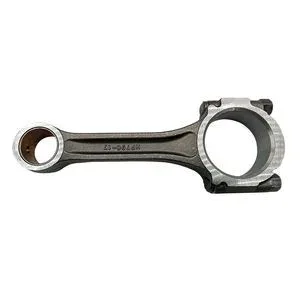
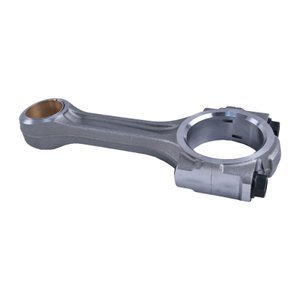
Overhaul Kits Matched — Every connecting rod ships with verified bore tolerances to align with your N844 rebuild sequence and piston grade.
Technical Specifications
| Parameter |
Value |
| Part Number |
115026330 |
| Product Type |
Connecting Rod |
| Cross-Reference (reference only) |
P115026330, SBA115026330, 87763364, SBA115026330C, SBA115026330R |
| Machine Fitment |
New Holland TC35D, TC35, TC35A, TC35DA, TC40–TC55DA, BOOMER 2030–45D, BOOMER 3040, 1920, 2120, 3415, T1510–T2420, L175, L213–L218, L220, C175, TT45A, TT50A, G6030–G6035, MC22–MC35, WORKMASTER 45/55 |
| Material |
40CrMo alloy steel |
| Surface Treatment |
Shot-peened finish with anti-rust oil |
| Assembly State |
New Aftermarket |
| Big-end Bore Tolerance |
±0.005 mm |
| Small-end Bore Tolerance |
±0.005 mm |
| Hardness |
28–32 HRC |
| Rod-to-rod Weight Variance |
<±2 g |
| Inspection Method |
Magnetic particle inspection |
| Warranty |
3–12 months against manufacturing defects |
| MOQ |
1 piece |
| Certification |
ISO 9001, ISO 2710 |
Application Suitability
| Engine System |
Related Components |
| Crankshaft mechanism |
Piston assembly, piston pin, connecting rod bearings, crankshaft journals |
| Cylinder block rebuild |
Main bearings, thrust washers, cylinder liner, full gasket set |
| Lubrication circuit |
Oil pump, oil filter, bearing shells matched to journal grind size |
| Cooling and thermal management |
Thermostat, water pump, coolant passages cleared of debris |
| Fuel delivery system |
Injector nozzles checked for dribble to prevent hydraulic lock recurrence |
Why Connecting Rod Failures Keep Repeating After Rebuild
The part broke, but the system caused it — replacing components without tracing root cause is the most expensive mistake in engine overhaul.
I have walked into workshops where a freshly rebuilt Shibaura N844 came back apart within the first hundred hours. The connecting rod bearing spun, the crank journal scored, and the blame landed on the parts. What actually happened was a dribbling injector creating hydraulic lock on one cylinder, bending the rod just enough to break the oil film. The new rod lasted until the same injector did the same damage again. [NEED_CITE: diesel engine hydraulic lock failure modes from injector malfunction]
Another pattern I see repeatedly: a machine arrives for its second overhaul, and the crankshaft connecting rod journals were already ground to 0.25 undersize during the first rebuild. Standard-size bearings go in, oil clearance collapses, and the engine destroys itself on the first loaded run. The connecting rod itself was fine. The mismatch between journal size and bearing grade was the failure.
These scenarios share one thing — the Connecting Rod engine rebuild parts for Shibaura N844 were treated as isolated replacements rather than components within a system that needs full diagnosis before any new metal goes in.

Where This Rod Sits Inside the N844 Powertrain
The connecting rod transmits combustion force from the piston to the crankshaft, converting linear motion into rotation. In the Shibaura N844 and N844L, this component operates under cyclic loads that demand precise big-end and small-end bore geometry to maintain hydrodynamic oil films on both the crank journal and the piston pin bushing. When planning an overhaul, this rod must be evaluated alongside piston-to-liner clearance, ring end gaps, and main bearing alignment — treating it as a standalone swap ignores the interference relationships that define engine longevity.
Grind History and the Undersize Trap
Every crankshaft has a rebuild history, and that history dictates what size connecting rod and bearing set you actually need. If the previous shop ground the rod journals to 0.25 mm or 0.50 mm undersize, fitting standard bore rods with standard bearings will leave insufficient oil clearance and guarantee premature failure. Before ordering Connecting Rod engine rebuild parts for Shibaura N844, measure each journal with a micrometer and record the actual dimension. Match your bearing shells and, if necessary, source rods with corrected big-end bores. The N844L variant also introduced minor changes in bolt thread specifications across production years, so engine serial number verification prevents fastener mix-ups during assembly. [NEED_CITE: crankshaft journal undersize measurement standards for diesel rebuild]
Reading the Specs That Matter on the Bench
The 40CrMo alloy steel provides the fatigue strength needed for the alternating tension and compression cycles inside a four-cylinder diesel. Shot-peening the surface introduces compressive residual stress that resists crack initiation at the rod beam and bolt boss transitions — areas where fatigue fractures typically start. The ±0.005 mm bore tolerance on both big-end and small-end ensures the bearing crush height and pin fit remain within the hydrodynamic lubrication window. Rod-to-rod weight variance under ±2 g means the rotating assembly stays balanced without selective pairing on the bench. Magnetic particle inspection catches subsurface forging defects that visual examination would miss entirely.
The Cost Nobody Puts on the Invoice
A mismatched bearing grade forces a second teardown. The engine comes out, the sump drops, the caps come off — and every gasket, seal, and stretched bolt in the lower end gets replaced again. Multiply that labor across a fleet and the parts cost becomes almost irrelevant. Worse, a rod that fails catastrophically can punch through the block, turning a bearing job into a short-block replacement. The hidden expense of skipping system diagnosis before ordering Connecting Rod engine rebuild parts for Shibaura N844 is never just the rod itself. [NEED_CITE: total cost of engine teardown recurrence in mobile equipment maintenance]
What This Supply Chain Actually Covers
Own production lines and qualified sourced partners operate under one account with matching warranty terms, so whether the rod comes from our facility or a certified partner, the QC standard is identical. Eight product categories mean your entire overhaul list — rods, pistons, rings, bearings, gaskets, seals — ships in one consignment instead of arriving from five different vendors on five different schedules. One-piece MOQ means a single-cylinder repair does not force you into buying a full engine set. Identification works from a part number, a machine model, a photograph of a worn nameplate, or even a serial plate image. Cross-reference verification covers superseded numbers so a discontinued reference still resolves to the correct current component. Technical support confirms bearing grade and rod variant before anything leaves the warehouse.
Documentation & Verification
- Commercial invoice and packing list referencing each rod by serial-matched position
- Compatibility and cross-reference sheet for 115026330 marked reference only
- Dimensional inspection record with big-end and small-end bore readings
- Magnetic particle inspection certificate per rod batch
- Warranty terms sheet covering manufacturing defects for 3–12 months
- HS code and customs documentation support for cross-border shipment
Installation & Rebuild Sequence
- Clean block oil galleries and verify main bearing alignment before rod installation
- Measure each crankshaft rod journal and match bearing shells to actual grind size
- Confirm connecting rod bolt torque and stretch specifications per engine serial variant
- Check piston-to-rod weight pairing to stay within the ±2 g variance band
- Prime lubrication system and verify oil pressure before first loaded operation
- Run initial break-in at varied load to seat bearing shells and ring faces properly
Requesting the Right Match
Send the Shibaura or New Holland engine model, serial number from the nameplate, and any known crankshaft regrind history. If the nameplate is unreadable, a clear photograph of the block casting numbers or the old rod stamping helps confirm the correct variant. Mention whether this is a single-cylinder repair or a full overhaul so the matching piston and bearing set can be included in the same quotation.
Frequently Asked Questions
Q: What else belongs in a complete overhaul kit alongside this connecting rod?
A: A full N844 rebuild package typically includes matched pistons, piston rings, piston pins, connecting rod bearings, main bearings, thrust washers, a complete gasket set, and valve stem seals. We consolidate all items under one order so everything arrives together and cross-matches by size grade.
Q: The crankshaft rod journals were already ground — how do I pick the right grade?
A: Measure each journal with a micrometer and note the actual dimension. Standard, 0.25 mm, and 0.50 mm undersize are common regrind stages. Provide those readings with your engine serial number so we supply bearings and, if needed, corrected-bore rods that match.
Q: Are N844 and N844L connecting rods fully interchangeable?
A: They share the same base architecture, but certain production years introduced differences in bolt thread pitch and piston pin diameter. Confirm your engine serial number so we verify the exact variant before dispatch.
Q: What system faults should I diagnose before installing a new rod?
A: Check injectors for dribble that causes hydraulic lock, verify oil pump pressure and gallery cleanliness, and inspect the cooling system for hot spots that create thermal stress. Correcting these prevents the new connecting rod from suffering the same failure mode.
Q: I only have the equipment model, not the engine serial — can you still identify the part?
A: Yes. Send a photograph of the machine data plate or the casting numbers visible on the block. We cross-reference the equipment model against engine build records to narrow down the correct connecting rod variant.