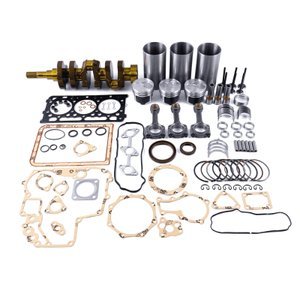
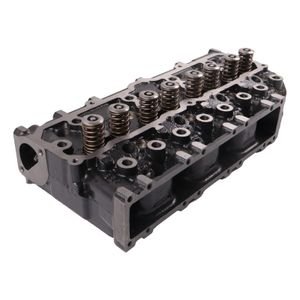
Matched Valve Train Assembly — every cylinder head ships with valves and springs calibrated for the specific Kubota V-series variant, eliminating tolerance stack-up from mixed reused components.
Technical Specifications
| Parameter |
Value |
| Product Type |
Cylinder Head |
| Machine Fitment |
Kubota V2003, V2203, V2403 and variant serial ranges |
| Assembly State |
Complete with Valves & Springs |
| Material |
HT250 Gray Cast Iron |
| Valve Seat Hardness |
45–50 HRC |
| Valve Stem Diameter Tolerance |
±0.005 mm |
| Spring Load |
280 N at 35 mm installed height |
| Sealing Surface Finish |
Ra ≤1.6 μm |
| Condition |
New Aftermarket |
| Warranty |
6-month warranty against manufacturing defects |
| MOQ |
1 piece |
| Standards |
ISO 9001, ISO 6789, SAE J1330 |
Application Suitability
| Engine System |
Related Components |
| Full engine overhaul |
Head gasket set, head bolts, valve cover gasket |
| Valve train replacement |
Camshaft, rocker arm assembly, pushrods, lifters |
| Compression loss diagnosis |
Piston rings, cylinder liners, injector sleeves |
| Coolant intrusion repair |
Block deck resurfacing, thermostat, water pump seal kit |
| High-hour preventative rebuild |
Timing gear set, main and rod bearings, crankshaft seal kit |
Why a Cylinder Head Swap Demands System-Level Verification
A cylinder head replacement is never just about the casting. The valve train tolerances, head gasket thickness, and block deck condition must be confirmed as a system before the new head goes on.
In my years sourcing engine components across North American and European rebuild channels, I have seen V2203 and V2403 engines come back to the teardown bench within the first service interval — not because the casting was bad, but because the engine serial variant was misidentified. Kubota V-series engines carry internal differences across production runs that change valve geometry, port orientation, and gasket interface. A cylinder head engine rebuild that ignores these serial-level distinctions risks uneven seating pressure, coolant passage misalignment, and repeat failure [NEED_CITE: Kubota V-series engine serial variant identification procedures for overhaul shops].

Where This Cylinder Head Sits in the Rebuild Sequence
The cylinder head is the convergence point of the upper engine assembly. During a cylinder head engine rebuild, this component interfaces directly with the block deck through the head gasket, seals the combustion chambers, and houses the entire valve train above the pistons. When the existing head is cracked from thermal fatigue, warped beyond resurfacing limits, or has valve seats that no longer hold compression, a complete assembly with pre-installed valves and springs removes the variable of mismatched seating pressure that occurs when new valves meet old springs or reused guides.
Serial Variant Differences That Change the Fitment
Kubota V2003, V2203, and V2403 designations cover dozens of serial variants — from naturally aspirated to turbocharged, from early mechanical injection to common rail E4B configurations. The V2203-M-E3B and the V2203-E2B, for example, differ in internal component specifications that affect cylinder head compatibility. An engine block that has been previously machined during an earlier overhaul also shifts the required head gasket thickness, which in turn affects valve-to-piston clearance [NEED_CITE: engine block deck resurfacing impact on head gasket selection and valve clearance]. Confirming the exact engine serial number, the rebuild history, and whether oversize components were fitted previously is essential before ordering.
What the Specification Sheet Means for the Rebuild Bay
The HT250 gray cast iron casting is selected for its thermal cycling stability under the intermittent high-compression loads typical of Kubota V-series diesels. The valve seats receive induction hardening to achieve the 45–50 HRC surface hardness needed to resist recession under sustained load — a failure mode that appears gradually as compression drops over hundreds of operating hours. Valve stem diameter held to ±0.005 mm ensures consistent oil control through the guide bore, while the Ra ≤1.6 μm sealing surface finish supports proper head gasket adhesion without requiring additional deck machining on the head itself. Spring load calibrated to 280 N at the specified installed height means the valve train operates within the design envelope for correct seat pressure and float margin at governed RPM [NEED_CITE: valve spring installed load and seat pressure requirements for medium-duty diesel engines].
The Cost of Skipping the System Check
When a rebuild shop installs a cylinder head without confirming the block deck condition or the engine's prior machining history, the consequences surface after the engine leaves the bay. A block that was resurfaced during a previous overhaul but paired with a standard-thickness head gasket can push valve-to-piston clearance into dangerous territory. Mismatched spring loads from reusing old springs with a new head create uneven seating that accelerates valve face wear on specific cylinders. These failures rarely trigger immediately — they emerge as unexplained compression loss or coolant consumption weeks after the engine returns to service, forcing a second teardown that costs the shop credibility and the equipment owner significant unplanned downtime [NEED_CITE: root cause analysis methodology for repeat cylinder head failures in diesel engines].
What You Get When You Source Through XUNPO
Our production lines and qualified sourcing partners operate under one account with identical quality control standards, so whether your cylinder head comes from our own facility or a partner plant, the warranty terms and inspection protocols remain the same. We stock across eight engine component categories, meaning the head gasket set, head bolts, valve cover gasket, and injector sleeve seals can ship in the same consignment as the cylinder head itself. Orders start from one piece for emergency single-engine repairs. Our technical team verifies compatibility against your engine serial number — not just the base model designation — covering superseded part numbers and variant-specific differences. Samples are available for fitment confirmation before you commit to a bulk order for a fleet overhaul program.
Documentation & Verification
- Commercial invoice and packing list matching cylinder head variant and engine serial reference
- Part compatibility sheet confirming fitment against specific Kubota V-series serial range (reference only)
- Quality inspection record covering pressure test, valve lash verification, and seat concentricity check
- Warranty terms covering casting integrity and valve train assembly defects for six months
- Packing photographs documenting protective packaging before crate closure
- HS code and customs classification support for cross-border engine component shipments
Installation & Rebuild Sequence
- Verify block deck flatness and surface finish before placing the cylinder head to ensure gasket sealing
- Confirm head gasket thickness matches any prior block or head machining performed during earlier overhauls
- Torque head bolts in the manufacturer-specified sequence and stages to achieve even clamping load
- Check valve lash after initial thermal cycling and retorque head fasteners per rebuild protocol
- Run a break-in procedure under monitored load to seat valves and confirm compression uniformity across cylinders
Preparing Your Inquiry
Provide the full engine model designation and serial number from the engine nameplate, along with any known rebuild history — specifically whether the block deck or head mating surface has been machined previously. If the nameplate is worn or painted over, send a photograph of the block casting numbers and we will cross-reference the variant. For fleet overhaul programs, share the engine list with serial ranges so we can batch-match cylinder heads and associated gasket kits for consolidated dispatch.
Frequently Asked Questions
Q: Does the cylinder head come with valves and springs pre-installed?
A: Yes. Every cylinder head ships as a complete assembly with valves, springs, retainers, and locks installed and verified for correct installed height and spring load. This eliminates the tolerance mismatch risk that arises when rebuild shops mix new valves with reused springs or install components without calibrated seating equipment.
Q: How do I confirm which V2203 or V2403 variant my engine is?
A: The base model designation alone is not sufficient — Kubota V-series engines carry variant suffixes that indicate specific internal configurations. Provide the full engine serial number from the nameplate or a clear photograph of the nameplate and block casting marks. Our technical team cross-references this against variant-specific cylinder head specifications to confirm fitment.
Q: Should I replace the head gasket and head bolts at the same time?
A: Head bolts that have been torqued to yield during a previous assembly should not be reused, and the head gasket must match the current block deck condition. We supply matched head gasket sets and replacement fasteners alongside the cylinder head so the entire upper engine seal is addressed in one order.
Q: What causes cylinder head failure in these engines — is there a system-level root cause?
A: Thermal fatigue cracking, valve seat recession, and warping typically trace back to cooling system inefficiency, sustained overload operation, or improper torque from a prior assembly. Before installing a replacement head, verify coolant flow, thermostat operation, and injector spray pattern to address the fault that destroyed the previous unit rather than simply swapping the symptom.
Q: Can I order an overhaul gasket kit together with this cylinder head?
A: Yes. Complete overhaul gasket kits covering the full engine seal set — head, valve cover, intake and exhaust manifold, oil pan, and front and rear crankshaft seals — ship in the same consignment. This ensures gasket material compatibility and eliminates split deliveries that delay the rebuild timeline.