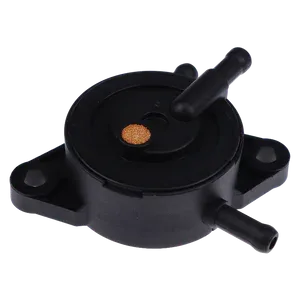
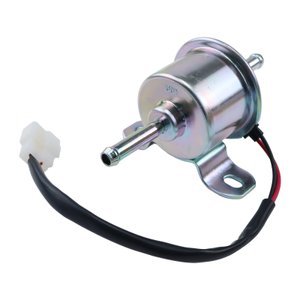
Matched Diaphragm Grade — NBR material verified against ethanol blend limits for each engine serial variant before dispatch.
Technical Specifications
| Parameter |
Value |
| Product Type |
Fuel Pump |
| Cross-Reference |
491922, 808656, 808492, 692313, 691034, BS-491922, BS-808656, BS-597338, LG808656, M138498, M145667, 24 393 04-S, 24 393 16-S, 16700-Z0J-003, 16700-ZL8-013, 190 248 (reference only) |
| Machine Fitment |
Craftsman 10,000 Watt Portable Generator (580.327201 / 1191-0); White Outdoor ZT-50, ZT-54 |
| Pump Type |
Vacuum type |
| Fuel Line Compatibility |
Fits 1/4" fuel line |
| Diaphragm Material |
Nitrile rubber (NBR) |
| Fuel Type Limitation |
Not compatible with fuel containing more than 10% ethanol |
| Condition |
New Aftermarket |
| Standards |
ISO 9001, ASTM D471 |
| Warranty |
3–12 months against manufacturing defects |
Application Suitability
| Engine System |
Related Components |
| Fuel delivery — vacuum actuated |
In-line fuel filter, 1/4" fuel hose, carburetor inlet needle |
| Crankcase ventilation interface |
Vacuum pulse hose, crankcase breather assembly |
| Portable generator prime mover |
Fuel tank pickup tube, sediment bowl gasket |
| Zero-turn mower horizontal engine |
Fuel shut-off valve, tank vent cap |
Why the Same Part Number Fits One Engine and Starves Another
A vacuum fuel pump swap fails when the replacement ignores engine serial variant differences in port orientation and mounting pattern.
In Indonesian mining camps, I watched entire generator fleets sit idle because the fuel pumps ordered matched the base engine family but not the sub-model build code. The physical bolt holes aligned, yet the vacuum pulse port sat rotated just enough to crimp the hose at high RPM. That misalignment caused lean misfire within operating hours, not months [NEED_CITE: engine fuel delivery fault diagnosis under variable load conditions]. Ordering by base model number alone leaves rebuild shops guessing at port position and vacuum nipple angle — two details that change across serial suffix variants within the same engine family. A Briggs & Stratton 161432 series, for example, spans sub-models with distinct mounting footprints that a generic cross-reference table will not distinguish.

Fuel System Context and Adjacent Component Matching
This vacuum fuel pump sits at the center of a fuel delivery chain that includes the tank pickup, sediment bowl, in-line filter, and carburetor inlet. Replacing the pump without inspecting the rest of that chain leaves the root cause of fuel starvation unaddressed. Cracked vacuum pulse hoses, clogged filters, and ethanol-swollen diaphragm remnants inside the carburetor bowl all reproduce the original failure signature. A complete fuel system rebuild requires matched components arriving together, not staggered across separate shipments.
Engine Serial Variants and Diaphragm Material Selection
The NBR diaphragm in this pump handles fuel blends up to 10% ethanol, which covers most standard gasoline markets. Engines operating in regions with higher ethanol concentrations — E15 or E85 — need an FKM or PTFE diaphragm upgrade rather than a direct replacement. Ethanol-blended fuel accelerates nitrile rubber degradation through swelling and loss of tensile strength, a failure mode that appears as intermittent lean condition at partial throttle [NEED_CITE: elastomer compatibility with ethanol-blended fuels in small engines]. Confirming regional fuel ethanol content before specifying diaphragm material prevents repeat failure within the first service interval.
How Diaphragm and Housing Specs Translate to Field Behavior
The nitrile rubber diaphragm provides the flexing membrane that converts crankcase vacuum pulses into fuel-drawing strokes. Its ASTM D471 rating defines swelling resistance when immersed in reference fuels — a direct indicator of service life in ethanol-blended gasoline. The die-cast aluminum housing maintains dimensional stability across the temperature range a horizontal engine produces, preventing the warpage that plastic housings develop after repeated heat cycles. Stainless steel internal check valves resist corrosion from moisture-laden fuel, a common condition in tropical and coastal operating environments where condensate accumulates in partially filled tanks. The 1/4" barb fittings match standard fuel line hose without adapters, eliminating a common leak point at the connection. Together, these material choices determine whether the pump survives a full rebuild cycle or fails before the next scheduled service [NEED_CITE: vacuum fuel pump material selection criteria for small horizontal engines].
The Cost of Skipping Root-Cause Diagnosis Before Installation
Installing a new vacuum fuel pump on an engine with degraded vacuum pulse lines or a blocked tank vent reproduces the exact symptoms that killed the original pump. Lean misfire, hard starting, and power loss under load are system-level faults that may originate from crankcase pressure loss, not pump failure itself. Shops that treat the pump as a standalone swap rather than a system component accumulate repeat warranty claims and erode customer trust [NEED_CITE: small engine fuel system diagnostic sequence for vacuum pump failures]. The hidden cost is not the part price — it is the second teardown, the second round of gaskets and seals, and the equipment owner's lost revenue during extended downtime.
Why Sourcing Through a System-Aware Supplier Changes Rebuild Outcomes
Our own production lines and qualified sourced supply share the same QC protocol and warranty terms, so a fuel pump ordered alongside carburetor gaskets and fuel filters arrives under one account with consistent quality documentation. Eight product categories mean a complete fuel system overhaul list ships as one consignment, eliminating the staggered arrivals that delay machine return-to-service. Minimum order from one piece allows a single emergency pump to move without waiting for a batch quantity. Part identification works from the OEM reference number, the machine model, a photograph of the old unit, or a nameplate image — whichever is readable on site. Cross-reference verification covers superseded and alternate numbers across engine families, catching port-orientation mismatches before the part ships. Technical support confirms diaphragm material suitability and serial variant fitment before commitment.
Documentation & Verification
- Commercial invoice listing fuel pump quantity, cross-reference numbers, and consignee detail
- Part compatibility sheet mapping engine serial variants to correct port orientation (reference only)
- Quality inspection record showing vacuum hold test at 25 kPa for 60 seconds
- Warranty terms covering manufacturing defects for 3–12 months from dispatch
- Packing photographs documenting protective wrapping and carton condition before seal
- HS code and customs documentation support for fuel system component import classification
Installation & Rebuild Sequence
- Inspect vacuum pulse hose for cracks and replace if hardened before connecting the new pump
- Flush 1/4" fuel lines with clean solvent and verify flow at carburetor inlet before final hookup
- Confirm port orientation matches engine serial variant build sheet before tightening mounting fasteners
- Prime fuel system manually and check for leaks at both barb fittings before cranking the engine
- Run engine at idle for initial warm-up cycle and verify steady fuel delivery at partial throttle
Requesting an Accurate Quote for Your Fuel System Rebuild
Provide the full engine model and serial number — for example, 161432-0016-02 — along with the operating region's typical ethanol blend percentage. If the nameplate is worn, send a photograph of the old pump showing port positions and mounting bolt spacing. This allows us to confirm diaphragm material suitability, verify cross-reference accuracy, and quote any adjacent fuel system components your overhaul requires in a single consolidated shipment.
Frequently Asked Questions
Q: What other fuel system components should be replaced alongside this vacuum pump?
A: The vacuum pulse hose, in-line fuel filter, and carburetor inlet needle and seat should all be inspected and typically replaced during the same service event. Sediment bowl gaskets and fuel tank vent caps are low-cost items that, if degraded, reproduce fuel starvation symptoms. Ordering these as a matched set ensures the entire delivery chain is refreshed in one teardown.
Q: How do I identify my engine serial variant when the nameplate is unreadable?
A: Send a photograph of the old fuel pump from multiple angles, focusing on port positions, mounting bolt hole spacing, and any cast markings on the housing. Our technical team cross-references these visual details against engine build records to identify the correct serial variant and confirm fitment before the part ships.
Q: Is an upgraded diaphragm available for fuel with more than 10% ethanol?
A: Yes. FKM and PTFE diaphragm options are available for engines operating on E15, E85, or other high-ethanol blends. Specify your region's typical fuel composition when requesting a quote so we can match diaphragm material to the ethanol concentration your engine will encounter in service.
Q: Does this pump fit Kohler and Honda engines or only Briggs & Stratton?
A: This pump is compatible with multiple horizontal engine families including Kohler and Honda models that share the same vacuum pulse port dimensions and 1/4" fuel line fittings. Provide the specific engine model and serial number so we can verify port orientation and mounting pattern match your application.
Q: What diagnostic checks should be completed before installing the replacement pump?
A: Verify crankcase vacuum pulse strength at the hose connection point, confirm fuel tank vent is unobstructed, and check for debris in the carburetor bowl that may indicate upstream contamination. These checks distinguish true pump failure from system-level faults that would damage the new unit if left uncorrected.