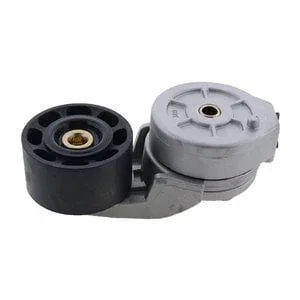
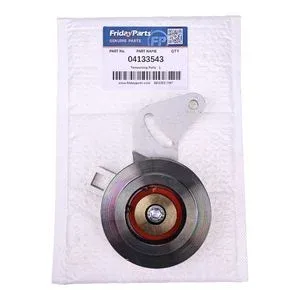
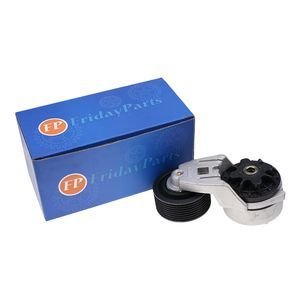
Matched Set Confirmed — Spring force calibration verified against Cummins B-series serpentine drive geometry before dispatch.
Technical Specifications
| Parameter |
Value |
| Product Type |
Belt Tensioner |
| Cross-Reference |
3937553 (reference only), 3937553-REV-D (reference only) |
| Machine Fitment |
4BT, NT855, 6BT, 6CT, 4BTA, 6BTA 5.9L |
| Tensioner Arm Material |
SAE 1045 steel |
| Pivot Bushing Material |
Sintered bronze with PTFE impregnation |
| Surface Treatment |
Zinc-nickel plated (12 μm) |
| Heat Treatment |
42–46 HRC (tensioner arm) |
| Spring Force |
280–320 N at 10 mm deflection |
| Dimensional Tolerance |
±0.15 mm on mounting interfaces |
| Operating Temperature |
-20°C to +120°C |
| Salt Spray Resistance |
Exceeding 720 hours per ASTM B117 |
| Condition |
New Aftermarket |
Application Suitability
| Engine System |
Related Components |
| Serpentine Belt Drive |
Multi-rib belt, idler pulleys, alternator bracket |
| Accessory Drive Front End |
Water pump pulley, fan hub, crankshaft damper |
| Cooling Fan Drive |
Fan blade assembly, viscous clutch (where fitted) |
| Alternator Charging Circuit |
Alternator mounting ear, B+ terminal hardware |
Why the Belt Drive System Fails Again Shortly After Rebuild
Replacing the tensioner without auditing the entire serpentine loop invites a repeat visit to the workshop within the first hundred hours.
I have seen too many Cummins 6BT 5.9L engines come back with belt squeal or shredded ribs because the rebuild scope stopped at the tensioner itself. The root cause is often a worn idler pulley bearing or a misaligned alternator bracket pulling the belt off-track, placing asymmetric load on the new tensioner pivot [NEED_CITE: serpentine belt drive misalignment failure modes in heavy-duty diesel applications]. When a Belt Tensioner engine rebuild replacement is treated as a standalone swap rather than a subsystem refresh, the new component absorbs the fault that killed the previous one. This belt tensioner (cross-reference 3937553) is engineered to sit within a matched set of B-series drive components, so the system is addressed as a whole during overhaul planning.

The Serpentine Loop as a Single Wear System
The belt, tensioner, idler pulleys, and accessory bearings form one continuous load path. A Belt Tensioner engine rebuild replacement that ignores adjacent wear points transfers unresolved stress into the new component, accelerating pivot bushing wear and spring fatigue. When quoting a Cummins 4BTA or 6BTA 5.9L top-end service, the tensioner should never be the only belt-drive line item.
Engine Serial Variants and Mounting Pattern Differences
Across the 4BT, 6BT, 6CT, and 6BTA 5.9L family, tensioner mounting geometry and arm length can shift between production runs. Confirming the engine build code before ordering ensures the ±0.15 mm mounting interface tolerance actually aligns with your bracket [NEED_CITE: Cummins B-series engine serial variant identification procedures]. An incorrect variant may bolt on but sit at a slight angle, causing premature belt walk and pulley edge wear.
Reading the Specifications for Real-World Service
The SAE 1045 steel arm heat-treated to 42–46 HRC provides the yield strength needed to resist bending under sustained 280–320 N spring loading at operating temperature. The sintered bronze pivot bushing with PTFE impregnation is self-lubricating, which matters because external grease attracts abrasive dust in off-highway environments and accelerates bushing scoring. Zinc-nickel plating at 12 μm exceeding 720 hours of salt spray resistance per ASTM B117 protects the arm and mounting face from corrosion pitting that can shift dimensional tolerance over successive service intervals [NEED_CITE: zinc-nickel plating performance in high-vibration diesel engine environments].
The Cost of Skipping the System Audit
A tensioner installed beside a worn idler pulley will develop pivot play as the off-axis load wears the PTFE-impregnated bushing from one side. The belt then tracks poorly, generating heat that degrades the multi-rib profile and leads to accessory drive slippage affecting water pump and alternator output [NEED_CITE: accessory belt slippage effects on cooling system and charging circuit performance]. The machine goes back down, the warranty claim points at the tensioner, and the real fault remains buried in the pulley set.
Why Source This Belt Tensioner Through XUNPO
Own production on selected lines and qualified sourced supply carry the same quality inspection and six-month warranty terms, so you do not need to track which supplier made which line item. Eight product categories under one account mean the tensioner, belt, idler pulleys, and seal kits for the same Cummins overhaul ship in one consignment. Minimum order is one piece, supporting single-unit emergency repairs as readily as distributor stocking programs. Guangzhou warehouse stock enables fast dispatch on common B-series belt-drive components. Part identification is available from engine serial number, photograph, or nameplate image when the original marking is worn or painted over. Cross-reference verification covers superseded and alternate numbers within the 3937553 family to resolve variant ambiguity before the order is placed.
Documentation & Verification
- Commercial invoice listing each belt-drive line item with cross-reference numbers for customs clearance
- Part compatibility sheet confirming engine serial variant match for your 4BT or 6BTA 5.9L
- Quality inspection record covering spring force calibration and mounting interface dimensional check
- Six-month warranty terms against manufacturing defects, stated on dispatch documentation
- Packing photographs showing individual retail box with molded EPE foam protection before carton sealing
Installation & Rebuild Sequence
- Inspect idler pulley bearings for axial play before fitting the new tensioner to the bracket
- Verify mounting bolt torque and arm pivot freedom after installation on the engine block
- Route the multi-rib belt following the B-series diagram, confirming rib alignment on each pulley
- Apply spring load and rotate the crankshaft two full turns by hand to seat the belt before start-up
Request a System-Matched Quote
Provide your Cummins engine model, serial number, and any available rebuild history so the correct tensioner variant and matched belt-drive components can be confirmed. If the nameplate is illegible, a photograph of the existing tensioner mounting face and arm geometry is sufficient for identification.
Frequently Asked Questions
Q: What other belt-drive components should be replaced together with the tensioner during an engine rebuild?
A: The multi-rib belt, all idler pulleys, and the crankshaft damper should be evaluated as a matched set. Worn pulley bearings or a degraded damper impose off-axis loads that exhaust the new tensioner pivot bushing prematurely. Addressing the full serpentine loop during a Cummins B-series overhaul prevents repeat belt-drive failures within the first service interval.
Q: How do I confirm the correct tensioner variant for my specific Cummins engine serial number?
A: Provide the engine serial number or a photograph of the existing tensioner and mounting bracket. The B-series family includes variants with different arm geometries and mounting patterns across 4BT, 6BT, and 6BTA 5.9L builds. Cross-reference verification resolves superseded numbers and confirms the correct variant before the order ships.
Q: Is this tensioner included in a complete belt-drive overhaul kit or sold individually?
A: This belt tensioner is available as an individual component with a one-piece minimum order. It can also be grouped with belts, idler pulleys, and related hardware into a consolidated belt-drive kit for a specific engine serial number, shipping as one consignment under a single warranty.
Q: What system-level faults cause premature tensioner failure?
A: Misaligned accessory brackets, worn idler pulley bearings, and a deteriorated crankshaft damper all place asymmetric loads on the tensioner pivot. These faults accelerate PTFE bushing wear and spring fatigue. Identifying and correcting the root cause during rebuild prevents the new tensioner from absorbing the same destructive load path.