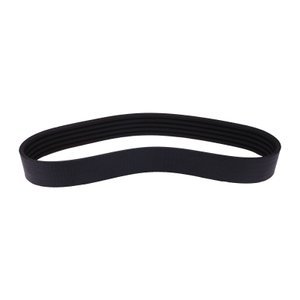
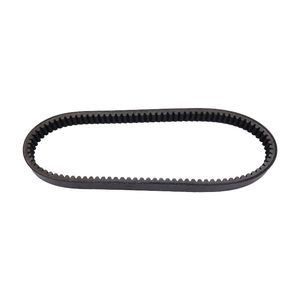
Matched set dispatch — all three AC compressor drive belts verified against Carrier X4 production serial variants before packing.
Technical Specifications
| Parameter |
Value |
| Part Number |
50-00178-16, 50-00162-25, 50-00178-27 |
| Cross-Reference (reference only) |
50-00178-16, 50-00162-25, 50-00178-27, 500017816, 500016225, 500017827 |
| Machine Fitment |
Carrier X4 7300, X4 7500 |
| Product Type |
Belt |
| Condition |
New Aftermarket |
| Content |
1 PC 50-00178-16, 1 PC 50-00162-25, 1 PC 50-00178-27 |
| Standards |
ISO-certified manufacturing |
| Warranty |
3–12 months against manufacturing defects |
Application Suitability
| Engine System |
Related Components |
| AC compressor drive |
Tensioner assembly, idler pulley, compressor clutch bearing |
| Accessory belt drive circuit |
Crankshaft pulley, alignment brackets, fastener set |
| Climate control subsystem |
Compressor seal kit, refrigerant line O-rings, clutch coil |
Why the Same Belt Number Still Fails Within Weeks of Installation
Replacing the broken belt alone while ignoring the remaining two guarantees a repeat teardown.
I spent years handling warranty claims in Shandong, and the pattern was always the same: a technician would swap out 50-00178-16 on a Carrier X4 7300, leave the other two belts untouched, and call it done. Two weeks later the machine was back on the bench. The older belts had already lost tensile consistency, so the new belt absorbed disproportionate load and cracked along the cord line. A full AC compressor drive belt replacement only holds when all three share matched tension characteristics from the same production batch. [NEED_CITE: elastomeric drive belt tensile degradation patterns in mobile HVAC systems]

The Compressor Drive as Part of the Accessory System
This belt set sits inside the engine accessory belt drive system, which also feeds the alternator and sometimes a hydraulic pump depending on the Carrier X4 build variant. The AC compressor drive belt replacement matters at system level because a slipping belt does not only reduce cooling performance — it lets the compressor clutch cycle erratically, which increases thermal stress on the clutch coil itself. When a rebuild shop opens the accessory cover, checking the entire belt routing path prevents a second visit.
Tensile Matching and What Happens Without It
Each of the three belts in this set — 50-00178-16, 50-00162-25, and 50-00178-27 — carries a slightly different length and rides on a different pulley position. If one belt is newer or from a different compound batch, it stretches at a different rate under engine bay heat, shifting tension to its neighbors. This is why matched set supply is not a marketing phrase but a mechanical requirement. The reinforced cord construction across all three belts maintains tension stability so that load distribution stays balanced from first startup through sustained operation. [NEED_CITE: multi-belt drive load sharing and tension differential effects]
Compound Behavior Under Continuous Thermal Load
The high-tensile rubber compound used in these belts resists thermal cracking, which is the primary failure mode in enclosed engine compartments where ambient temperatures climb during continuous operation. Carrier X4 units working in mining or port logistics environments face compounded thermal stress because the engine bay ventilation is already restricted by dust filtration housings. The belt compound must retain flexibility without softening to the point where it deforms under pulley contact pressure. Belt sidewall cracking is usually the first visible sign that the compound has exceeded its thermal service window.
What a Partial Replacement Actually Costs the Shop
A shop that replaces only the failed belt saves one component cost but commits to a second teardown when the next belt fails under unbalanced tension. That second teardown means another round of refrigerant recovery, compressor clutch disengagement, and accessory cover removal. Across a fleet of Carrier X4 7500 units running through a maintenance season, those repeat visits accumulate into significant unplanned downtime that was entirely avoidable. [NEED_CITE: mobile equipment repeat teardown cost factors in HVAC service]
Why Sourcing This Set From Here Reduces Rebuild Risk
Production on selected belt lines happens in our own facility, with the remainder sourced from qualified ISO-certified manufacturing partners — both carry identical warranty terms under one account. The three-belt set ships as one consignment, eliminating the situation where one part number arrives and the other two sit on backorder from a different supplier. Part identification works from the unit service manual, a nameplate photograph, or the compressor serial, so superseded numbers across Carrier X4 production runs get cross-referenced before dispatch. Technical staff are available to confirm whether a specific engine serial variant requires a different belt length than the standard listing shows. A quality inspection record with dimensional checks accompanies the set.
Documentation & Verification
- Commercial invoice listing all three belt part numbers with correct HS codes
- Cross-reference sheet confirming superseded and alternate numbers (reference only)
- Quality inspection record showing length and width dimensional checks per belt
- Warranty terms document covering manufacturing defects for 3–12 months
- Packing photographs taken before carton sealing for visual record
- Customs documentation support with accurate tariff classification
Installation & Rebuild Sequence
- Verify compressor serial against Carrier X4 service manual before opening the accessory cover
- Clean all pulley grooves of old belt residue to prevent tracking issues on new belts
- Route belts in the sequence specified for the X4 7300 or 7500 variant to avoid tensioner interference
- Confirm tensioner arm travel and pulley bearing condition — replace if radial play is detectable
- Run the engine at idle for initial belt seating, then recheck tension after the first thermal cycle
Requesting a Confirmed Fitment Quote
Provide the Carrier unit model, compressor serial number, and any visible numbers from the old belts so we can verify the correct lengths against production variants. If the nameplate is worn or painted over, a photograph of the compressor housing and pulley arrangement is usually enough to confirm the set.
Frequently Asked Questions
Q: What other components should be inspected when replacing these drive belts?
A: Check the tensioner assembly for arm travel and spring tension, inspect each idler and compressor pulley for bearing play, and examine the compressor clutch surface for glazing. Any worn adjacent component will shift load onto the new belts and cause premature failure regardless of belt quality.
Q: Do I need to replace all three belts at once or can I replace just one?
A: Replacing all three as a matched set is strongly recommended. A new belt paired with aged belts creates tension imbalance because the older belts have already lost tensile consistency, which overloads the new belt and leads to failure within weeks.
Q: How do I confirm the correct belt set for my specific Carrier X4 serial?
A: Provide the Carrier unit model and compressor serial number. Belt lengths were superseded across X4 production runs, so the serial determines which variant fits. A photograph of the nameplate or old belts helps when numbers are worn.
Q: What causes premature belt failure in AC compressor drive systems?
A: Common causes include seized or dragging idler pulleys, a worn tensioner that cannot maintain proper load, misaligned pulley grooves, and thermal cracking from sustained high engine bay temperatures. Identifying the root cause prevents the replacement set from failing early.
Q: Is a tensioner or pulley inspection recommended during belt replacement?
A: Yes. Spin each pulley by hand to check for roughness or radial play, and verify the tensioner arm moves freely through its full range. A faulty tensioner or binding pulley will destroy a new belt set rapidly, making inspection a necessary step in every AC compressor drive belt replacement.