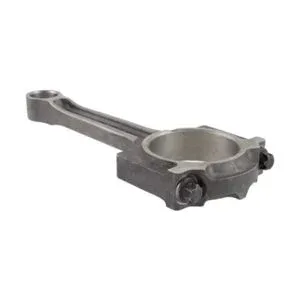
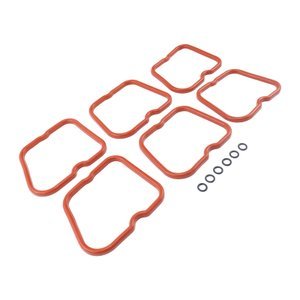
Matched Sets Shipped Together — every connecting rod leaves our Guangzhou warehouse paired with the exact bearing grade and piston set the engine serial demands, preventing the mismatches that stall rebuilds on the stand.
Technical Specifications
| Parameter |
Value |
| Part Number |
719810-23100 |
| Product Type |
Connecting Rod |
| Cross-Reference |
719810-23100, 71981023100, YM719810-23100, YM71981023100, YMR000995, YM719810-23700, YM71981023700, 719810-23700, 71981023700 (reference only) |
| Machine Fitment |
3D75N-1YC, 3D78AE-3A, 3D78AE-3B, 3D78AE-3C, 3D78AE-3D, 3D78N-1A, 3D78N-1C, 3D78N-1E, 3D80-1, 3D82AE-3C, 3D82AE-3D, 3D82AE-3E, 3D82AE-3F, 3D82AE-3G, 3D82AE-3H, 3D82AE-3HB, 3D82AE-3HC, 3D82AE-5M-BA, 3D82AE-5P-CB, 3D82AE-6, 3D82AE-6BM-DA, 3D82E-3A, 3D82E-3B, PC20R-8, PC27MR-2, PC27R-8 DELUXE, PC27R-8, PC27MR-3 |
| Material |
Forged steel (SAE 4140 equivalent) |
| Hardness |
28-32 HRC |
| Tensile Strength |
≥800 MPa |
| Big End Bore Tolerance |
±0.02mm |
| Small End Bushing |
Copper-lead alloy coating |
| Testing |
Magnaflux tested for crack detection |
| Condition |
New Aftermarket |
| Warranty |
3-12 months against manufacturing defects |
| MOQ |
1 piece |
| Standard |
ISO 9001 |
Application Suitability
| Engine System |
Related Components |
| Bottom-end rebuild |
Rod bearing shells (STD / 0.25 / 0.50 oversize), crankshaft journal inspection |
| Piston-to-rod assembly |
Piston sets, piston pin bushings, circlips matched to rod weight class |
| Lubrication circuit |
Oil pump, main and rod bearing oil feed passages, oil cooler |
| Overhaul gasket system |
Full engine gasket kit, rod bolt seals, crankshaft rear seal |
| Cooling and thermal management |
Piston cooling jets, cylinder liner condition, thermostat |
Why the Wrong Connecting Rod for Yanmar 3TNE78 Engine Rebuild Wastes an Entire Teardown
Confirm the crankshaft journal condition and engine serial before ordering, or the new rod set arrives incompatible with the grind left by the last overhaul.
I once watched a rebuilder pull a freshly assembled Yanmar 3TNE78 back off the stand because the connecting rod big end bore was standard size while the crankshaft had been ground to 0.25mm oversize during the previous rebuild. The bearing shells would not seat, the rod cap would not torque to spec, and three days of labor vanished. [NEED_CITE: crankshaft journal regrind practices and bearing oversize coordination in diesel engine overhaul]. That failure was not a parts defect — it was a system-level mismatch that a single phone call confirming the engine serial and rebuild history would have prevented.

The System This Rod Belongs To
A connecting rod for Yanmar 3TNE78 engine rebuild does not work in isolation. It sits between the piston assembly above and the crankshaft journal below, transferring combustion force through a bearing clearance measured in hundredths of a millimeter. The rod weight class must match across all cylinders to keep the rotating assembly balanced, and the big end bore must align with whatever journal diameter the crankshaft currently presents — which may no longer be standard if a previous rebuilder already ground it undersize.
Serial Variants and the Oversize Trap
The 3TNE78 and 3TNE78A families span multiple serial ranges, and internal components shifted across production runs. [NEED_CITE: Yanmar 3TNE78 engine serial range variant differences in internal rotating components]. Some variants use a different rod bolt thread pitch, others require a specific piston pin bushing diameter. When a crankshaft has already been ground to 0.25 or 0.50 oversize at a prior overhaul, the replacement connecting rod must be supplied with bearing shells in the matching oversize grade — otherwise the clearance is either too tight, causing immediate bearing distress, or too loose, producing the knock that brings the machine back within weeks.
Reading the Specifications That Matter
The forged steel construction in SAE 4140 equivalent grade gives the rod the tensile strength to handle repeated combustion loading without stretching the big end bore beyond tolerance. The ±0.02mm big end bore tolerance is critical because rod bearing crush height depends on that bore being held precisely — even a few hundredths of deviation changes the oil film thickness at operating temperature. The copper-lead alloy coating on the small end bushing provides the boundary lubrication needed during cold starts before full oil pressure builds. Magnaflux crack detection catches subsurface fatigue lines that visual inspection misses, particularly around the rod bolt landing and the big end cap parting line where cyclic stress concentrates. [NEED_CITE: magnaflux inspection standards for forged connecting rods in industrial diesel engines].
The Cost of Skipping Root-Cause Diagnosis
Replacing a failed connecting rod without asking why it failed is the fastest route to a second teardown. If the original rod failed from oil starvation, the fault may sit in a blocked oil feed passage, a worn oil pump, or a collapsed piston cooling jet — none of which a new rod addresses. [NEED_CITE: lubrication system root cause analysis in diesel engine connecting rod bearing failure]. Bearing shell patterns tell the story: wiping on the load side suggests misalignment, embedded particles point to filtration breakdown, and copper showing through the overlay means the engine ran starved. Every adjacent component in the lubrication and cooling circuit needs inspection before the new rod goes in, otherwise the same failure mode repeats.
Why Rebuilders Source This Rod Through Our Engine System Desk
Our technical team confirms the exact engine serial variant before any connecting rod leaves the warehouse, cross-referencing the rod weight class and big end specification against the production range. We supply matched sets — rod bolts, bearing shells in the correct oversize grade, piston pin bushings, and the specific gasket contents that variant requires — under one account and one warranty. Both our self-produced lines and sourced supply from qualified partners carry identical QC and documentation. Sample units ship for fitment confirmation before bulk commitment on fleet rebuild programs. The Guangzhou warehouse stocks common variants for fast dispatch, and identification works from a part number, a machine model plate, or a photograph of the existing rod on the bench.
Documentation & Verification
- Commercial invoice listing each rod with engine serial variant noted
- Cross-reference sheet mapping 719810-23100 to alternate numbers (reference only)
- Magnaflux test record and dimensional inspection for big end bore tolerance
- Warranty terms covering manufacturing defects across matched component sets
- Packing photographs showing rod protection and matched set grouping before crating
- HS code and customs documentation for international engine parts shipment
Installation & Rebuild Sequence
- Verify crankshaft journal diameter with a micrometer before selecting bearing grade for each connecting rod
- Clean all oil passages in the rod and block with compressed air to remove assembly debris
- Torque rod bolts in the specified sequence using new fasteners — never reuse stretched bolts
- Check big end side clearance with a feeler gauge after each rod is seated on its journal
- Confirm piston cooling jet alignment before installing the rod and piston assembly into the bore
- Run initial break-in at reduced load to allow bearing surfaces to seat properly
What We Need From You to Quote Accurately
Send the engine serial number and any known crankshaft regrind history so we can confirm the correct oversize grade and rod variant. If only the machine model plate is readable, a photograph of the existing rod alongside the engine data tag is enough to start the cross-reference. For fleet overhaul planning, share the engine build list and we will map the matched sets across your serial ranges.
Frequently Asked Questions
Q: What does a complete 3TNE78 overhaul kit include beyond the connecting rods?
A: A verified kit for this engine family includes rod and main bearing shells matched to journal condition, piston sets with rings and pins, a full gasket set specific to the serial variant, rod bolts, piston pin bushings, thrust washers, and crankshaft seals. We cross-check every line item against your engine serial so nothing is missing when assembly begins.
Q: My crankshaft was ground at the last rebuild — how do I confirm the right bearing grade?
A: Measure the crankshaft journal diameter at multiple points with a micrometer and share the readings with our technical team. We match the connecting rod bearing shells to that exact diameter in STD, 0.25, or 0.50 oversize. Sending a photo of the old bearing shell part number also helps confirm what grade was fitted previously.
Q: Do different 3TNE78 serial ranges use different connecting rods internally?
A: Yes. Production changes across the 3TNE78 and 3TNE78A families introduced variations in rod weight class, bolt thread specification, and small end bushing diameter. We confirm the exact variant from your engine serial number before dispatch to ensure the rod matches your rotating assembly without modification.
Q: What other engine systems should I inspect when one rod has failed?
A: Examine the lubrication circuit including the oil pump, feed passages, and piston cooling jets for blockage or wear. Check the oil filter for metallic particles indicating broader bearing distress. Inspect adjacent rod and main bearings for wipe patterns that reveal misalignment or starvation affecting the entire bottom end.
Q: How do I confirm the exact engine variant when only the machine model plate is readable?
A: Send a clear photograph of the machine model plate along with any visible casting numbers on the block or the existing connecting rod. Our team cross-references these against the compatibility database covering Yanmar and Komatsu mini-excavator applications to identify the correct engine serial range and internal component specification.