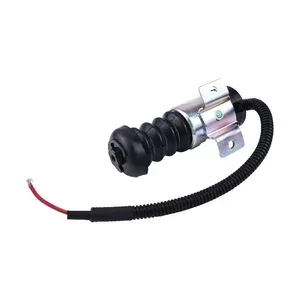
Engine Variant Confirmed — Serial-range cross-check prevents wrong stop solenoid variant from reaching the rebuild bench.
Technical Specifications
| Parameter |
Value |
| Part Number |
35DZS1E2 |
| Product Type |
Stop Solenoid |
| Cross-Reference |
04233841, 0423 3841, 04234373, 0423 4373, 35DZ/S/1/E/2, 35DVZS1E2, 35DVZ/S/1/E/2 (reference only) |
| Machine Fitment |
BFL914, BF 3L 914, D 3L 91403, F 3L 914, D 4L 91404, D 5L 91406, F 5L 914, D 6L 91406, TCD 6L 91406, Deutz 912, Deutz 913, Deutz 914 |
| Voltage |
12V |
| Condition |
New Aftermarket |
| Warranty |
3–12 months against manufacturing defects |
| Manufacturing Standard |
ISO-certified production |
Application Suitability
| Engine System |
Related Components |
| Fuel shutoff control |
Fuel injection pump linkage, shutoff lever, return spring |
| Engine electrical circuit |
Wiring harness connectors, relay, ignition switch contacts |
| Engine auxiliary group |
Thermostat housing, belt tensioner, alternator bracket bolts |
| Fuel delivery system |
Fuel filter head, supply pump diaphragm, banjo bolt washers |
When a Stop Solenoid Fails Again Within Weeks of Replacement
The replacement part is rarely the problem — the root cause lives elsewhere in the circuit.
I have spent years in the Pearl River Delta warehouse district moving from parts catalogue lookup to technical support, and the pattern repeats itself across Deutz 912 and 913 engine rebuilds. A stop solenoid burns out within a short period after installation, the blame lands on the component, and another unit gets swapped in. What actually happened is a voltage spike from a failing alternator regulator, corrosion inside the connector that creates resistance heating, or fuel varnish jamming the plunger bore. [NEED_CITE: common causes of solenoid coil burnout in mobile diesel applications] The 12V stop solenoid engine replacement for Deutz applications requires the technician to trace the fault backward before fitting the new unit. Ignoring this step turns a single-component replacement into a recurring expense.

The Fuel Shutoff System and Its Neighbours in the Deutz 912/913/914 Family
This stop solenoid belongs to the fuel shutoff control circuit on Deutz 912, 913, and 914 series engines. When the ignition is switched off, the solenoid de-energises and the internal spring drives the plunger to cut fuel delivery at the injection pump. The adjacent wiring connector, the relay upstream, and the mechanical linkage inside the pump housing all share responsibility for clean shutoff. Replacing only the solenoid while a corroded terminal or a sticky linkage remains in the system invites the same failure to reappear. A 12V stop solenoid engine replacement for Deutz units should always be evaluated as part of the broader electrical and fuel delivery system.
Engine Serial Variants That Change the Fitment Picture
Within the Deutz 914 family alone, several sub-models — D 3L 91403, D 4L 91404, D 5L 91406, D 6L 91406 — carry different injection pump configurations and, in some cases, different solenoid mounting orientations or connector pin layouts. The same base part number can ship in variants with different plunger stroke lengths or different spade terminal configurations. [NEED_CITE: Deutz engine serial variant identification procedures for aftermarket parts] Before ordering, the engine serial plate must be cross-checked against the variant list, because a solenoid that physically threads in but has the wrong stroke length will either fail to shut off the engine or bind the plunger on every cycle. This verification step is non-negotiable for the 12V stop solenoid engine replacement for Deutz applications across the 912 through 914 range.
Voltage, Coil Resistance, and Sealing Under Bonnet Conditions
The 12V rating means the solenoid coil is wound for nominal vehicle system voltage, but real-world charging systems on construction equipment routinely push voltage higher during bulk-charge phases. Coil resistance determines current draw and, consequently, operating temperature inside the winding. Excessive heat degrades the insulation on the copper wire over repeated duty cycles, eventually causing a short between windings and coil failure. The solenoid body must also maintain a seal where it penetrates the fuel gallery or pump housing — fuel ingress past a degraded O-ring or gasket face will contaminate the coil chamber from the inside. [NEED_CITE: solenoid ingress protection standards for engine bay electrical components] These two factors — thermal stress on the winding and fuel-side sealing integrity — define service life more than any single material choice.
The Hidden Cost of Skipping Root-Cause Diagnosis
When a rebuild shop installs a new stop solenoid without checking the alternator output, the connector condition, and the injection pump linkage freedom, the replacement unit absorbs the same electrical or mechanical abuse that destroyed the original. The machine returns to the field, the solenoid fails again within a short operating period, and the customer loses confidence in both the part and the repair. [NEED_CITE: repeat failure patterns in diesel engine electrical components] For the shop, the cost is not just the warranty claim — it is the labour to pull the machine back in, the freight on the replacement, and the reputation hit with a fleet operator who expected the first repair to hold. This is why the 12V stop solenoid engine replacement for Deutz engines must be paired with a system-level diagnostic checklist.
Why Source This Solenoid Through Our Engine Parts Account
Our own production lines and qualified sourced supply operate under a single account and a single warranty, so the stop solenoid ships alongside matched fuel filters, seal kits, and overhaul gaskets without juggling multiple vendor terms. Eight product categories sit in one consignment, meaning the complete fuel system job moves in one dispatch rather than three separate shipments. Minimum order starts at one piece, so a single emergency replacement does not require padding an order. Our Guangzhou warehouse holds common Deutz electrical items for fast release, and part identification can be confirmed from the number, the machine model, a photograph of the old unit, or a nameplate image. Cross-reference verification covers superseded and alternate numbers — including the 04233841 and 04234373 references — to catch variant mismatches before dispatch. Technical support is available to confirm compatibility and grade against your specific engine serial. [NEED_CITE: aftermarket cross-reference verification methodology for diesel engine components]
Documentation & Verification
- Commercial invoice and packing list itemising each solenoid variant by serial applicability
- Part compatibility sheet showing cross-reference numbers marked reference only
- Quality inspection record covering coil resistance and plunger stroke measurement
- Warranty terms specifying coverage for manufacturing defects over 3–12 months
- Packing photographs documenting solenoid condition before crate closure
- HS code and customs documentation support for cross-border shipment
Installation & Rebuild Sequence
- Disconnect battery negative before removing the faulty stop solenoid to protect the coil circuit
- Clean the solenoid mounting bore and inspect the sealing surface for scoring or fuel varnish
- Verify plunger stroke matches the injection pump shutoff lever travel before final tightening
- Reconnect wiring through a cleaned or replaced terminal, then confirm shutoff function with ignition off
- Run the engine through a warm-up cycle and re-check solenoid body temperature after initial operation
- Record the engine serial and solenoid batch on the rebuild sheet for future service traceability
Preparing Your Enquiry for Accurate Quotation
Provide the Deutz engine model and serial number from the nameplate, along with any previous rebuild history that might have changed the injection pump or wiring configuration. If the old solenoid is still available, a photograph of the connector face and the body markings helps us confirm the exact variant before quoting. For shops planning an overhaul package, share the full engine job list so we can consolidate the stop solenoid with matching seals, gaskets, and electrical components in a single dispatch.
Frequently Asked Questions
Q: How do I confirm which stop solenoid variant fits my specific Deutz engine serial?
A: Send us the engine model designation and the serial number from the nameplate. We cross-reference the serial range against variant records that cover mounting orientation, connector type, and plunger stroke. If the nameplate is unreadable, a photograph of the old solenoid body and connector allows us to identify the correct variant before committing to an order.
Q: What other engine electrical components should I inspect when replacing the stop solenoid?
A: Check the wiring connector for corrosion or loose pins, test the relay upstream for contact resistance, and verify alternator output voltage under load. Inspect the injection pump shutoff linkage for freedom of movement. These adjacent components often carry the fault that caused the original solenoid failure, and replacing them together prevents a repeat visit to the same repair.
Q: Why did my previous solenoid fail — how do I avoid repeat failure?
A: Common causes include voltage spikes from a failing alternator regulator, connector corrosion creating heat buildup, and fuel varnish restricting plunger travel inside the bore. Diagnose the root cause by measuring system voltage and checking connector condition before fitting the replacement. Addressing the underlying fault ensures the new solenoid operates within its design parameters and delivers its full service life.
Q: Are all the listed cross-reference numbers interchangeable for my engine?
A: The cross-reference numbers 04233841, 04234373, and the 35DVZS1E2 variant are listed for identification purposes and may cover different production runs or sub-model variants. They are not automatically interchangeable across every Deutz 912, 913, and 914 engine serial. Confirm fitment against your specific engine serial before ordering to avoid receiving a variant with incorrect stroke length or connector configuration.
Q: Can I order a sample to verify fitment before committing to a bulk purchase?
A: Yes. We supply single units so you can physically verify the mounting thread, connector type, and plunger engagement on your specific injection pump before ordering in quantity. This step is especially valuable when working with older Deutz engines that may have undergone previous rebuilds with non-standard pump configurations.